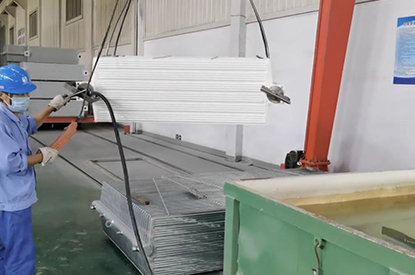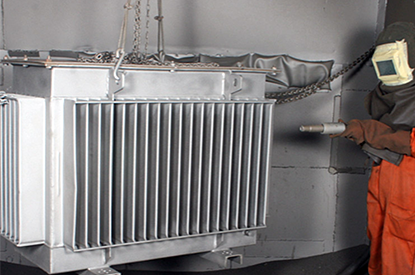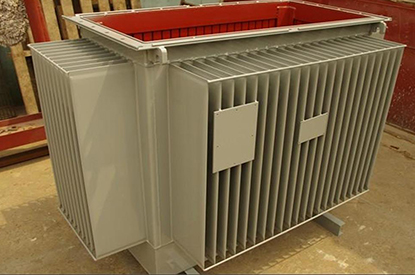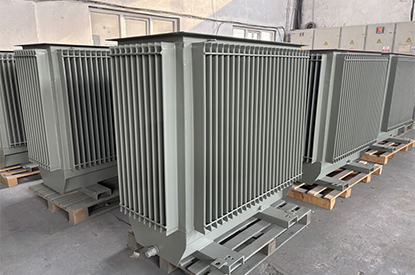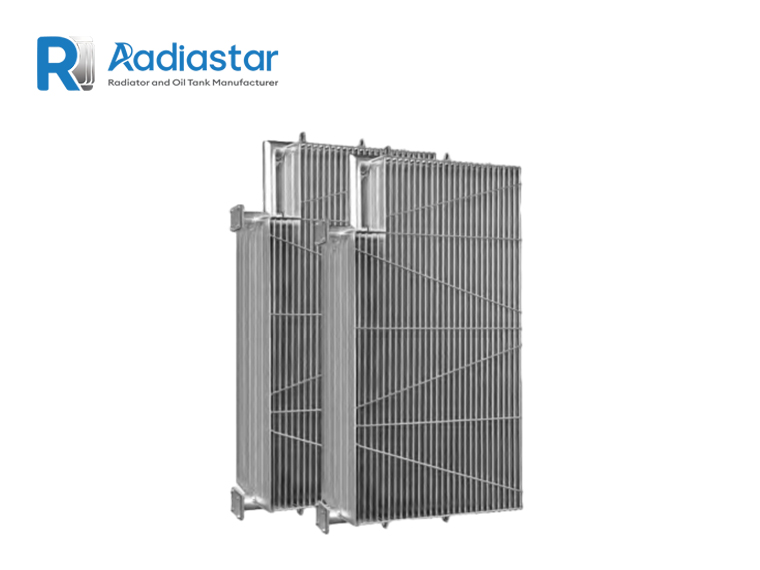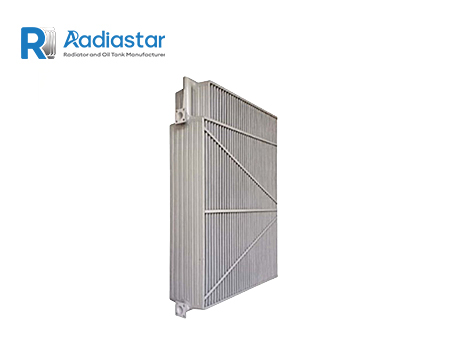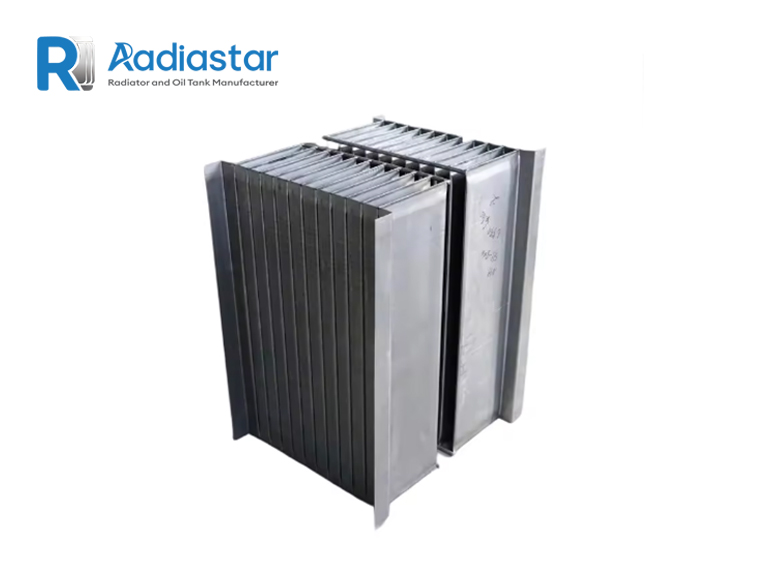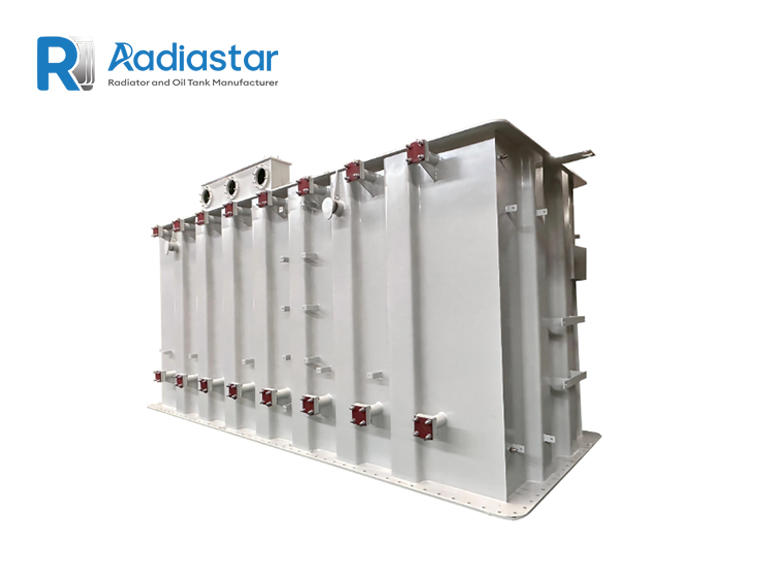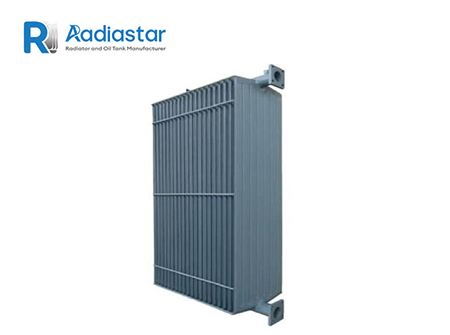

The material used for a transformer radiator directly affects its corrosion resistance, mechanical strength, weight, manufacturing cost and service life.
For most liquid-immersed transformers, carbon steel transformer radiators are widely used because they offer a practical balance between mechanical performance, manufacturing cost and thermal performance.
However, for transformers installed in coastal, marine, chemical or highly corrosive environments, stainless steel transformer radiators can provide significant advantages.
This leads to an important purchasing question:
Should you choose a carbon steel or stainless steel transformer radiator?
The answer depends less on the transformer MVA rating and more on the installation environment, required service life, corrosion exposure, maintenance strategy, budget and project specification.
A stainless steel radiator is not automatically a better choice for every transformer.
Likewise, a carbon steel radiator is not necessarily the best choice simply because it is less expensive.
The correct selection should consider the complete service environment.
This guide compares carbon steel and stainless steel transformer radiators from an engineering and purchasing perspective, including:
A transformer radiator operates continuously as part of the transformer’s cooling system.
It is exposed to:
For outdoor transformers, the external surface of the radiator is particularly exposed to environmental conditions.
If corrosion protection is inadequate, corrosion can gradually reduce the service life of the radiator.
Potential consequences include:
Therefore, radiator material and surface protection should be considered during the initial transformer design.
Carbon steel is one of the most widely used materials for transformer radiator manufacturing.
A typical carbon steel radiator consists of:
The external surface is normally protected by an appropriate coating system.
The main advantages of carbon steel include:
For standard utility, industrial and commercial transformer installations, carbon steel often provides an excellent balance between performance and cost.
Stainless steel transformer radiators use corrosion-resistant stainless steel for the radiator structure.
The exact stainless-steel grade should be specified according to the application.
Stainless steel is particularly attractive when the radiator will be exposed to aggressive environmental conditions.
Potential applications include:
The major advantage is improved resistance to atmospheric corrosion compared with conventional carbon steel.
However, stainless steel generally has a higher material cost and requires appropriate fabrication and welding procedures.
| Parameter | Carbon Steel | Stainless Steel |
|---|---|---|
| Material cost | Lower | Higher |
| Corrosion resistance | Depends on coating | High |
| Surface coating | Usually required | May be reduced or application-dependent |
| Mechanical strength | Excellent | Excellent |
| Weldability | Excellent with proper process | Requires controlled procedure |
| Outdoor use | Very common | Excellent |
| Marine environment | Requires robust protection | Highly suitable |
| Chemical environment | Application dependent | Often preferred |
| Maintenance | Higher in aggressive environments | Generally lower |
| Initial investment | Lower | Higher |
| Long-term corrosion resistance | Coating dependent | Material dependent |
| Typical application | General transformer projects | Harsh environments |
The correct selection depends on the project environment rather than material preference alone.
This is an important question.
The radiator’s cooling performance depends on many factors:
Material thermal conductivity is only one factor.
Therefore:
Choosing stainless steel does not automatically mean the transformer will have significantly higher cooling capacity.
A well-designed carbon steel radiator and a well-designed stainless steel radiator with equivalent geometry can provide comparable cooling performance when the overall thermal design is appropriately engineered.
For radiator selection, geometry and thermal design generally matter more than simply choosing a more expensive material.
Different metals have different thermal conductivities.
However, the heat-transfer path in a transformer radiator involves several stages:
Transformer oil
↓
Radiator inner wall
↓
Steel material
↓
External radiator surface
↓
Ambient air
The overall heat transfer depends on all of these stages.
A simplified relationship is:
where:
This means that changing the material alone does not determine the radiator’s cooling capacity.
A radiator with optimized:
can outperform a radiator made from a different material but with poor thermal design.
The most significant difference between carbon steel and stainless steel radiators is usually corrosion resistance.
Carbon steel naturally reacts with oxygen and moisture.
Therefore, an unprotected carbon steel radiator can develop rust.
This is why carbon steel transformer radiators normally require an appropriate protective coating.
Stainless steel contains alloying elements that provide a much higher level of corrosion resistance.
The exact performance depends on:
Therefore, the phrase:
“Stainless steel never corrodes”
is technically incorrect.
Stainless steel offers enhanced corrosion resistance, but material selection must still consider the actual environment.
For carbon steel radiators, surface treatment is an important part of the product design.
Typical systems may include:
Surface preparation
↓
Primer
↓
Intermediate coating
↓
Topcoat
The actual coating system depends on:
For outdoor transformers, proper surface preparation is particularly important.
Even high-quality paint cannot compensate for poor surface preparation.
One advantage of stainless steel is that it can reduce dependence on conventional external protective coatings.
However, stainless steel radiator manufacturing still requires appropriate surface treatment and fabrication control.
Important considerations include:
A stainless-steel radiator that is poorly fabricated or contaminated during production may not achieve the expected corrosion performance.
Therefore:
Stainless steel changes the corrosion-protection strategy; it does not eliminate the need for quality control.
Coastal areas create challenging conditions for outdoor electrical equipment.
The environment may contain:
Carbon steel radiators can still be used successfully in coastal environments, but the coating system needs to be designed appropriately.
For particularly aggressive marine environments, stainless steel can become an attractive alternative.
The decision should consider:
Initial radiator cost
versus
Expected maintenance and replacement cost over the service life.
This is a classic life-cycle-cost decision.
Chemical plants can expose electrical equipment to aggressive atmospheres.
Potential contaminants may include:
In these environments, the material selection should be made according to the actual chemical exposure.
A standard carbon steel radiator with a conventional coating may not be sufficient for every chemical environment.
Stainless steel may offer better long-term resistance, but the exact grade must be selected according to the chemicals involved.
Therefore, the buyer should provide the supplier with:
Tropical regions can combine:
High ambient temperature also affects transformer cooling.
This means that radiator selection involves two separate issues:
Can the radiator provide sufficient heat dissipation at the specified ambient temperature?
Can the radiator withstand long-term humidity and weather exposure?
A carbon steel radiator with a properly specified coating system may be completely suitable for many tropical projects.
For especially humid or corrosive locations, stainless steel may provide additional protection.
Carbon steel remains popular because it provides several practical advantages.
Carbon steel is generally less expensive than stainless steel.
The manufacturing process is mature and widely available.
Carbon steel is well established for welded radiator construction.
Replacement parts and fabrication services are generally easier to source.
It provides the required structural performance for many transformer applications.
Different coating systems can be selected according to the environment.
For standard transformer projects, these advantages make carbon steel a highly practical option.
Stainless steel provides several important benefits.
Particularly useful in humid and corrosive environments.
The material itself provides corrosion resistance.
When the appropriate grade is selected and fabricated correctly.
Including certain marine and industrial applications.
Potentially reducing repainting and corrosion-control work.
However, these advantages come with higher material and manufacturing costs.
Carbon steel’s main limitation is corrosion protection.
Potential issues include:
This does not mean carbon steel is unsuitable.
It means that the coating system must be treated as an important engineering specification.
For most general transformer applications, properly manufactured and coated carbon steel radiators can provide reliable long-term service.
Stainless steel also has limitations.
The raw material is generally more expensive.
Welding and fabrication require appropriate procedures.
Improper handling can reduce corrosion resistance.
Not every stainless-steel grade is suitable for every environment.
The purchase price can be significantly higher than a carbon steel radiator.
Therefore, stainless steel should be selected when its additional performance justifies the additional cost.
The answer depends on how “economical” is defined.
If we only compare purchase price:
Carbon steel usually wins.
If we compare total ownership cost:
The answer may be different.
Consider:
Lower initial cost
Regular coating maintenance
Potential repainting
Higher corrosion risk in aggressive environments
Higher initial cost
Higher inherent corrosion resistance
Potentially lower corrosion maintenance
Long-term environmental durability
Therefore, the correct comparison is:
Total Cost of Ownership (TCO)
rather than simply:
Initial Purchase Price
A simple life-cycle evaluation can consider:
where:
For a normal inland transformer installation, carbon steel may have the lowest total cost.
For a highly corrosive environment, stainless steel may become more attractive despite the higher purchase price.
This depends on:
Stainless steel can often operate without a conventional protective coating.
However, some projects may still specify painting or other surface treatment.
The decision should therefore be made according to the project specification.
For carbon steel, protective coating is normally an essential part of the corrosion-protection system.
Welding deserves special attention.
Welding is generally well established and economical.
Welding requires more controlled procedures to preserve corrosion resistance and avoid contamination.
The supplier should control:
For stainless steel radiators, poor welding practice can reduce the expected corrosion resistance of the finished product.
Yes, but the final weight depends primarily on:
The difference in material density between different steels is not necessarily the dominant factor in total radiator weight.
For large transformer projects, the bigger factors are often:
Therefore, buyers should compare the complete radiator assembly rather than assuming that stainless steel automatically produces a much heavier radiator.
Replacement projects require special attention.
If the original radiator was carbon steel, replacing it with stainless steel is technically possible in many cases, but the design must still be checked.
Important factors include:
The replacement radiator should not be selected solely because:
“Stainless steel lasts longer.”
It must still meet the original transformer’s thermal and mechanical requirements.
For new transformer projects, the decision can be made earlier.
A typical engineering decision process is:
Define the installation environment.
Define the required transformer service life.
Determine corrosion exposure.
Select carbon steel or stainless steel.
Define coating or surface-treatment requirements.
Complete thermal radiator sizing.
Finalize dimensions and connections.
Approve manufacturing drawings.
This approach avoids expensive changes later in the project.
For a normal outdoor substation:
Carbon steel + appropriate protective coating
is often a practical solution.
For:
stainless steel
may be considered.
However, the environmental classification and customer specification should always be reviewed before making the final decision.
The transformer voltage level itself does not automatically determine the radiator material.
A 110 kV transformer does not necessarily require stainless steel.
Likewise, a 220 kV transformer does not automatically require stainless steel.
Material selection depends more strongly on:
The voltage level affects the overall transformer design, but radiator material selection remains an environmental and mechanical decision.
Regardless of material, the purchaser should provide:
| Parameter | Required Information |
|---|---|
| Transformer rating | MVA |
| Cooling | ONAN / ONAF / OFAF |
| Ambient temperature | °C |
| Center distance | mm |
| Fin width | mm |
| Fin number | pcs |
| Fin pitch | mm |
| Header diameter | mm |
| Flange | Standard + dimensions |
| Material | Carbon steel / stainless steel |
| Sheet thickness | mm |
| Surface treatment | Paint / galvanized / stainless |
| Installation | Indoor / outdoor |
| Quantity | pcs |
For a replacement radiator, the existing radiator drawing is strongly recommended.
“Stainless steel” is not one single material.
Different stainless-steel grades provide different:
The correct grade depends on:
Therefore, the purchaser should specify the required material grade rather than simply writing:
Stainless steel.
The radiator supplier should confirm the proposed material against the project requirements.
For stainless steel radiators, buyers should consider checking:
The quality-control procedure should reflect the selected stainless-steel grade and manufacturing method.
For carbon steel radiators, buyers should focus particularly on:
A good coating system can significantly extend the service life of a carbon steel radiator.
| Application | Recommended Starting Point |
|---|---|
| Normal indoor transformer | Carbon steel |
| Standard outdoor substation | Carbon steel + suitable coating |
| Industrial environment | Carbon steel or stainless steel |
| Coastal area | Evaluate stainless steel |
| Marine environment | Stainless steel often preferred |
| Chemical plant | Stainless steel or specialized coating |
| High humidity | Evaluate environment |
| Cost-sensitive project | Carbon steel |
| Long maintenance interval | Stainless steel may be attractive |
| Replacement radiator | Match original design first |
This is a starting point, not a substitute for project-specific engineering.
Before ordering, ask the supplier:
These questions help the purchaser compare suppliers on engineering value rather than price alone.
Radiastar supplies transformer radiator solutions for liquid-immersed transformers, including both carbon steel and stainless steel radiator configurations.
Available designs can be customized according to:
For standard transformer projects, carbon steel radiators provide a cost-effective solution with appropriate protective coating.
For projects requiring enhanced corrosion resistance, stainless steel radiator configurations can be considered.
The final material and dimensions should be confirmed against the customer’s transformer design and site conditions.
There is no universal answer to:
Carbon steel or stainless steel transformer radiator?
Instead, the correct question is:
Which material provides the required thermal, mechanical and corrosion performance at the lowest reasonable life-cycle cost for this transformer application?
The radiator material should ultimately be selected together with:
thermal design + mechanical design + corrosion protection + service environment + life-cycle cost.
Carbon steel and stainless steel transformer radiators can both provide reliable cooling performance when properly designed and manufactured.
The primary difference is not simply cooling capacity.
The more important distinction is:
Carbon steel relies heavily on an appropriate protective coating, while stainless steel provides corrosion resistance through the material itself.
For most standard transformer installations, a properly manufactured carbon steel radiator with a suitable coating system can provide an economical and reliable solution.
For aggressive coastal, marine or industrial environments, stainless steel may provide greater long-term corrosion resistance and potentially lower maintenance requirements.
The final decision should therefore be based on:
For an accurate radiator quotation, provide the transformer manufacturer or radiator supplier with the transformer rating, cooling mode, radiator dimensions, connection drawing, material requirement and installation environment.