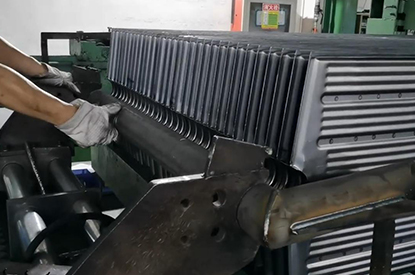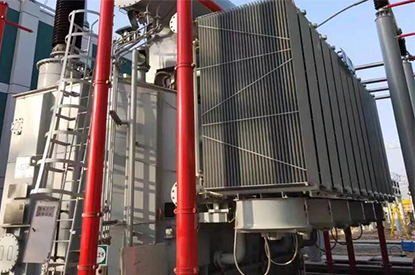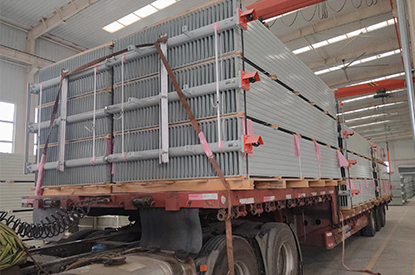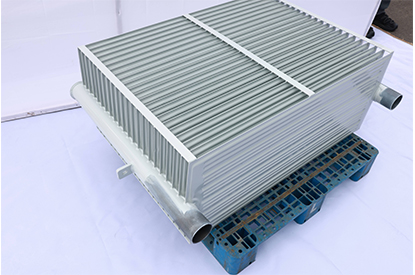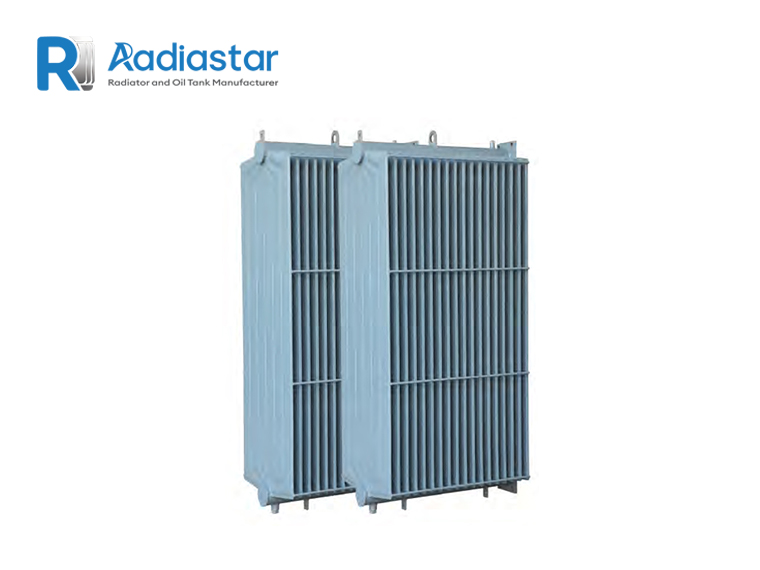

Material selection is one of the most important decisions when specifying a transformer radiator. For oil-immersed transformers, the radiator must provide reliable heat dissipation while maintaining mechanical integrity and oil tightness throughout its service life.
The two most common material solutions are carbon steel and stainless steel.
Carbon steel is widely used because of its good formability, weldability and cost efficiency. Stainless steel, typically grades such as 304 or 316, provides substantially higher corrosion resistance and can be advantageous in coastal, humid or chemically aggressive environments. Commercial transformer-radiator manufacturers currently offer both carbon-steel and 304/316 stainless-steel constructions.
The important point for transformer engineers is that stainless steel is not automatically a better radiator.
The correct material depends on:
IEC 60076-22-2:2019 applies to removable radiators used on liquid-immersed power transformers and reactors and establishes requirements covering service conditions, mechanical requirements, dimensions and type/routine testing.
Carbon steel, particularly low-carbon steel, is the mainstream material for transformer panel radiators.
Common specifications used by manufacturers include low-carbon grades such as Q235B, SPCC, SPHC or equivalent materials, depending on the applicable national or customer specification.
Its main advantages are:
For standard outdoor transformer installations, a properly designed carbon-steel radiator with an appropriate corrosion-protection system can provide reliable long-term service.
Typical protection systems include:
Carbon steel → shot blasting → primer → intermediate coating → topcoat
or:
Carbon steel → hot-dip galvanizing → paint
Commercial radiator manufacturers offer painted, galvanized and galvanized-plus-painted carbon-steel solutions for outdoor applications.
Stainless steel is selected primarily when corrosion resistance is more important than minimum initial cost.
Common radiator materials include:
Stainless steel radiators are particularly suitable for environments involving:
Some manufacturers specifically recommend stainless steel for coastal, humid and chemically aggressive environments, with 316 generally considered for more severe corrosion conditions.
However, material grade should always be selected based on the actual environmental conditions rather than simply specifying “stainless steel.”
| Factor | Carbon Steel | Stainless Steel |
|---|---|---|
| Initial cost | Lower | Higher |
| Corrosion resistance | Requires protection | High |
| Formability | Excellent | Good |
| Weldability | Excellent with suitable procedure | Requires controlled procedure |
| Surface treatment | Usually required | Often reduced |
| Coastal environment | Suitable with proper coating | Excellent |
| Chemical environment | Depends on coating | 304/316 depending on chemicals |
| Maintenance | Higher in aggressive environments | Generally lower |
| Material availability | Very high | High |
| Fabrication cost | Lower | Higher |
| Typical application | General transformer service | Aggressive environments |
| Life-cycle cost | Attractive for normal environments | Attractive for severe environments |
The choice should therefore be based on total life-cycle cost, not material price alone.
The most significant difference between the two materials is corrosion resistance.
Carbon steel naturally requires corrosion protection because exposed steel can oxidize in the presence of moisture and oxygen.
The actual service life therefore depends heavily on:
For example, carbon-steel radiators can be supplied with hot-dip galvanizing, powder coating or multi-layer paint systems.
Stainless steel provides inherent corrosion resistance through its passive chromium-rich surface layer.
However:
Stainless steel is corrosion-resistant, not corrosion-proof.
Grade selection remains important.
304 and 316 should not be treated as interchangeable materials in every environment.
For chloride-rich environments, 316 is often considered when the environmental exposure is more severe.
For coastal transformer installations, stainless steel generally provides a stronger corrosion-resistance solution.
Salt spray and chloride exposure can accelerate corrosion of carbon steel if the coating system is damaged.
A carbon-steel radiator can nevertheless be used successfully in coastal environments when an appropriate protective system is specified and maintained.
The decision can therefore be summarized as:
Carbon steel + high-performance corrosion protection
may provide a cost-effective solution.
304/316 stainless steel
may provide lower long-term corrosion risk.
The exact choice should consider:
Carbon steel is generally more economical than stainless steel.
Low-carbon steel is well suited to pressing, forming and welding.
Carbon-steel sheet is widely available internationally.
The radiator can be:
Fabrication and repair processes are well established.
For large transformer projects where hundreds of radiator panels may be required, the material-cost difference can become significant.
This is the primary reason to select stainless steel.
Depending on the application, stainless steel may be supplied with minimal external protection compared with carbon steel.
304 or 316 stainless steel can be selected for applications where carbon steel would require extensive corrosion protection.
For difficult-to-access transformer installations, reducing repainting or corrosion maintenance can have significant economic value.
Not necessarily.
This is an important technical misconception.
Radiator heat dissipation is influenced strongly by:
The thermal conductivity of the material itself is only one part of the overall heat-transfer system.
Therefore:
A stainless-steel radiator is not automatically thermally superior to a properly designed carbon-steel radiator.
For transformer radiator selection, engineers should first verify the required cooling capacity and radiator surface area, then select the material according to environmental and mechanical requirements.
IEC 60076-22-2 specifies radiator elements made from stamped steel sheets or steel pipes and gives a minimum thickness of 1.0 mm; a purchaser may specify 1.2 mm for enhanced mechanical performance, while other materials and thicknesses can be agreed between purchaser and manufacturer.
Therefore, buyers should not assume:
Stainless steel = thinner
or:
Carbon steel = thicker.
Thickness should be determined by:
Welding quality is critical because transformer radiators are oil-containing components.
Carbon steel generally has straightforward welding characteristics when the material grade and welding procedure are properly selected.
Stainless steel requires tighter process control because:
For both materials, the critical objective is:
continuous, mechanically sound and oil-tight welds.
Material selection cannot compensate for poor welding.
A high-quality carbon-steel radiator with controlled welding can be more reliable than a poorly fabricated stainless-steel radiator.
A typical carbon-steel radiator process is:
Steel sheet
→ Cutting
→ Forming
→ Seam welding
→ Header welding
→ Leak testing
→ Pressure testing
→ Surface preparation
→ Painting/galvanizing
→ Final inspection
Stainless steel follows a similar overall manufacturing sequence, but fabrication requires appropriate welding parameters and material handling.
For both materials, critical manufacturing controls include:
Modern radiator manufacturers commonly provide both carbon-steel and stainless-steel products using pressed-panel designs.
For carbon-steel radiators, corrosion protection is a major part of the product specification.
A typical system can include:
Shot blasting
↓
Primer
↓
Intermediate coating
↓
Topcoat
The exact coating system should be selected according to the installation environment and applicable coating specification.
For more aggressive environments, hot-dip galvanizing can also be considered.
Some manufacturers offer:
Therefore, when comparing carbon-steel radiator quotations, the buyer should not compare only:
Material price per kg
but also:
Material + surface treatment + expected maintenance + service environment.
Stainless steel reduces corrosion risk, but it does not eliminate the need for:
IEC 60076-22-2 includes routine and type-test requirements for removable radiators, meaning material selection is only one part of overall radiator quality.
A stainless-steel radiator still needs to be correctly manufactured and tested.
For most standard transformer applications:
Carbon steel usually has the lower initial cost.
But total cost should include:
Purchase cost
Surface treatment
Transportation
Installation
Maintenance
Expected corrosion-related replacement cost
For a normal industrial or utility installation with good access for maintenance, carbon steel can be the economically preferable solution.
For a remote offshore or highly corrosive installation where repainting is difficult, stainless steel may provide a better life-cycle value.
The environment involves particularly aggressive chloride or chemical exposure and the project specification supports the additional cost.
The final grade should be confirmed by an engineering corrosion assessment rather than chosen solely by location name.
A professional transformer radiator RFQ should state:
Radiator type: Pressed-panel / tubular / other
Material: Carbon steel / SS304 / SS316
Sheet thickness: According to approved design
Radiator dimensions: Height × width × center distance
Number of panels: Required quantity
Transformer rating: kVA / MVA
Cooling: ONAN / ONAF
Connection: DIN / ANSI / GB / customer drawing
Surface treatment: Paint / HDG / other
Pressure/tightness test: Required
Leak test: Required
Inspection documentation: Required
This eliminates ambiguity between different suppliers.
Before placing an order, ask:
A professional manufacturer should be able to provide technical documentation rather than simply stating:
“We use high-quality steel.”
There is no universal answer that stainless steel is better than carbon steel.
The correct selection is:
Normal environment + cost-sensitive project
→ Carbon steel
Normal environment + enhanced corrosion protection
→ Carbon steel + galvanizing/paint
Coastal/high-humidity environment
→ 304 stainless steel or appropriately protected carbon steel
Severe chloride/chemical environment
→ 316 stainless steel may be considered
The radiator’s cooling performance must still be designed according to the transformer’s thermal requirements.
The choice between a carbon steel transformer radiator and a stainless steel transformer radiator should be based on the complete operating environment rather than material price alone.
Carbon steel remains the practical choice for many transformer applications because it offers excellent formability, weldability, availability and cost efficiency. With a properly engineered coating system, carbon-steel radiators can provide reliable outdoor service.
Stainless steel becomes more attractive when corrosion resistance, reduced maintenance and long-term environmental durability are major priorities. 304 and 316 stainless steel are commonly offered for transformer radiator applications, with the appropriate grade depending on the exposure conditions.
Most importantly, material selection should be considered together with:
Radiator design → steel thickness → forming → welding → leak testing → pressure testing → surface protection → installation environment.
For removable radiators on liquid-immersed transformers, the applicable international framework should also be considered, particularly IEC 60076-22-2:2019, which covers mechanical requirements, preferred dimensions and type/routine tests.
For most standard transformer projects, carbon steel provides the best cost-performance balance. For highly corrosive environments where maintenance and corrosion risk justify the additional investment, stainless steel can provide a stronger long-term solution.