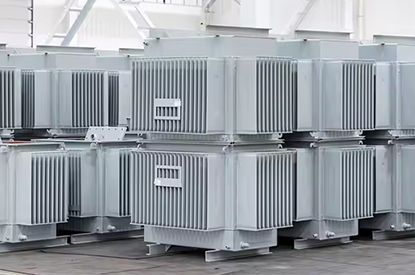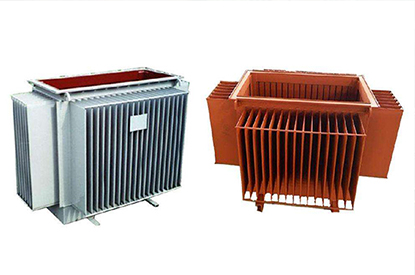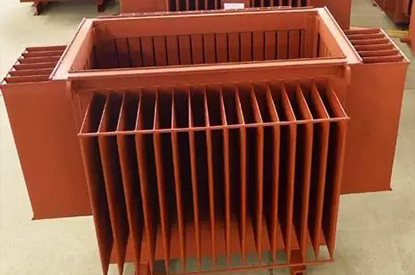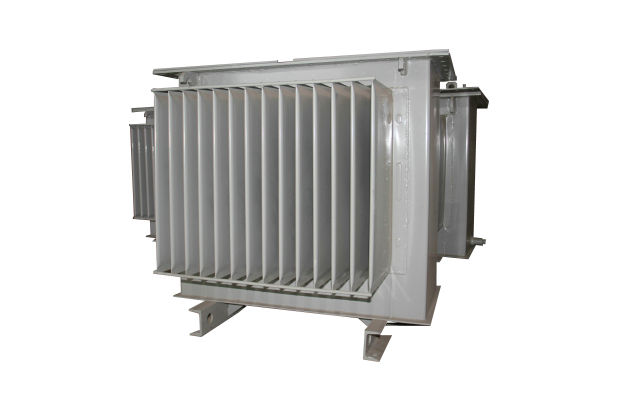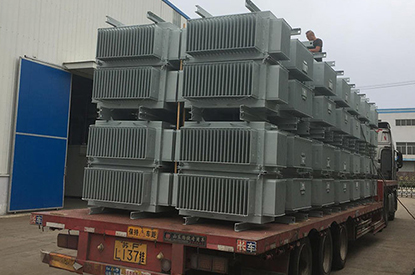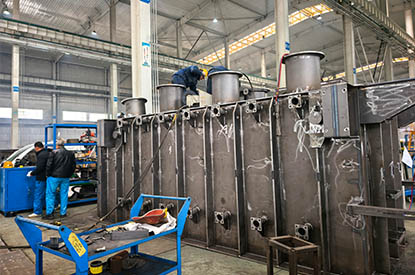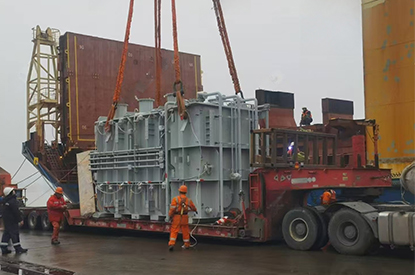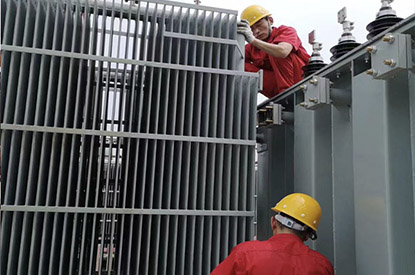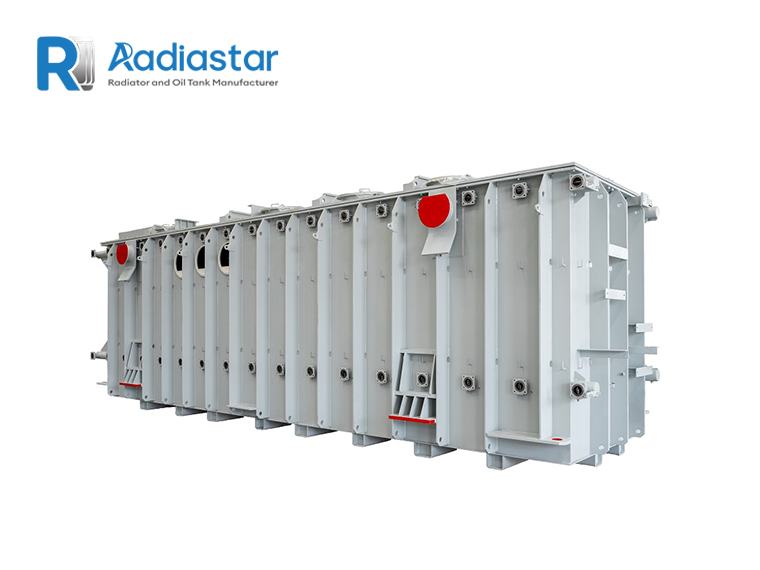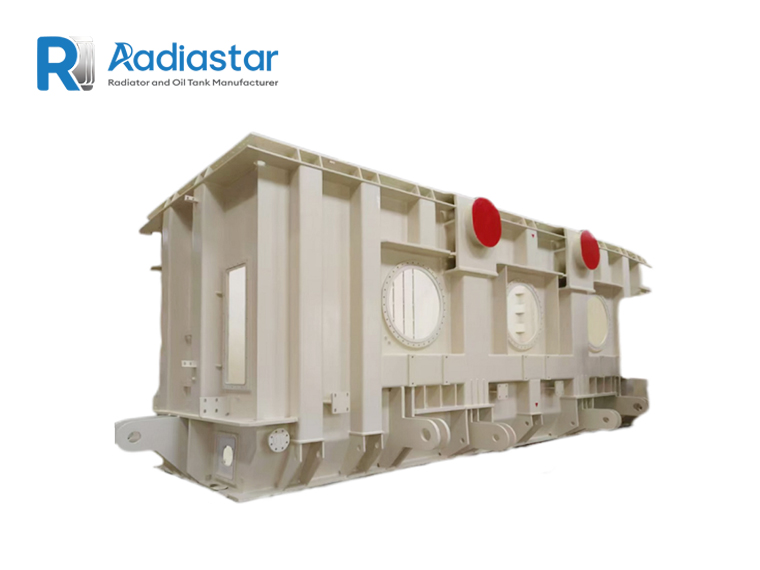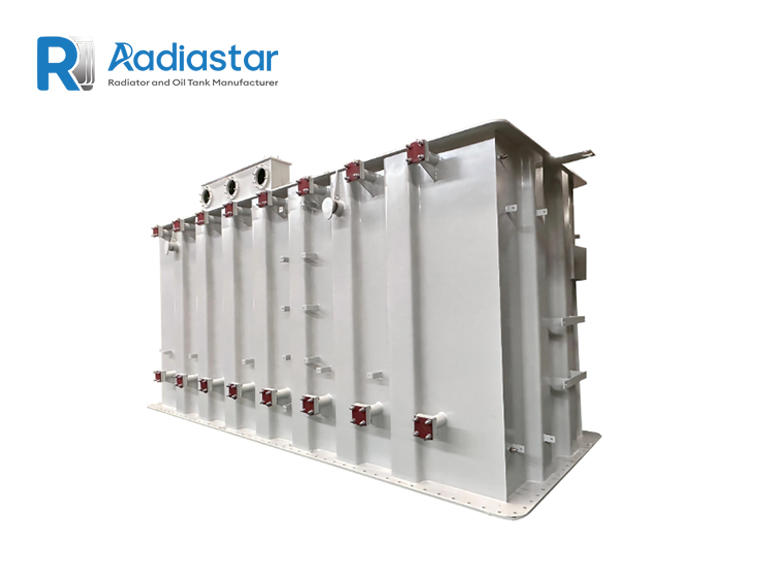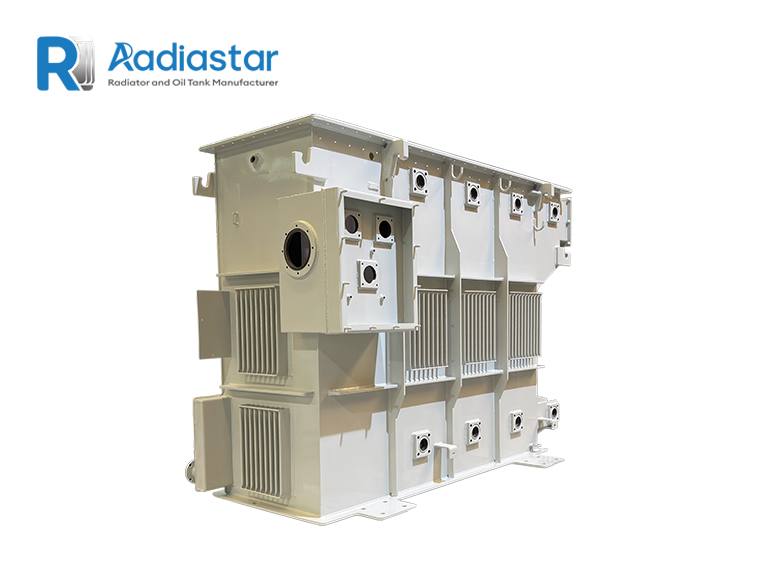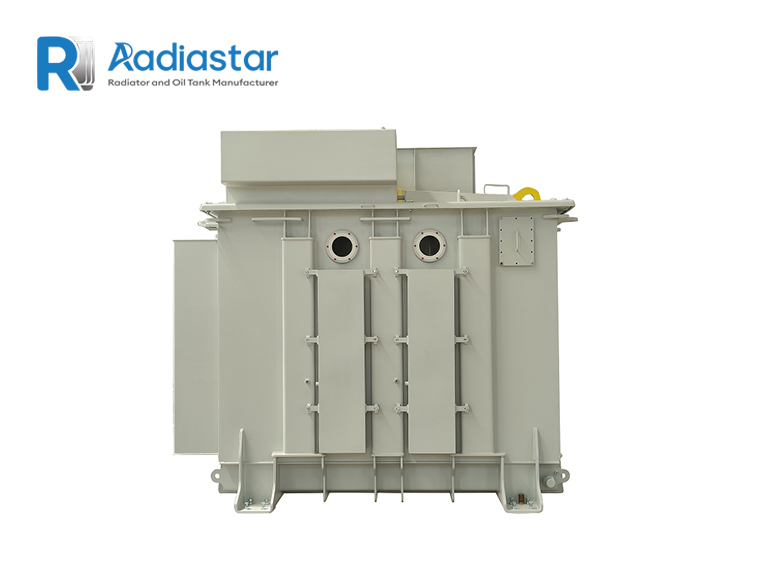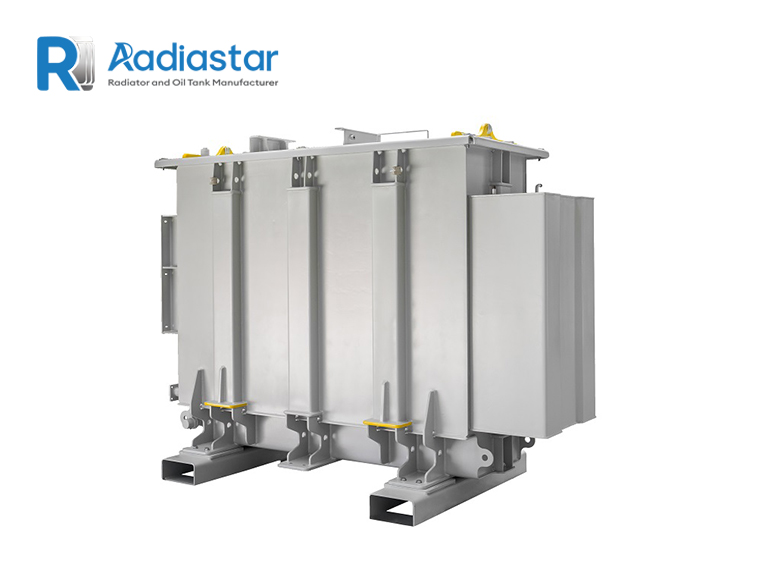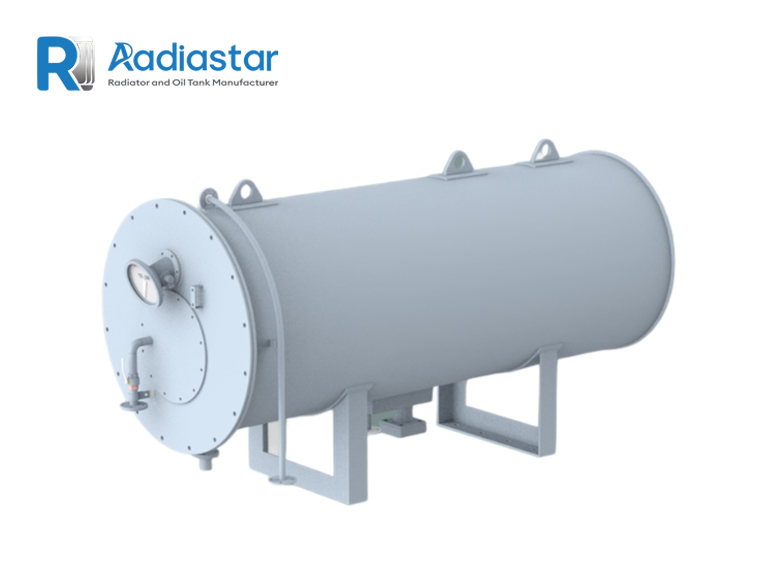

A transformer oil tank is the main external enclosure of an oil-immersed transformer. It houses the transformer core, windings, and insulating oil while providing mechanical protection, electrical insulation, heat dissipation, and sealing.
The oil tank is more than a simple steel container. Its structure directly affects transformer cooling performance, oil leakage prevention, mechanical strength, transportation safety, and long-term operating reliability.
For distribution transformers, power transformers, and specialized transformers, the oil tank structure is designed according to factors such as:
A properly designed transformer oil tank must maintain sufficient mechanical strength while efficiently transferring heat from the transformer oil to the surrounding environment.
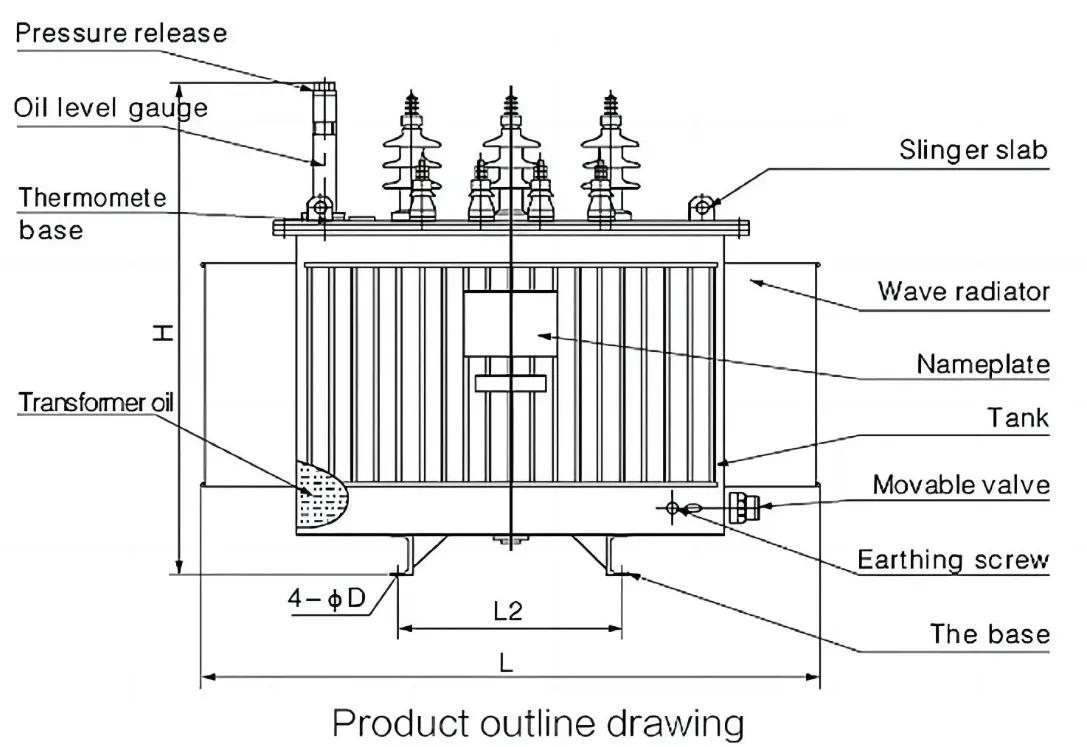
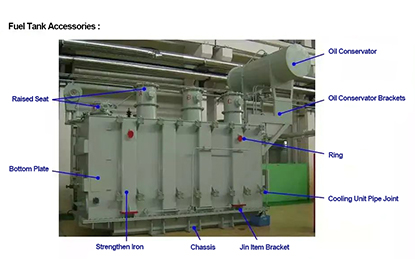
A typical oil-immersed transformer tank consists of several major components:
The exact configuration depends on the transformer type, capacity, voltage class, cooling method, and customer specifications.
| Component | Main Function |
|---|---|
| Tank body | Houses the transformer core, windings and oil |
| Tank cover | Provides access and supports external accessories |
| Tank bottom | Supports the transformer assembly |
| Radiators | Dissipate heat from transformer oil |
| Corrugated walls | Provide cooling and oil expansion compensation |
| Flanges | Connect bushings, valves and accessories |
| Gaskets | Prevent oil leakage |
| Earthing terminal | Provides electrical grounding |
| Lifting lugs | Support lifting and transportation |
| Drain valve | Allows transformer oil drainage |
| Oil filling connection | Used for oil filling |
| Pressure relief device | Releases excessive internal pressure |
The structure must be engineered as an integrated system rather than designing each component independently.
The tank body is the primary load-bearing component.
It normally consists of welded steel plates designed to withstand:
The steel plate thickness is selected according to transformer size, tank dimensions, structural calculations, and customer specifications rather than using a single universal thickness.
For larger power transformers, reinforced structures may be added to prevent deformation during transportation, vacuum treatment, and operation.
A transformer tank should have:
The tank cover is installed on the upper part of the transformer tank.
Depending on the transformer design, the cover may be:
The cover usually contains openings or mounting interfaces for transformer accessories such as:
For maintenance-oriented designs, a removable tank cover allows technicians to access the transformer active part.
Different transformer applications require different tank structures.
The four common designs are conventional tank structures, bell-type tanks, sealed tanks, and corrugated tanks.
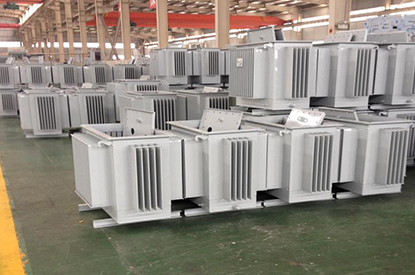
A conventional tank generally consists of a welded steel body with a removable top cover.
This structure is widely used for distribution and medium-sized oil-immersed transformers.
It is particularly suitable when regular maintenance and internal inspection are important.
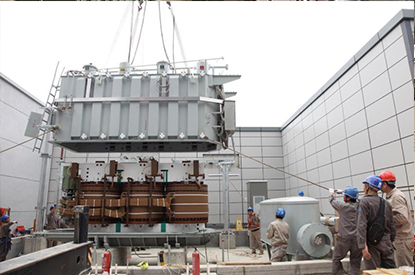
A bell-type tank, also called a bell cover tank, uses a tank structure that allows the transformer active part to be accessed by removing the upper tank section.
This configuration is frequently associated with larger transformers where maintenance access is an important design consideration.
The lifting equipment and factory layout must be considered during the design stage because the upper tank section can require specialized handling.
A sealed oil tank is designed to isolate the transformer oil from direct contact with atmospheric air.
This design helps reduce:
A sealed transformer may use a pressure relief device or another pressure-management system to accommodate changes in internal pressure.
The sealing system is therefore a critical part of the tank design.
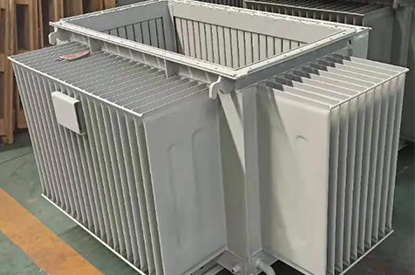
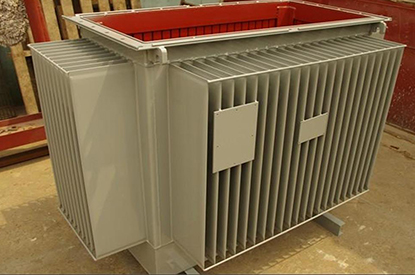
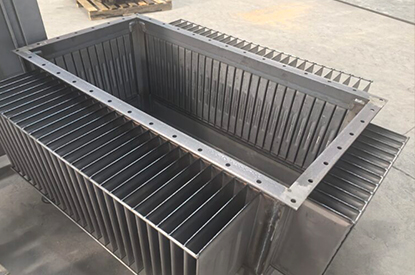
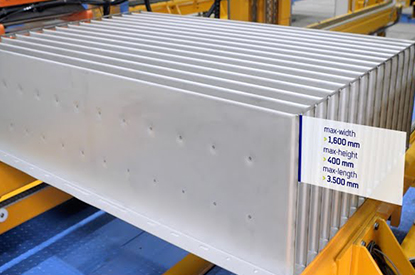
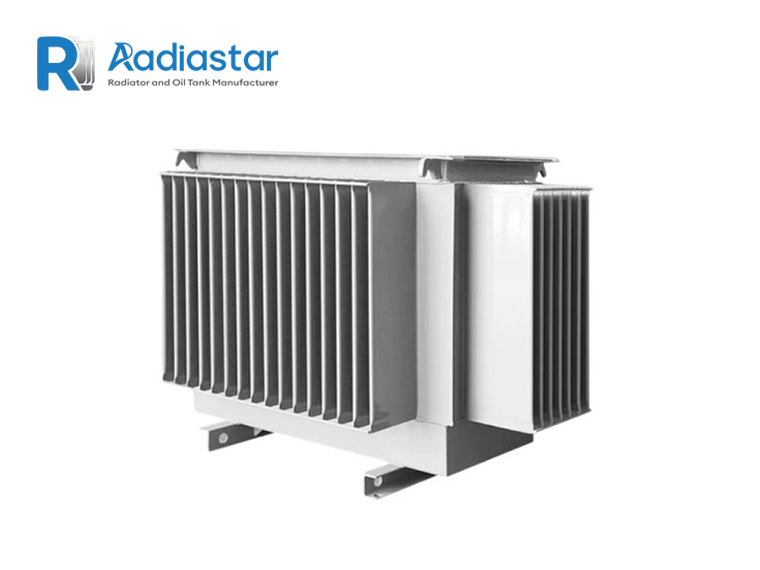
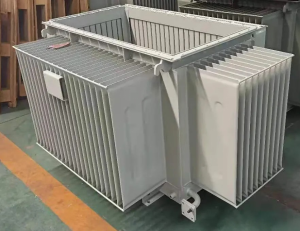
A corrugated transformer oil tank uses flexible corrugated steel walls instead of conventional flat tank walls with separate radiator banks.
The corrugated walls provide two important functions:
As transformer oil temperature increases, the oil expands. The flexible corrugated wall can deform to accommodate changes in oil volume in a sealed transformer.
Corrugated tanks are particularly common in sealed distribution transformers.
Heat management is one of the most important functions of a transformer tank.
Transformer losses generate heat inside the core and windings. This heat is transferred to the insulating oil and then from the oil to the tank wall, radiators, and surrounding air.
A simplified heat-transfer path is:
Core & Windings → Transformer Oil → Tank/Radiator → Ambient Air
The cooling structure must therefore provide sufficient heat-transfer area.
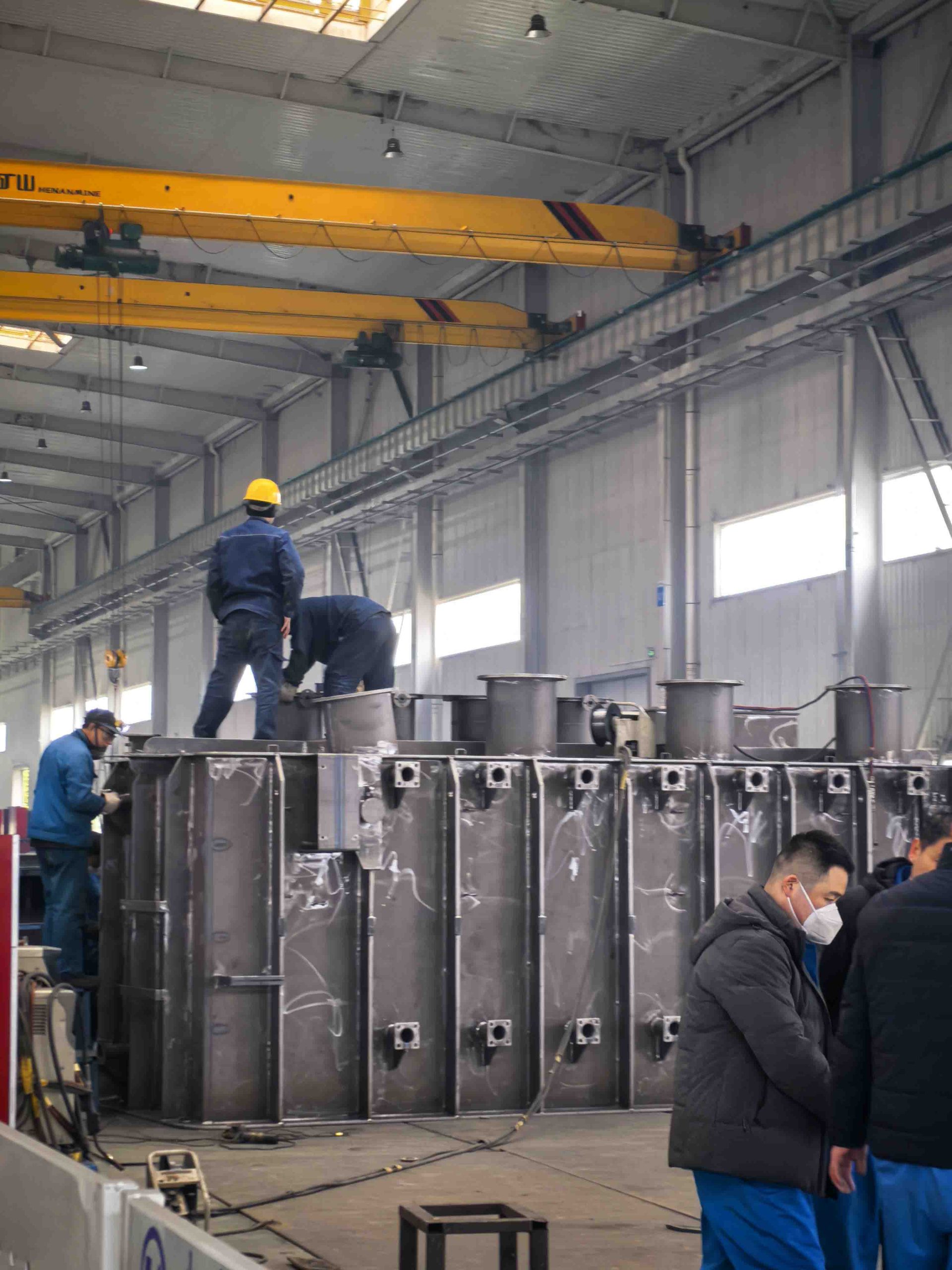
transformer tanks radiastar
Corrugated walls increase the effective external surface area of the tank.
The oil transfers heat through the steel wall, while natural convection transfers the heat from the outer surface to the surrounding air.
This solution is commonly used for sealed distribution transformers.
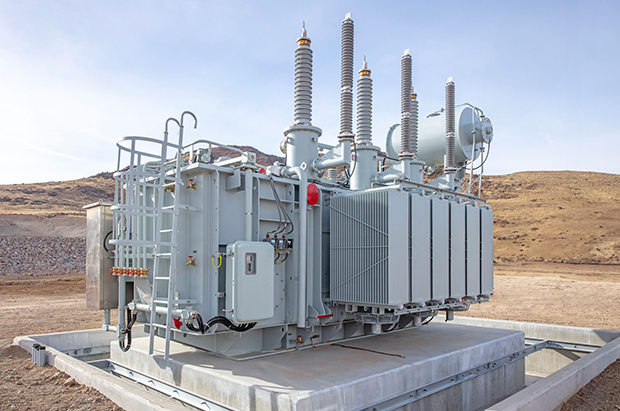
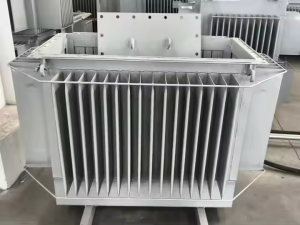
For higher-capacity transformers, separate transformer radiators may be installed on the tank.
Radiators increase the heat-transfer area and can be designed for:
Depending on transformer requirements, cooling may use natural oil circulation, forced oil circulation, fans, or combinations of these methods.
The internal structure of the tank can also influence cooling performance.
Oil flow should be properly distributed around the core and windings to prevent localized hot spots.
Important design factors include:
A well-designed tank therefore needs to work together with the transformer cooling system.
Oil leakage is one of the most important concerns during transformer operation.
A sealing system may include:
The gasket material must be compatible with transformer oil and the expected operating temperature.
During manufacturing and inspection, special attention should be paid to:
High-quality welding and appropriate sealing materials significantly reduce the risk of oil leakage.
Carbon steel is widely used for transformer oil tanks because it provides a good combination of:
The actual steel grade and thickness should be selected according to the transformer design and applicable standards.
Material selection should consider:
The material must withstand pressure, transportation loads, vibration, and structural forces.
The steel must support reliable welding without excessive deformation or defects.
Because the tank is exposed to outdoor environments, surface treatment is important.
Common protection systems include:
The coating system should be selected according to the installation environment and expected service life.
A professional transformer tank manufacturer normally follows a controlled manufacturing process.
The tank is designed according to:
3D modeling and engineering drawings can be used to verify the structure before fabrication.
Steel plates are cut according to approved engineering drawings.
High dimensional accuracy is important because inaccurate cutting can cause:
Depending on the tank structure, steel plates may be:
Corrugated transformer tanks require particularly accurate forming to maintain consistent geometry.
The tank body is assembled and welded.
Important welding areas include:
Welding quality has a direct impact on tank mechanical strength and oil-tightness.
After welding, the tank should undergo appropriate leakage or pressure testing.
The objective is to verify that the tank can maintain its required oil-tightness under specified test conditions.
The tank surface is cleaned and prepared before painting.
Typical processes may include:
Surface Cleaning → Blasting → Primer → Intermediate Coating → Finish Coating
For outdoor transformers, the coating system should be selected according to the local environment.
Final inspection may include:
Quality documentation can be provided according to project requirements.
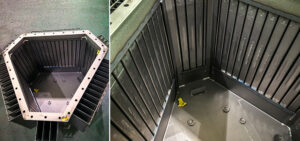
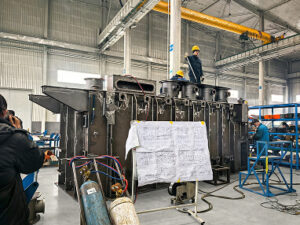
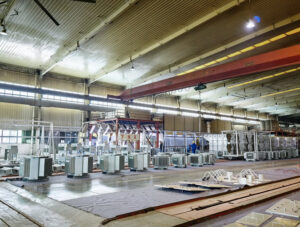
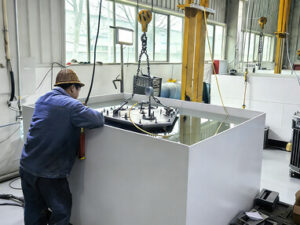
Tank integrity is critical because transformer oil leakage can cause insulation and environmental problems.
A suitable testing procedure may verify:
For sealed transformers, pressure and vacuum conditions may also need to be considered during the design and testing process.
The exact test pressure, duration, and acceptance criteria should follow the applicable transformer standard and approved technical specification.
A transformer tank normally includes several interfaces and accessories.
| Accessory | Function |
| Oil drain valve | Drains transformer oil |
| Oil filling valve | Fills transformer oil |
| Pressure relief device | Releases abnormal internal pressure |
| Earthing terminal | Connects the tank to ground |
| Lifting lug | Lifting and transportation |
| Jacking pad | Supports installation and maintenance |
| Thermometer pocket | Temperature measurement |
| Bushing flange | Mounts transformer bushings |
| Conservator connection | Connects to oil conservator |
| Buchholz connection | Gas relay connection |
| Sampling valve | Transformer oil sampling |
The exact accessory configuration depends on the transformer type and project requirements.
The transformer tank must be reliably connected to the grounding system.
External earthing terminals are normally provided on the tank.
The grounding connection should provide a reliable low-impedance electrical path in the event of a fault.
The specific grounding resistance requirement should be determined according to the applicable electrical installation standard and project specification rather than applying a universal value to every transformer.
For outdoor power transformers, grounding points should also be designed to remain accessible after installation.
Large transformers can produce leakage magnetic flux.
When significant leakage flux reaches the steel tank wall, localized eddy-current losses may occur.
These losses can cause:
For large transformers, magnetic shielding or other flux-control measures may therefore be incorporated into the tank design.
The shielding structure must be designed according to electromagnetic calculations and transformer configuration.
The correct tank design depends on the transformer application.
| Application | Recommended Tank Consideration |
| Small distribution transformer | Conventional or corrugated tank |
| Sealed distribution transformer | Corrugated sealed tank |
| Medium-capacity transformer | Conventional tank + radiators |
| Large power transformer | Bell-type or specialized tank |
| Outdoor transformer | Corrosion-resistant coating |
| High ambient temperature | Increased cooling capacity |
| Harsh coastal environment | Enhanced corrosion protection |
| Frequent maintenance | Removable cover / accessible structure |
| Compact installation | Corrugated or optimized tank design |
The transformer manufacturer should evaluate the complete thermal, mechanical, electrical, and environmental requirements before selecting the tank structure.
For international transformer manufacturers and EPC contractors, purchasing a transformer oil tank should not be based only on price.
Confirm:
Dimensional errors can create significant problems during transformer assembly.
Ask the supplier to provide:
Ask about:
For radiator or corrugated tanks, confirm the required heat-dissipation capacity.
The tank should be matched to the transformer rated power and cooling class.
For outdoor applications, coating quality is particularly important.
Consider:
Large transformer tanks can be damaged during transportation if lifting points and reinforcement structures are not properly designed.
The supplier should consider:
A reliable transformer tank manufacturer should establish quality control throughout the manufacturing process rather than relying only on final inspection.
A typical QC system includes:
Raw Material Inspection → Cutting Inspection → Forming Inspection → Welding Inspection → Dimensional Inspection → Leakage Test → Surface Treatment → Final Inspection
Important quality-control records may include:
For international projects, traceability is especially important.
Possible causes include:
Possible causes include:
Possible causes include:
Possible causes include:
Proper engineering, manufacturing, testing, and maintenance can significantly reduce these risks.
Although both structures are used for oil-immersed transformers, their designs are different.
| Feature | Conventional Oil Tank | Corrugated Oil Tank |
| External radiator | Usually required for higher capacity | Often integrated into tank wall |
| Oil expansion | Conservator or expansion system | Corrugated wall flexibility |
| Structure | Rigid steel tank | Flexible corrugated panels |
| Maintenance | Easy access depending on cover design | Usually sealed construction |
| Cooling | Radiators / tank surface | Corrugated wall surface |
| Applications | Wide range | Mainly sealed distribution transformers |
| External appearance | Traditional | Compact |
The best choice depends on transformer capacity, cooling requirements, maintenance strategy, and installation conditions.
The operating environment has a major influence on tank design.
For regions with high ambient temperatures, the tank and cooling system may require additional heat-dissipation capacity.
High humidity and salt exposure increase corrosion risk.
A more robust surface treatment and coating system may therefore be required.
Dust, high daytime temperatures, and large temperature variations should be considered.
Low-temperature conditions can affect:
Therefore, the tank and accessories should be selected according to the complete environmental specification.
The applicable standards depend on the transformer type, country, and project requirements.
Commonly referenced transformer standards may include:
For international projects, buyers should confirm the required standard before manufacturing begins.
A professional manufacturer should review the technical specification, drawings, inspection requirements, and applicable standards before production.
The transformer oil tank directly affects the reliability of the complete transformer.
A poorly manufactured tank can result in:
Therefore, tank manufacturing should be treated as an engineering process rather than simply steel fabrication.
The ideal supplier should have capabilities covering:
Engineering Design + Steel Fabrication + Precision Welding + Leak Testing + Surface Treatment + Quality Inspection + Export Packaging
This integrated manufacturing capability helps ensure dimensional compatibility and consistent quality.
Before placing an order, international buyers can ask the manufacturer:
For OEM and EPC projects, it is also useful to confirm whether the manufacturer can manufacture according to customer drawings rather than only supplying standard models.
A transformer oil tank houses the transformer active part and insulating oil while providing mechanical protection, cooling, sealing, and environmental protection.
Welded carbon steel is commonly used because of its strength, weldability, availability, and cost efficiency. The exact material grade and thickness depend on the transformer design and applicable specifications.
A corrugated transformer oil tank uses flexible corrugated steel walls to provide heat dissipation and accommodate changes in transformer oil volume caused by temperature variations.
The transformer tank contains the core, windings, and insulating oil. A radiator primarily increases the heat-transfer area to remove heat from the transformer oil.
Leakage prevention depends on high-quality welding, properly designed flanges, suitable gaskets, accurate assembly, and appropriate leakage testing.
Yes. Transformer oil tanks can be manufactured according to transformer rating, dimensions, cooling requirements, accessory layout, material specifications, coating requirements, and customer drawings.
Typical quality control may include dimensional inspection, welding inspection, leakage or pressure testing, coating inspection, and final assembly inspection. The exact test method should follow the applicable standard and project specification.
Large transformers generate more heat and experience greater mechanical and electromagnetic stresses. Their tanks may therefore require larger radiators, structural reinforcement, magnetic shielding, specialized lifting systems, and optimized oil-flow designs.
The transformer oil tank structure is a critical part of every oil-immersed transformer. Its design must balance mechanical strength, cooling performance, oil-tightness, corrosion resistance, transportation safety, and maintenance requirements.
Conventional tanks provide flexible maintenance and accessory configurations, while corrugated transformer oil tanks offer an efficient solution for sealed distribution transformers. Larger power transformers may require bell-type structures, reinforced tanks, separate radiators, magnetic shielding, and specialized accessories.
For transformer manufacturers, EPC contractors, distributors, and power-project buyers, the most important consideration is not simply tank price. The focus should be on engineering accuracy, material quality, welding reliability, leak-tightness, cooling performance, surface protection, inspection, and long-term operating reliability.
A qualified transformer oil tank manufacturer should be capable of providing customized tank designs, controlled manufacturing processes, complete testing documentation, and reliable export support.
Looking for a custom transformer oil tank manufacturer for distribution transformers, power transformers, or OEM projects?
A professional supplier can provide:
Send your transformer tank drawing, dimensions, rated power, voltage level, cooling method, and quantity to request a technical quotation.