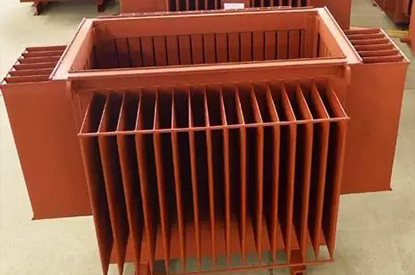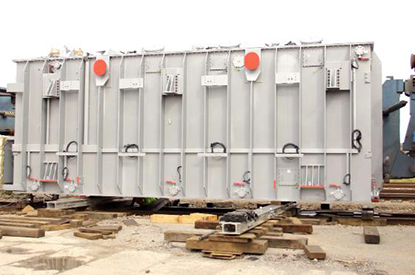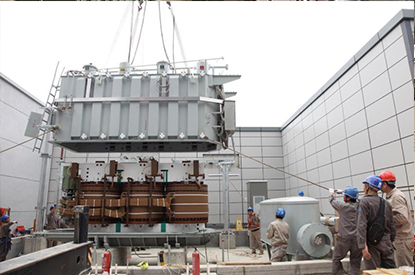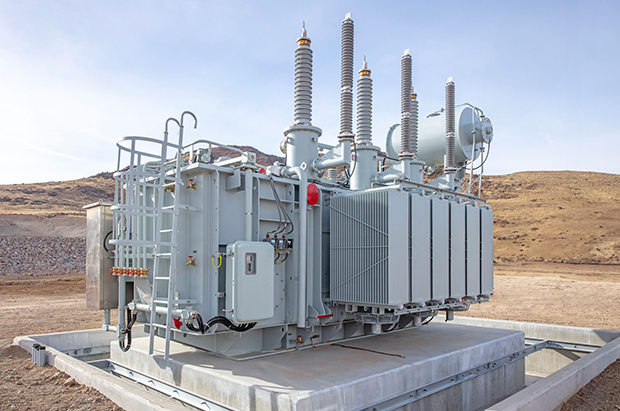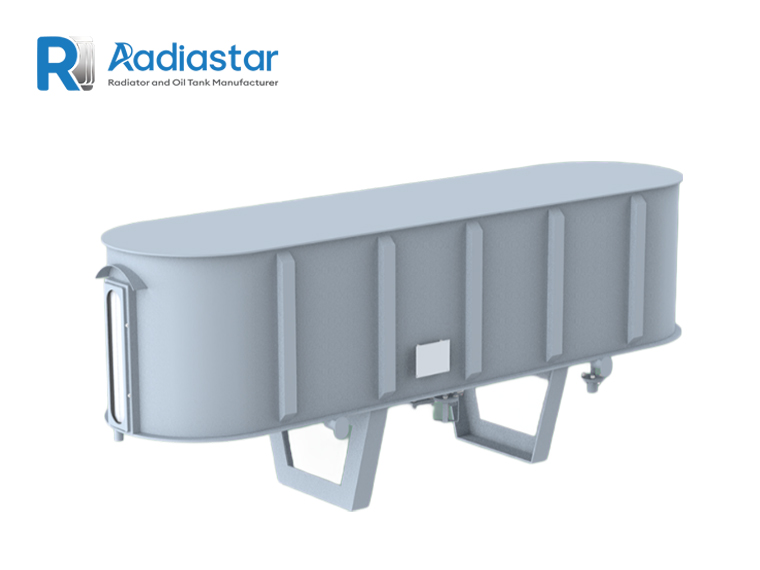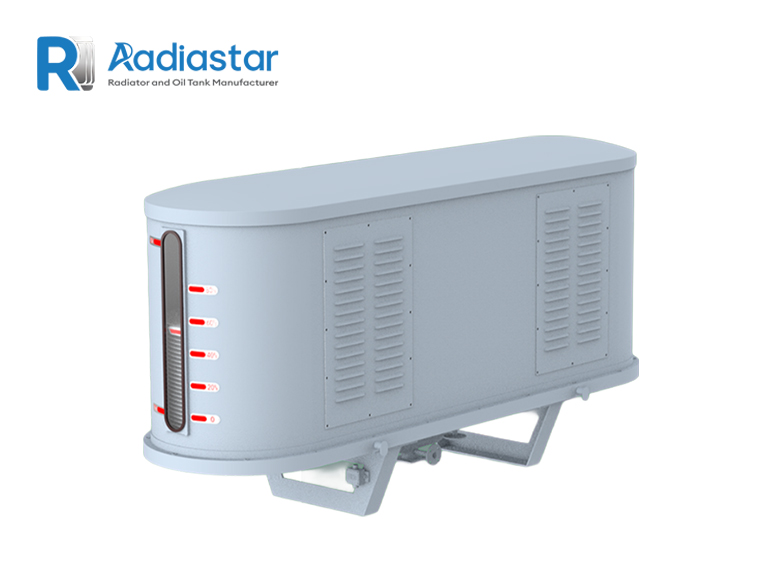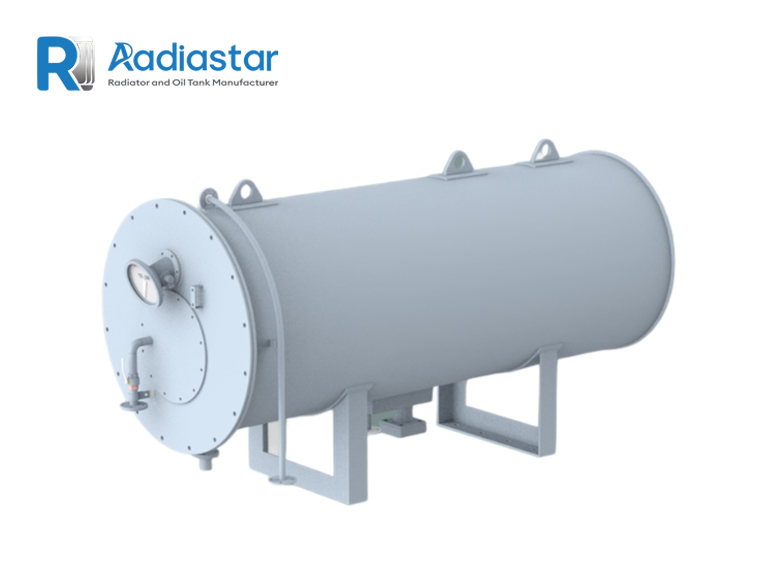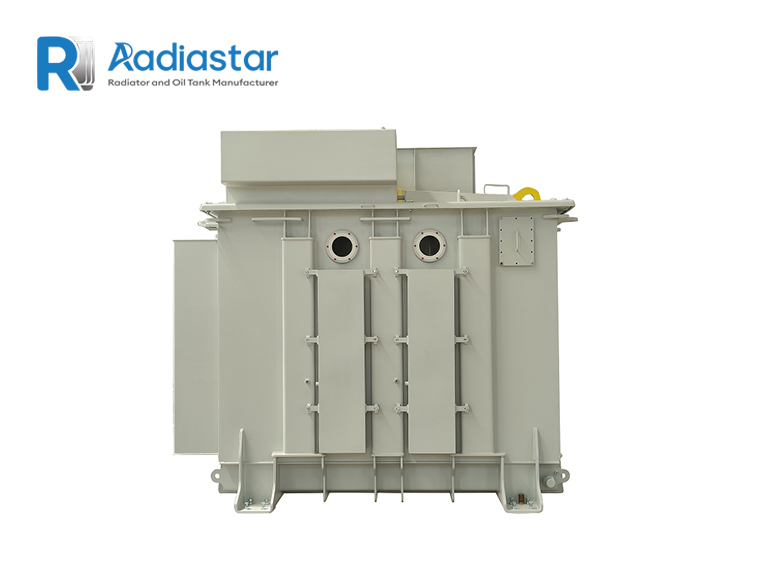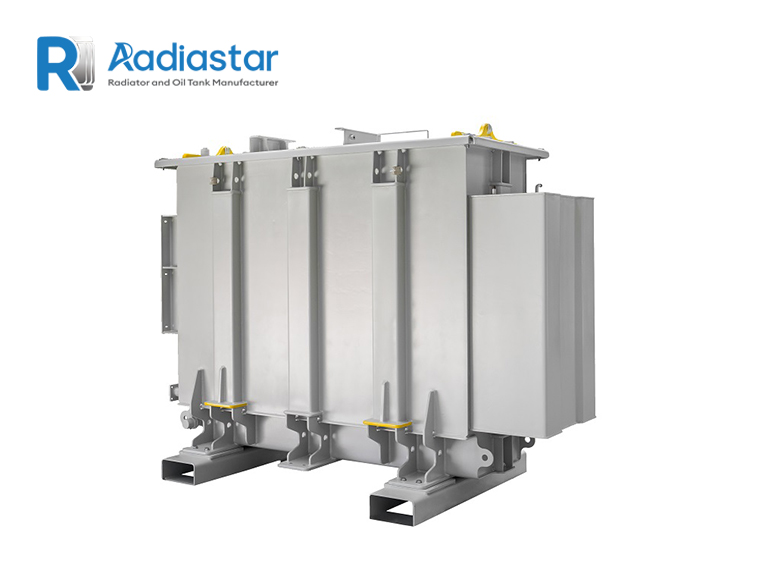

Diaphragm Type Conservator Tank is an oil preservation device used with oil-immersed power and distribution transformers. It accommodates the thermal expansion and contraction of transformer oil while separating the transformer oil from atmospheric air through a flexible diaphragm.
By reducing direct contact between transformer oil and moisture and oxygen, a diaphragm conservator helps improve oil preservation and supports the reliable long-term operation of oil-immersed transformers.
We manufacture Diaphragm Type Conservator Tanks in customized capacities, dimensions, materials, connection arrangements, and accessories according to transformer specifications and customer drawings.
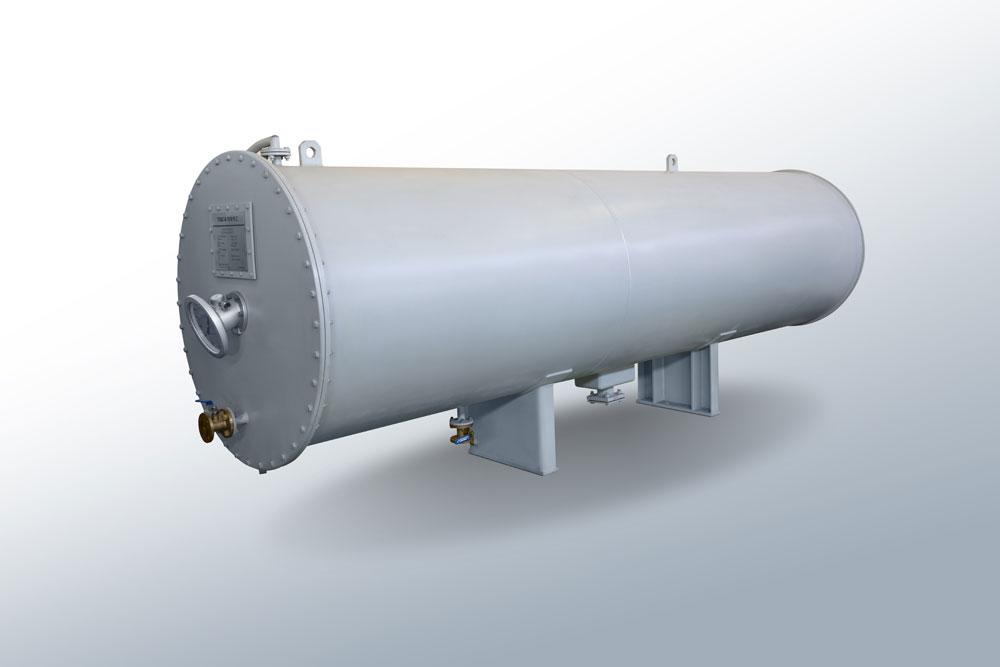
A Diaphragm Type Conservator Tank, also known as a Diaphragm Conservator or Transformer Diaphragm Conservator, is installed above the main tank of an oil-immersed transformer.
The conservator provides additional space for transformer oil to expand and contract as the oil temperature changes.
Unlike a conventional open conservator, a diaphragm-type design incorporates a flexible diaphragm between the transformer oil and the air space.
When the transformer oil expands:
Oil temperature increases → Oil volume increases → Diaphragm moves upward
When the transformer oil contracts:
Oil temperature decreases → Oil volume decreases → Diaphragm moves downward
This flexible movement accommodates changes in oil volume while helping limit direct exposure of the transformer oil to atmospheric moisture and oxygen.
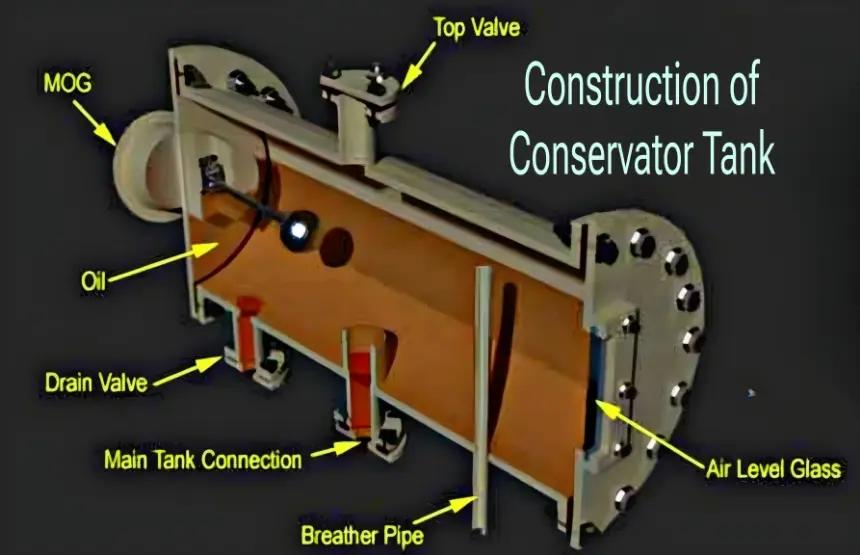
The diaphragm is the key component of the system.
The conservator tank is connected to the transformer main tank through an oil connection pipe. As the transformer operates under different load and ambient temperature conditions, the transformer oil temperature changes.
The resulting change in oil volume causes the diaphragm to move.
When the transformer operates at a higher temperature, the oil expands and enters the conservator. The diaphragm moves accordingly to accommodate the increased oil volume.
When the transformer cools, the oil contracts and flows back toward the main tank. The diaphragm moves in the opposite direction.
This process allows the transformer oil level to change without requiring continuous direct contact between the oil and atmospheric air.
The main difference is the method used to manage contact between transformer oil and atmospheric air.
| Feature | Conventional Conservator | Diaphragm Type Conservator |
|---|---|---|
| Oil expansion compensation | Yes | Yes |
| Flexible diaphragm | No | Yes |
| Oil-air separation | Limited | Improved |
| Moisture protection | Standard | Improved |
| Oil oxidation protection | Standard | Improved |
| Oil preservation | Standard | Enhanced |
| Maintenance requirements | Standard | Requires diaphragm inspection |
| Application | General transformers | Oil-preservation transformer systems |
For projects where transformer oil preservation is an important consideration, a Diaphragm Type Conservator Tank can provide an additional barrier between the oil and the surrounding atmosphere.
The actual dimensions and capacity should be designed according to the transformer oil volume, thermal expansion range, transformer rating, and applicable standards.
| Parameter | Typical Specification |
|---|---|
| Product | Diaphragm Type Conservator Tank |
| Application | Oil-Immersed Transformers |
| Conservator Type | Diaphragm Type |
| Tank Material | Carbon Steel / Mild Steel |
| Diaphragm Material | Transformer Oil-Compatible Elastomer |
| Typical Capacity | 50–5,000 L+ |
| Steel Thickness | 3–8 mm, customizable |
| Tank Shape | Cylindrical / Customized |
| Installation | Above Transformer Main Tank |
| Oil Connection | Customized |
| Flange Size | According to transformer design |
| Oil Filling Connection | Available |
| Drain Connection | Available |
| Oil Level Indicator | Optional |
| Magnetic Oil Level Gauge | Optional |
| Air Connection | Available according to design |
| Mounting Brackets | Customized |
| Lifting Lugs | Optional |
| Surface Treatment | Shot Blasting + Protective Coating |
| External Painting | Epoxy Primer + Finish Coat |
| Leakage Test | Available |
| Pressure Test | According to design requirement |
| Transformer Rating | Customized |
| Voltage Class | Customized |
| Standards | IEC / IEEE / Customer Specification |
Note: Capacity, diaphragm dimensions, material, tank wall thickness, flange dimensions, and connection positions should be confirmed according to the transformer manufacturer’s drawings and technical requirements.
A complete diaphragm conservator system may include the following components.
The main tank is normally manufactured from welded carbon steel plates. The tank provides the required mechanical strength and oil storage volume.
The diaphragm separates transformer oil from atmospheric air and moves according to changes in oil volume.
The diaphragm material should have suitable:
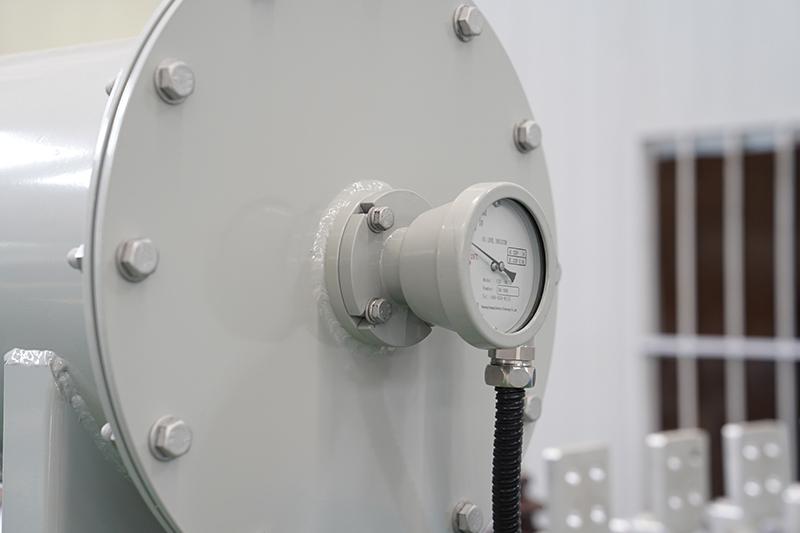
An oil level indicator provides a visual indication of the oil level inside the conservator.
A magnetic oil level gauge (MOG) can also be supplied when required.
The connection between the conservator and transformer main tank allows transformer oil to flow between the two vessels.
The connection dimensions and flange configuration can be manufactured according to the customer’s transformer drawing.
Heavy-duty brackets are provided for secure installation on the transformer structure.
The diaphragm is one of the most important components of the conservator.
Because it is continuously exposed to transformer oil and temperature variations, the material should be selected according to the transformer operating conditions.
Typical requirements include:
For different transformer applications, the diaphragm material and thickness can be customized according to the customer’s specification.
Buyers should consider several parameters before ordering a diaphragm conservator.
The total transformer oil quantity is one of the most important parameters.
The conservator should have enough effective expansion volume to accommodate changes in transformer oil volume during the expected operating temperature range.
The conservator should be matched to the transformer design rather than selected solely according to MVA.
Important transformer parameters include:
The expected oil temperature range directly affects the required expansion volume.
A transformer operating under large temperature variations may require a larger effective expansion volume.
Before manufacturing, the buyer should confirm:
This is particularly important when the conservator is being supplied as a replacement component.
For outdoor transformers, the tank and coating system should be designed for long-term exposure to:
Our Diaphragm Type Conservator Tanks can be manufactured according to customer drawings or transformer parameters.
Typical production includes:
Steel plates are cut according to approved manufacturing drawings.
The plates are formed into the required cylindrical or customized geometry.
The tank body, end plates, nozzles, brackets, and other components are welded according to the manufacturing procedure.
Welds are visually inspected and additional NDT can be provided according to project requirements.
The completed tank is tested to verify sealing performance.
The external surface is prepared before painting to improve coating adhesion and corrosion resistance.
A customized anti-corrosion coating system is applied according to the customer’s requirements.
The diaphragm, oil level indicator, flanges, valves, brackets, and other accessories are installed.
Dimensions, accessories, coating, connections, and overall appearance are inspected before shipment.
Quality control can include:
Dimensional Inspection
Verifies tank dimensions, flange positions, nozzle locations, and mounting holes.
Welding Inspection
Ensures that the welded structure meets the required quality level.
Leakage Test
Checks the tank for possible oil or air leakage.
Coating Inspection
Checks coating thickness, surface quality, and corrosion protection.
Diaphragm Inspection
Checks diaphragm dimensions, appearance, flexibility, and compatibility with the specified transformer oil.
Diaphragm conservator tanks are suitable for various oil-immersed transformer applications, including:
They are particularly suitable for transformer designs where improved separation between transformer oil and atmospheric air is required.
The diaphragm reduces direct contact between transformer oil and atmospheric air.
Separating oil from atmospheric air can help reduce moisture ingress into the transformer oil.
Limiting contact with oxygen can help reduce oil oxidation compared with a conventional open conservator system.
The diaphragm moves according to changes in transformer oil volume.
The tank dimensions, capacity, connections, accessories, and diaphragm specifications can be customized.
With an appropriate surface treatment and coating system, the conservator can be designed for long-term outdoor transformer applications.
Depending on project requirements, we can supply:
We provide customized Diaphragm Type Conservator Tanks for transformer manufacturers, EPC contractors, electrical distributors, and power equipment companies.
Our production capabilities include:
For replacement projects, customers can provide an existing conservator drawing, photographs, dimensions, or transformer nameplate information. Our engineers can use these details to prepare a suitable design.
To select or manufacture the correct Diaphragm Type Conservator Tank, please provide:
If you have a transformer drawing or existing conservator tank drawing, send it to us for a customized quotation and technical evaluation.
A diaphragm type conservator tank is a transformer oil reservoir equipped with a flexible diaphragm that accommodates transformer oil expansion and contraction while separating the oil from atmospheric air.
The diaphragm moves as the transformer oil volume changes and helps prevent direct contact between the transformer oil and atmospheric air.
Both designs use a flexible membrane to separate transformer oil from air. The exact construction, membrane configuration, terminology, and application can vary by transformer manufacturer and design.
Yes. Tank capacity, dimensions, steel thickness, flange dimensions, connection positions, diaphragm specifications, oil level gauge, coating system, and mounting arrangement can be customized.
They are mainly used with oil-immersed transformers where an oil-preservation system with separation between transformer oil and atmospheric air is required.
Looking for a reliable Diaphragm Type Conservator Tank manufacturer?
Send us your transformer technical specification or drawing. We can provide a customized solution based on your transformer capacity, oil volume, dimensions, connection requirements, and operating conditions.
Contact us for technical specifications, drawings, pricing, and OEM production.