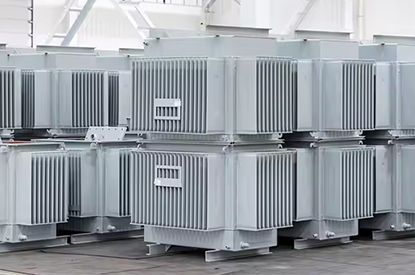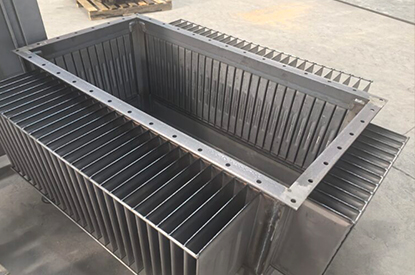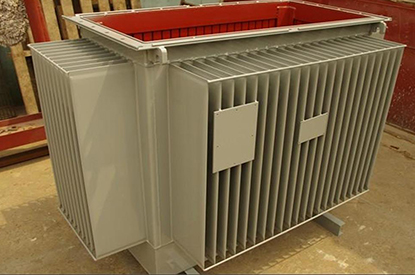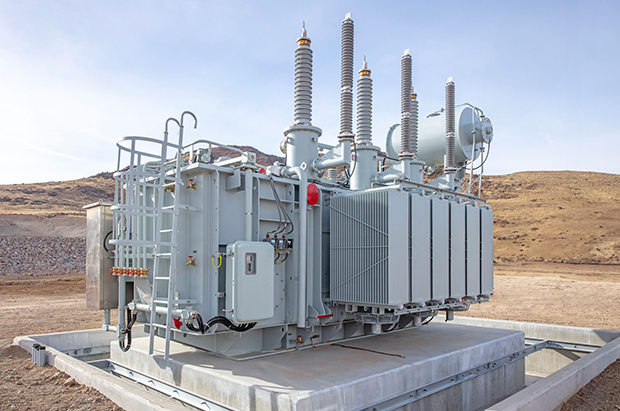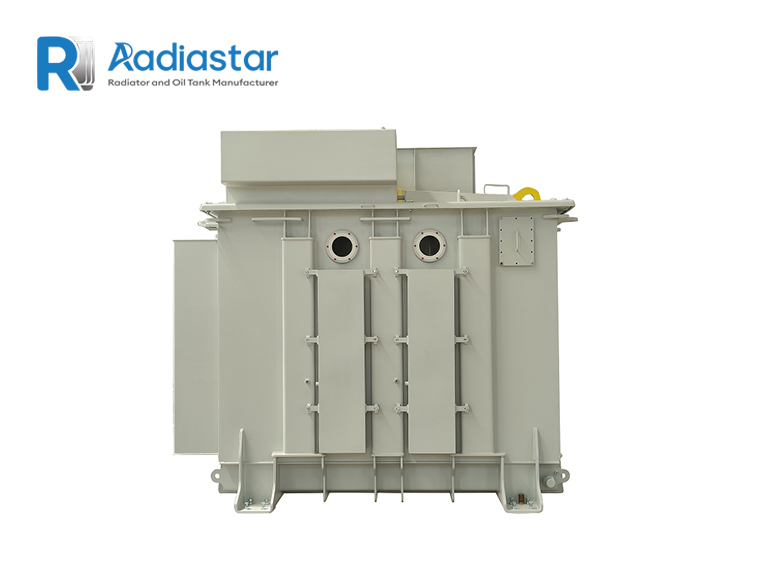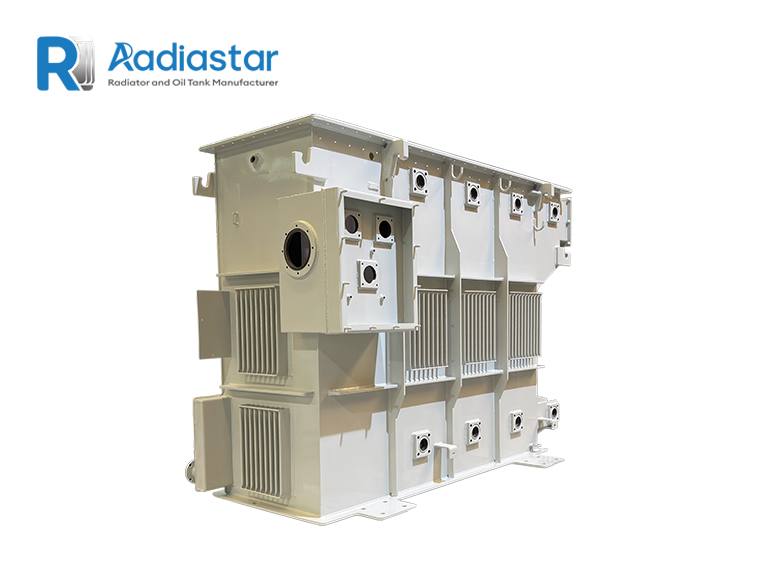

Transformer Conservator Tank is an essential component of oil-immersed power and distribution transformers. It provides additional oil volume to accommodate the thermal expansion and contraction of transformer oil during normal operation, helping maintain stable oil levels and prevent excessive pressure inside the main transformer tank.
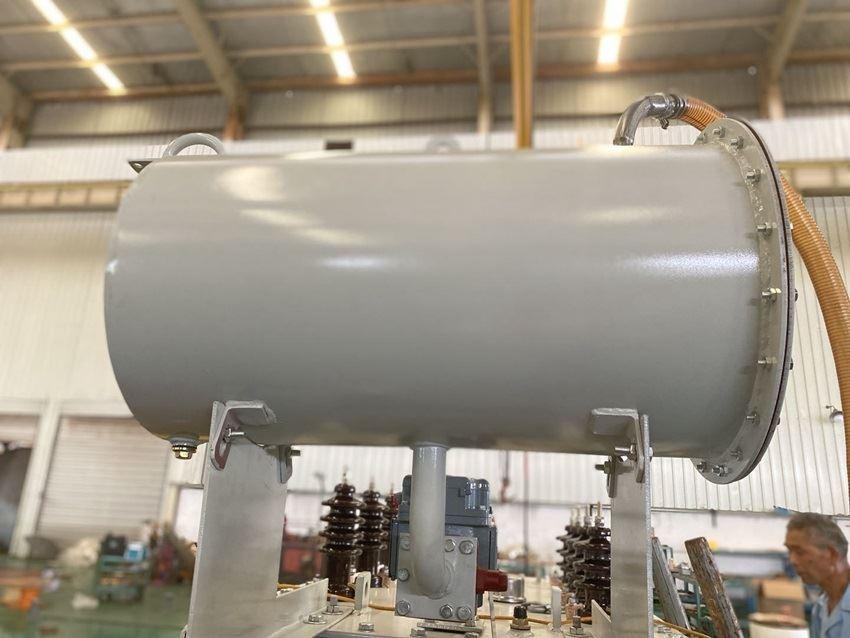
RADIASTAR supplies transformer conservator tanks for distribution transformers, power transformers, and customized high-voltage transformer applications. Conservator tanks can be manufactured in different capacities, dimensions, materials, and configurations according to transformer specifications and project requirements.
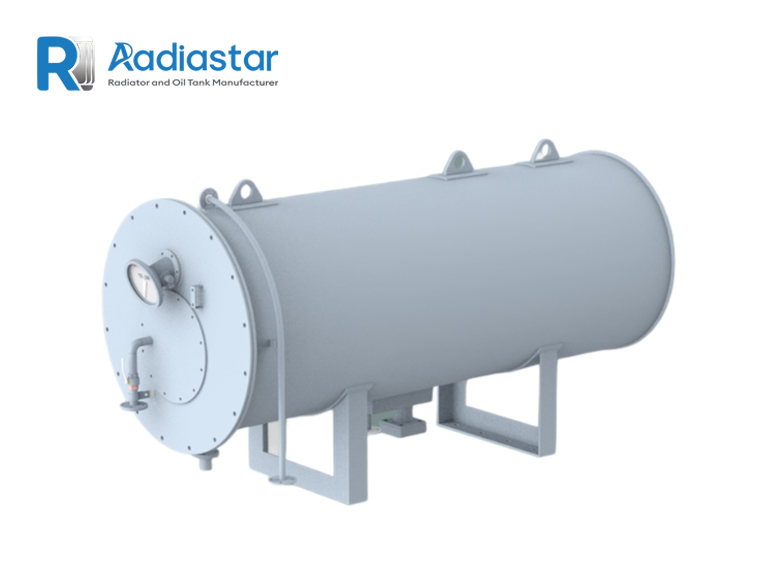
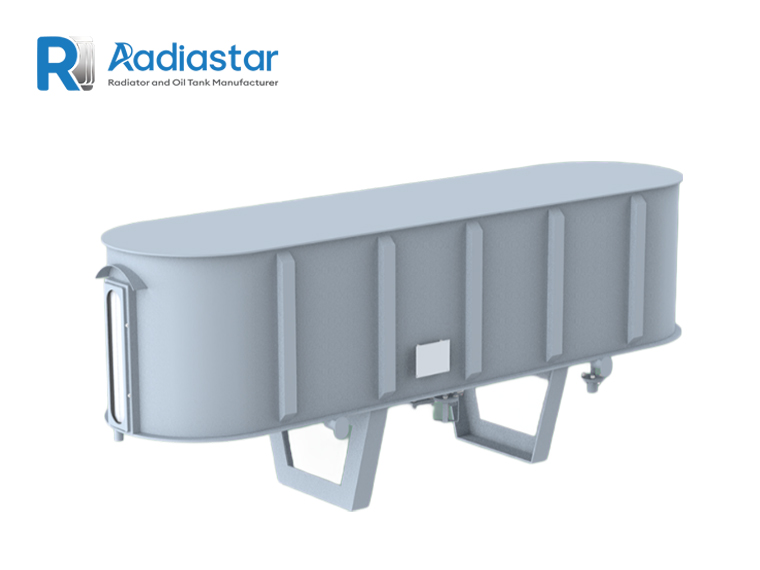
A Transformer Conservator Tank, also called a Transformer Oil Conservator or Transformer Expansion Tank, is a cylindrical or specially designed oil reservoir installed above the main tank of an oil-immersed transformer.
When transformer oil temperature increases during operation, the oil expands and flows into the conservator tank. When the transformer cools down, the oil contracts and returns to the main tank.
This arrangement helps:
For sealed designs, the conservator may also incorporate a bladder or diaphragm to separate transformer oil from atmospheric air.
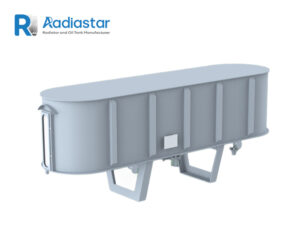
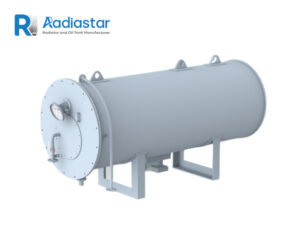
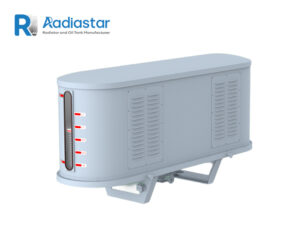
The conventional conservator tank is the most common design for oil-immersed transformers.
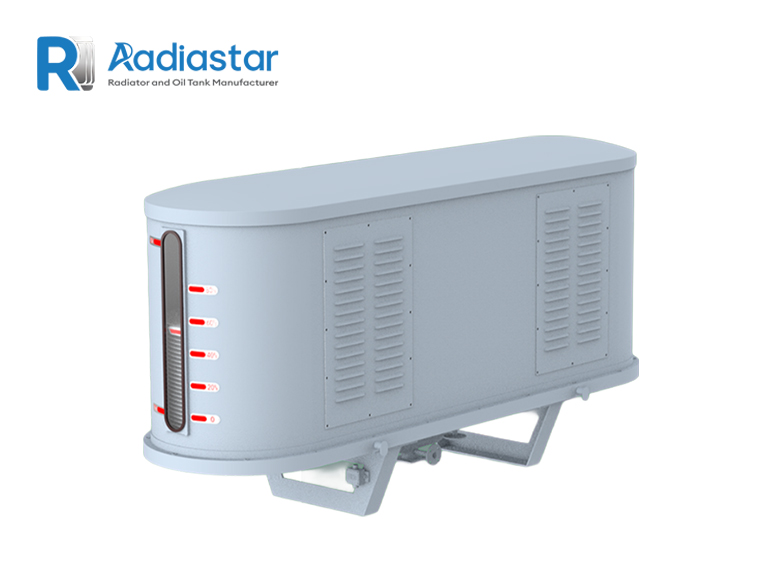
It consists of a steel oil reservoir connected to the transformer main tank through an oil pipe. The tank normally includes an oil level indicator, filling connection, drain connection, and other required fittings.
Common applications:
A Bladder Type Conservator Tank uses a flexible rubber bladder inside the conservator.
The bladder separates transformer oil from the surrounding air, reducing direct contact between transformer oil and atmospheric moisture and oxygen.
This design is particularly suitable for transformers where improved oil protection and reduced oxidation are required.
A Diaphragm Type Conservator Tank uses a flexible diaphragm to separate the transformer oil from the atmosphere.
The diaphragm moves according to changes in oil volume caused by temperature variation.
It is commonly used in sealed or oil-preservation transformer systems.
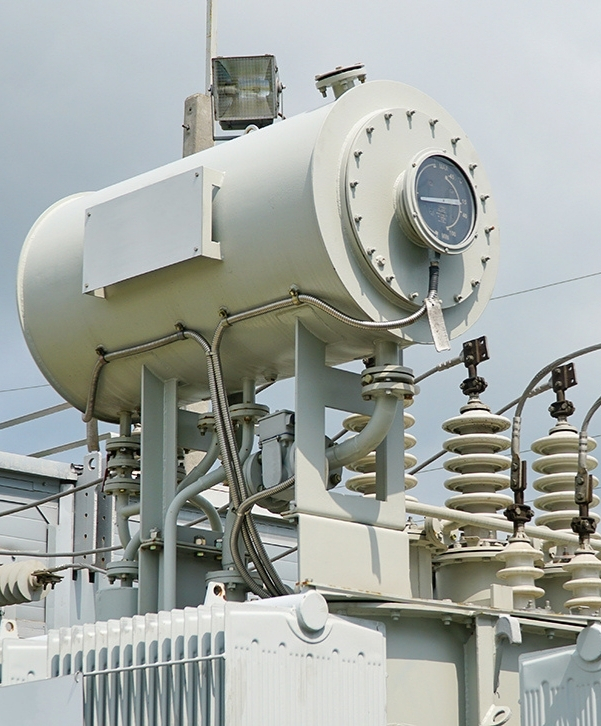
The exact dimensions and capacity should be selected according to the transformer rating, oil volume, temperature range, and applicable design standard.
| Parameter | Typical Specification |
|---|---|
| Product | Transformer Conservator Tank |
| Application | Oil-Immersed Transformer |
| Type | Conventional / Bladder / Diaphragm |
| Installation | Above Transformer Main Tank |
| Material | Carbon Steel / Mild Steel |
| Steel Thickness | 3–8 mm, customizable |
| Typical Capacity | 50–5,000 L+ |
| Design | Cylindrical / Customized |
| Surface Treatment | Shot Blasting + Anti-Corrosion Coating |
| Internal Treatment | Transformer Oil Compatible Coating, if required |
| External Coating | Epoxy Primer + Polyurethane Finish |
| Oil Temperature | Typically according to transformer design |
| Design Pressure | According to transformer system requirements |
| Leakage Test | Hydrostatic / Air Pressure Test |
| Oil Level Indicator | Optional / Included according to design |
| Oil Filling Connection | Available |
| Oil Drain Connection | Available |
| Air Breather Connection | Available |
| Buchholz Relay Connection | Available |
| Oil Level Gauge | Optional |
| Magnetic Oil Level Gauge | Optional |
| Bladder | Optional |
| Diaphragm | Optional |
| Mounting Brackets | Customized |
| Connection Flanges | Customized |
| Transformer Rating | Customized |
| Voltage Class | Customized |
| Standards | IEC / IEEE / Customer Specification |
Note: The final conservator capacity, wall thickness, nozzle dimensions, flange size, coating system, and accessories should be confirmed according to the transformer design and customer technical specification.
Selecting a conservator tank only according to transformer MVA rating is not sufficient. Several technical parameters should be considered.
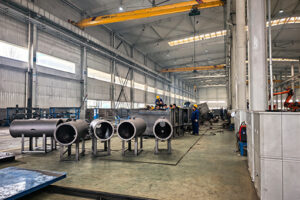
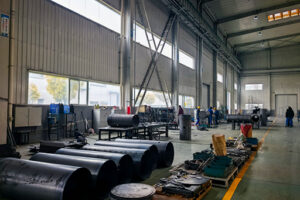
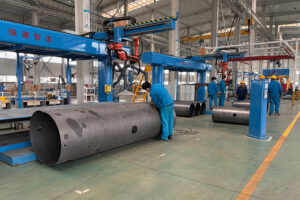
The first consideration is the total oil volume of the transformer.
The conservator must have sufficient reserve volume to accommodate the expected thermal expansion and contraction of the transformer oil.
A larger power transformer generally requires a larger conservator.
The expected minimum and maximum oil temperatures affect the required expansion volume.
The greater the temperature variation, the greater the oil volume change that needs to be accommodated.
Conservator tank dimensions are normally matched to the transformer:
Therefore, a 50 kVA distribution transformer and a 50 MVA power transformer should not use the same conservator design simply because the nominal voltage may be similar.
The buyer should determine whether the project requires:
Conventional Conservator
Suitable for standard oil-immersed transformer applications.
Bladder Conservator
Suitable when transformer oil needs to be isolated from atmospheric moisture and oxygen.
Diaphragm Conservator
Suitable for oil-preservation systems using a flexible diaphragm.
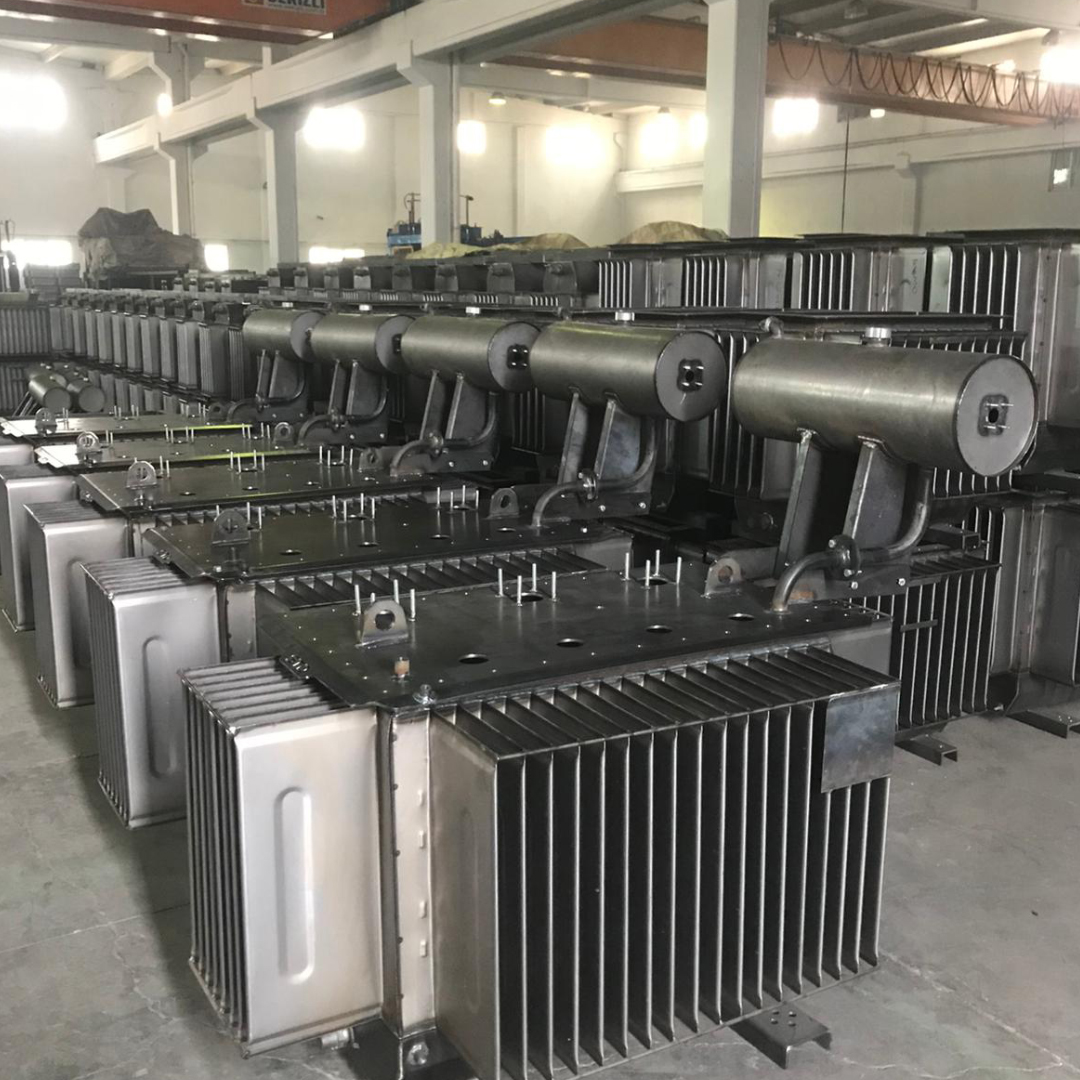
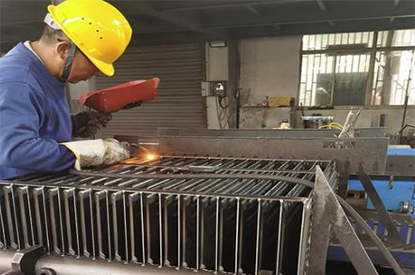
The conservator tank is fabricated from high-quality carbon steel plates designed for mechanical strength and long-term outdoor operation.
The external surface can be treated by shot blasting followed by a multi-layer protective coating system.
Typical coating systems include:
Shot Blasting → Primer → Intermediate Coating → Finish Coating
The coating system can be customized according to the installation environment.
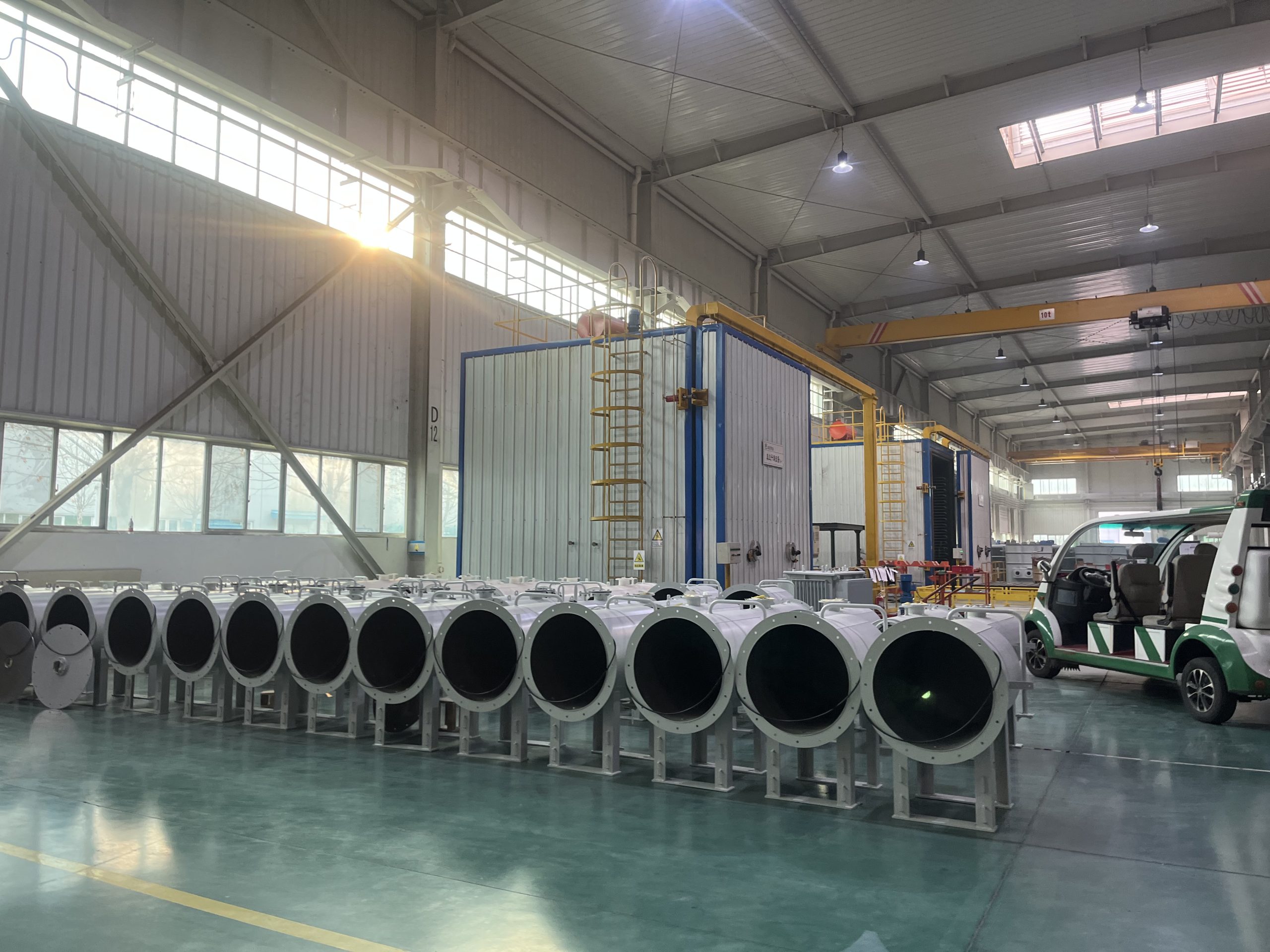
Conservator tanks can be manufactured according to customer drawings or transformer technical parameters.
We can customize:
Depending on the transformer design, the conservator can be supplied with:
A typical manufacturing process includes:
Steel Plate Cutting
↓
Rolling / Forming
↓
Welding
↓
Dimensional Inspection
↓
Weld Inspection
↓
Leakage / Pressure Testing
↓
Surface Treatment
↓
Painting
↓
Accessory Installation
↓
Final Inspection
↓
Packing and Shipment
Each conservator tank can be inspected according to the agreed technical specification before shipment.
Quality testing is important because the conservator operates continuously with transformer oil and may be exposed to outdoor environmental conditions.
Typical inspections include:
Checking:
Weld seams are inspected to ensure structural integrity and prevent oil leakage.
Depending on project requirements, NDT methods such as visual inspection, penetrant testing, or other applicable inspection methods can be provided.
The tank is tested to verify that there are no oil or air leakage points.
The coating system can be inspected for:
Transformer conservator tanks are widely used with:
They can be supplied for transformers ranging from small distribution units to large power transformer applications.
The terms Transformer Conservator Tank and Transformer Expansion Tank are sometimes used interchangeably.
However, for international transformer procurement, Transformer Conservator Tank is the preferred primary product name.
Recommended keyword structure:
| Keyword | Recommended Use |
|---|---|
| Transformer Conservator Tank | Primary keyword |
| Transformer Oil Conservator | Secondary keyword |
| Transformer Conservator | Secondary keyword |
| Oil Conservator Tank | Secondary keyword |
| Transformer Expansion Tank | Supporting keyword |
| Conservator Tank for Transformer | Long-tail keyword |
| Power Transformer Conservator Tank | Long-tail keyword |
| Distribution Transformer Conservator Tank | Long-tail keyword |
| Bladder Type Conservator Tank | Product type |
| Diaphragm Type Conservator Tank | Product type |
We provide customized Transformer Conservator Tanks for oil-immersed transformer manufacturers, EPC contractors, distributors, and electrical equipment suppliers.
Our manufacturing capabilities include:
Whether you need a conservator for a distribution transformer, 33kV transformer, 66kV transformer, 110kV transformer, or higher-voltage power transformer, the tank can be designed according to your transformer parameters.
To receive an accurate quotation, please provide the following information:
Send us your transformer drawing or technical specification. Our engineers can recommend a suitable conservator tank configuration and provide a customized quotation.