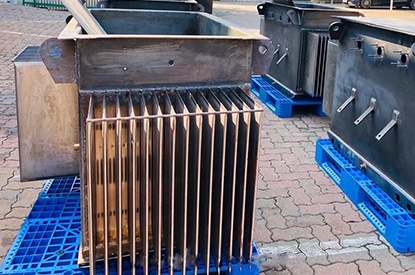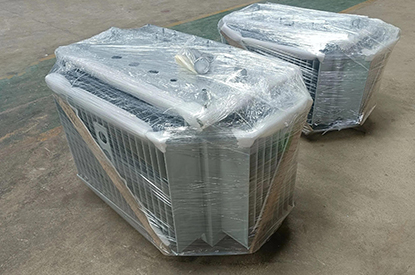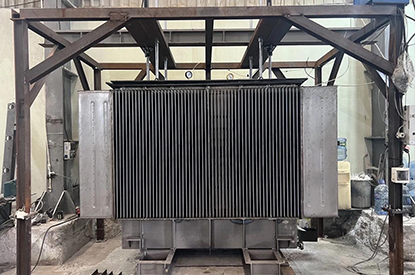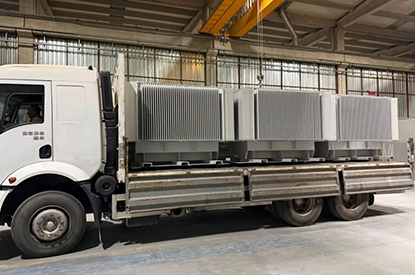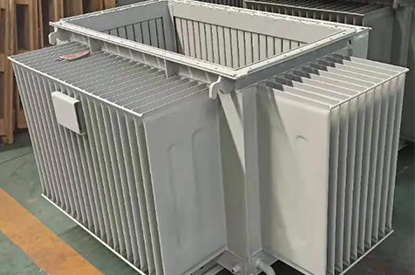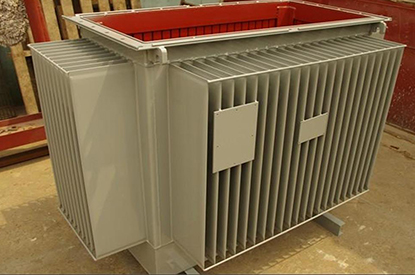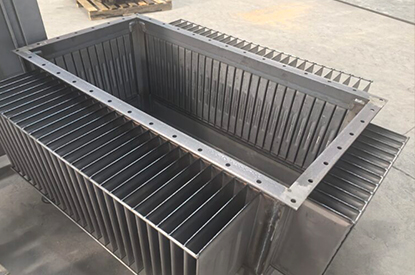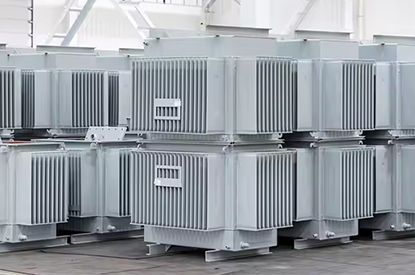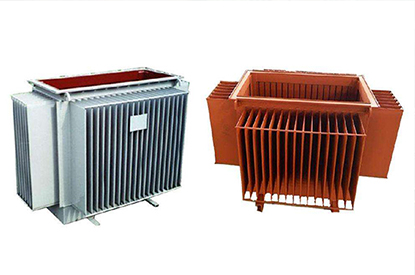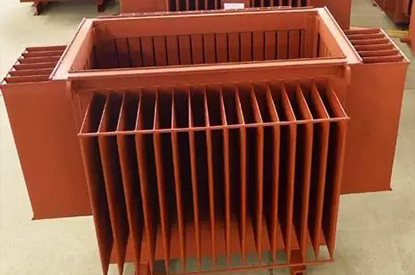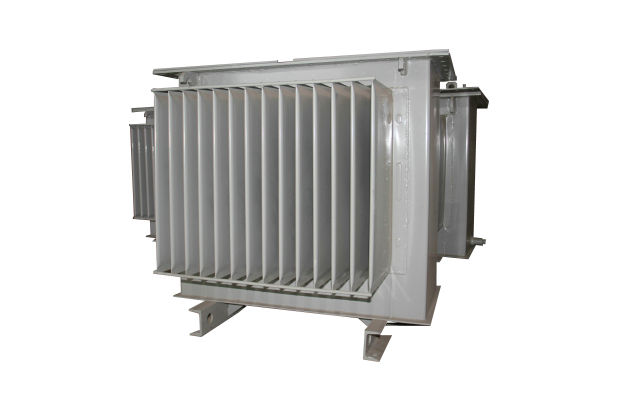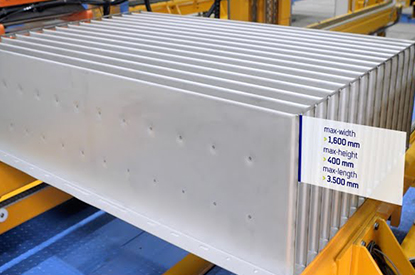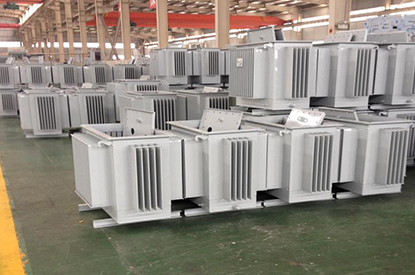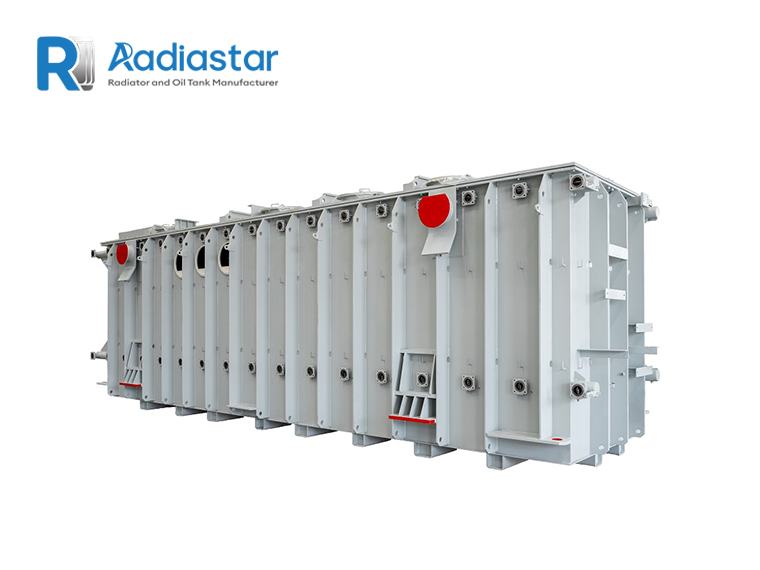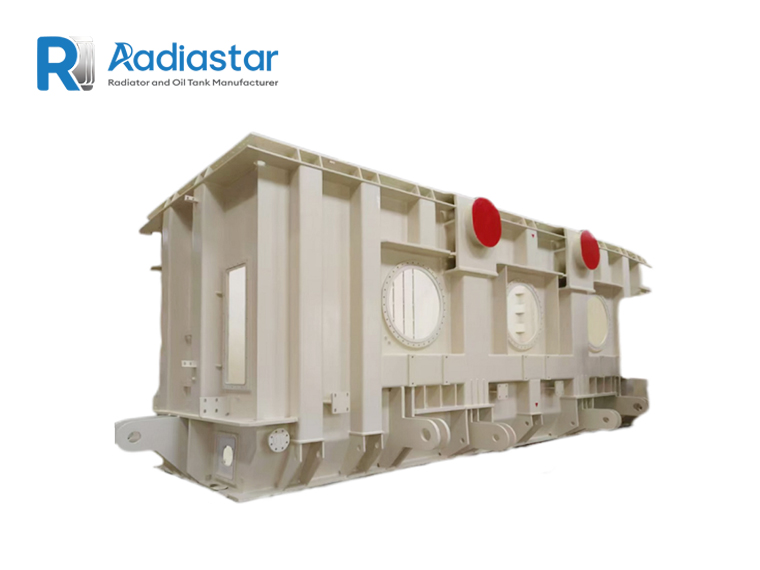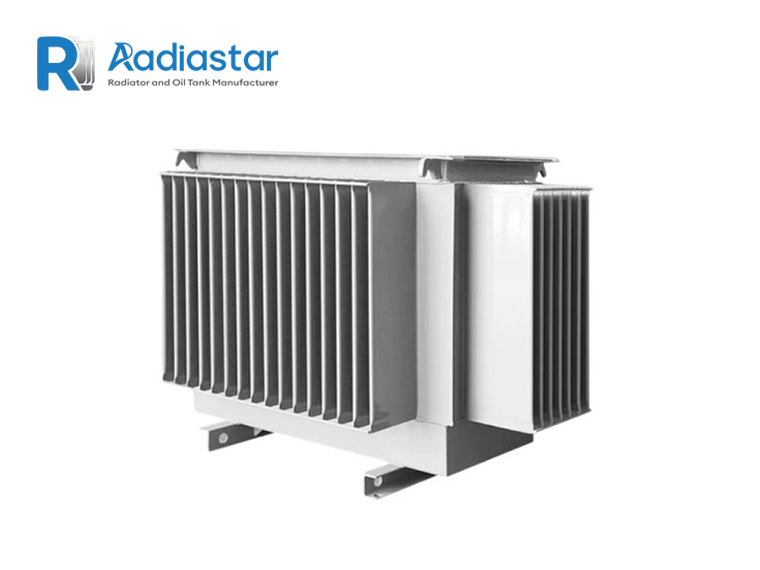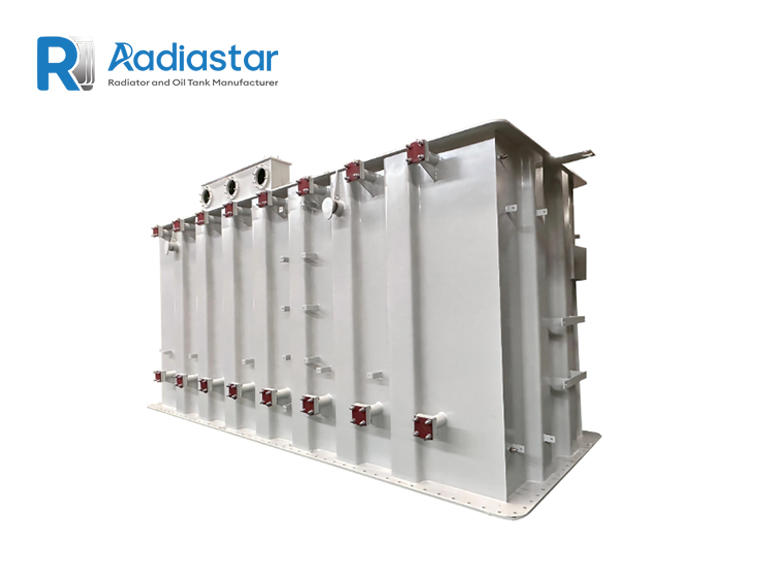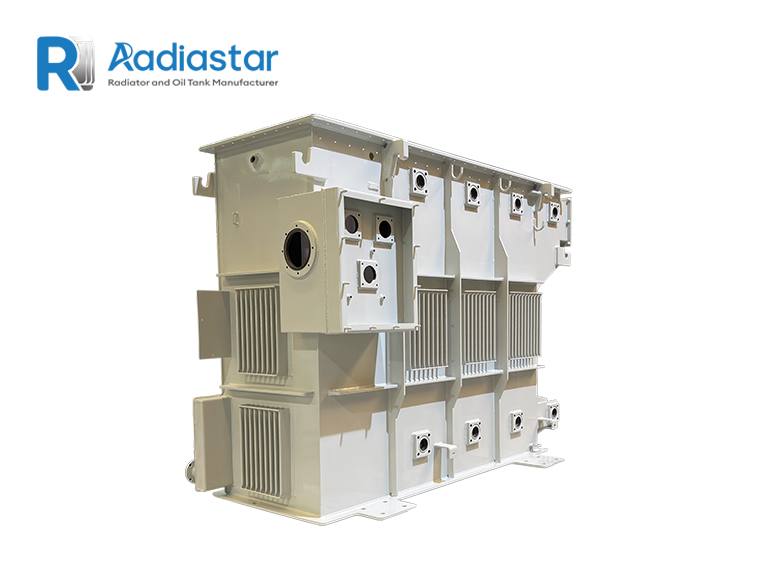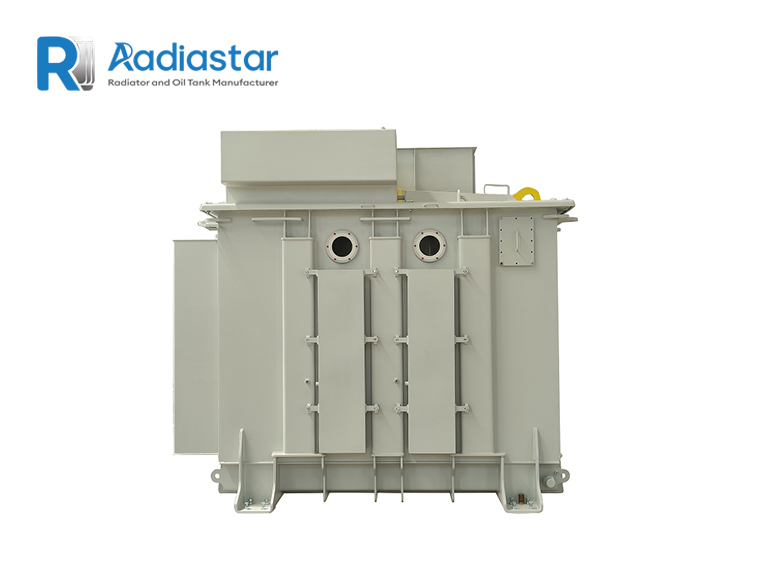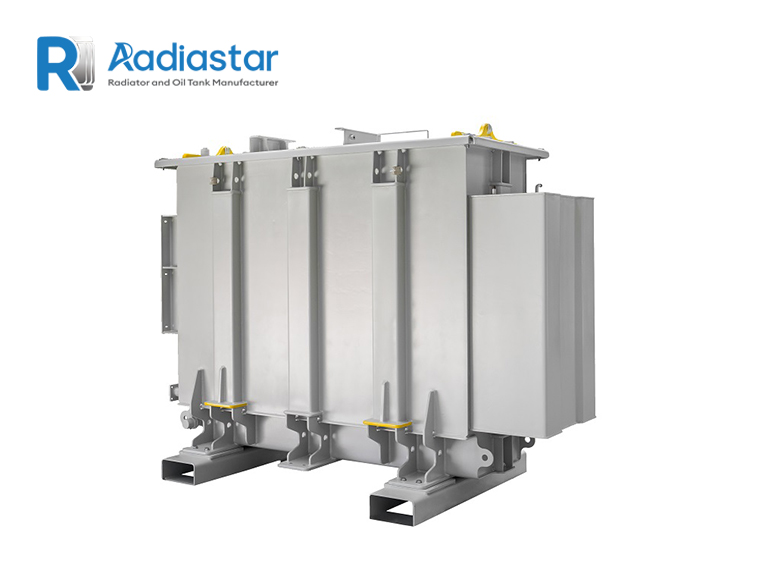

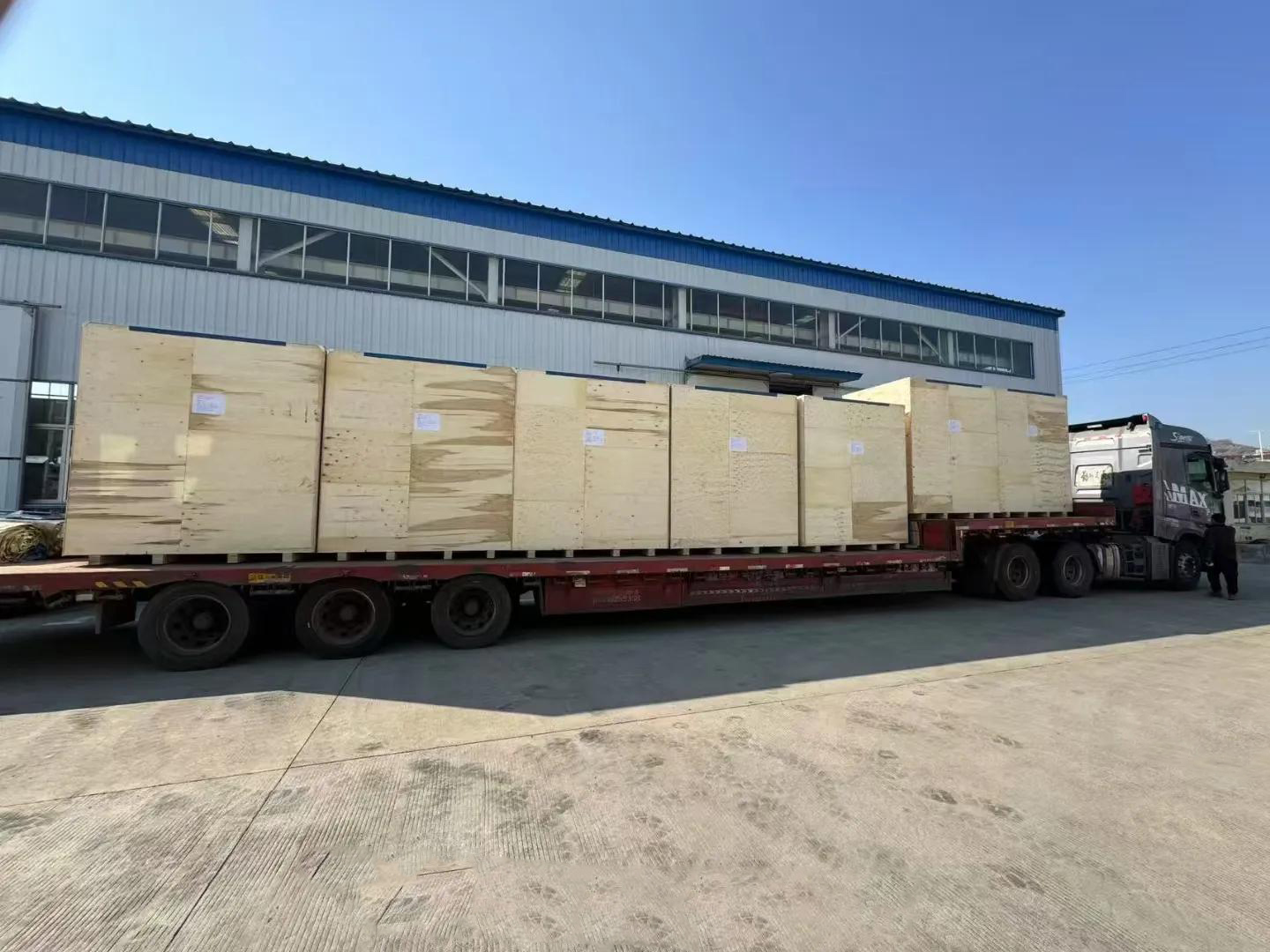
A transformer assembly factory in Turkey ordered a batch of PC-type detachable panel radiators for 6300 kVA oil-immersed power transformers.
The customer required a radiator system that could be easily installed and removed from the transformer tank, while providing sufficient cooling surface, reliable oil circulation and accurate dimensional compatibility with the transformer tank.
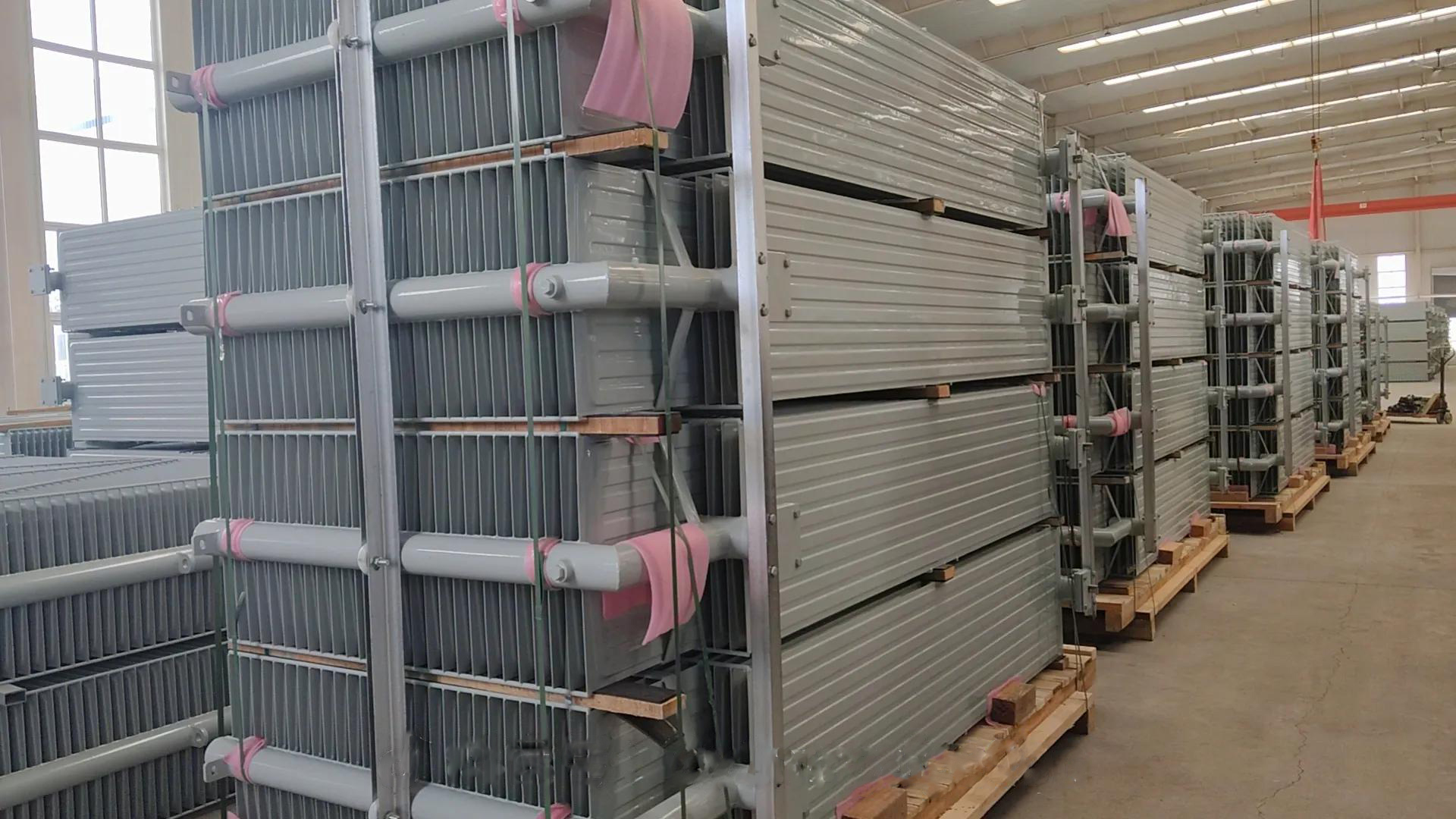
The radiator design was developed around the customer’s transformer configuration, including the radiator center distance, panel width, fin pitch, number of panels, header pipe connections and mounting flange dimensions.
The radiator is designed as a PC-type detachable structure, where the complete radiator assembly is connected to the transformer tank through flanges rather than being directly welded to the tank.
IEC 60076-22-2 covers removable radiators used with liquid-immersed transformers and includes requirements for dimensions, mechanical performance and routine testing.
The Turkish transformer manufacturer needed detachable radiators for a batch of 6300 kVA oil-immersed transformers.
The main purchasing requirements included:
For a transformer assembly factory, radiator interchangeability is particularly important because the radiator must match the tank flange, oil inlet/outlet position and installation space.
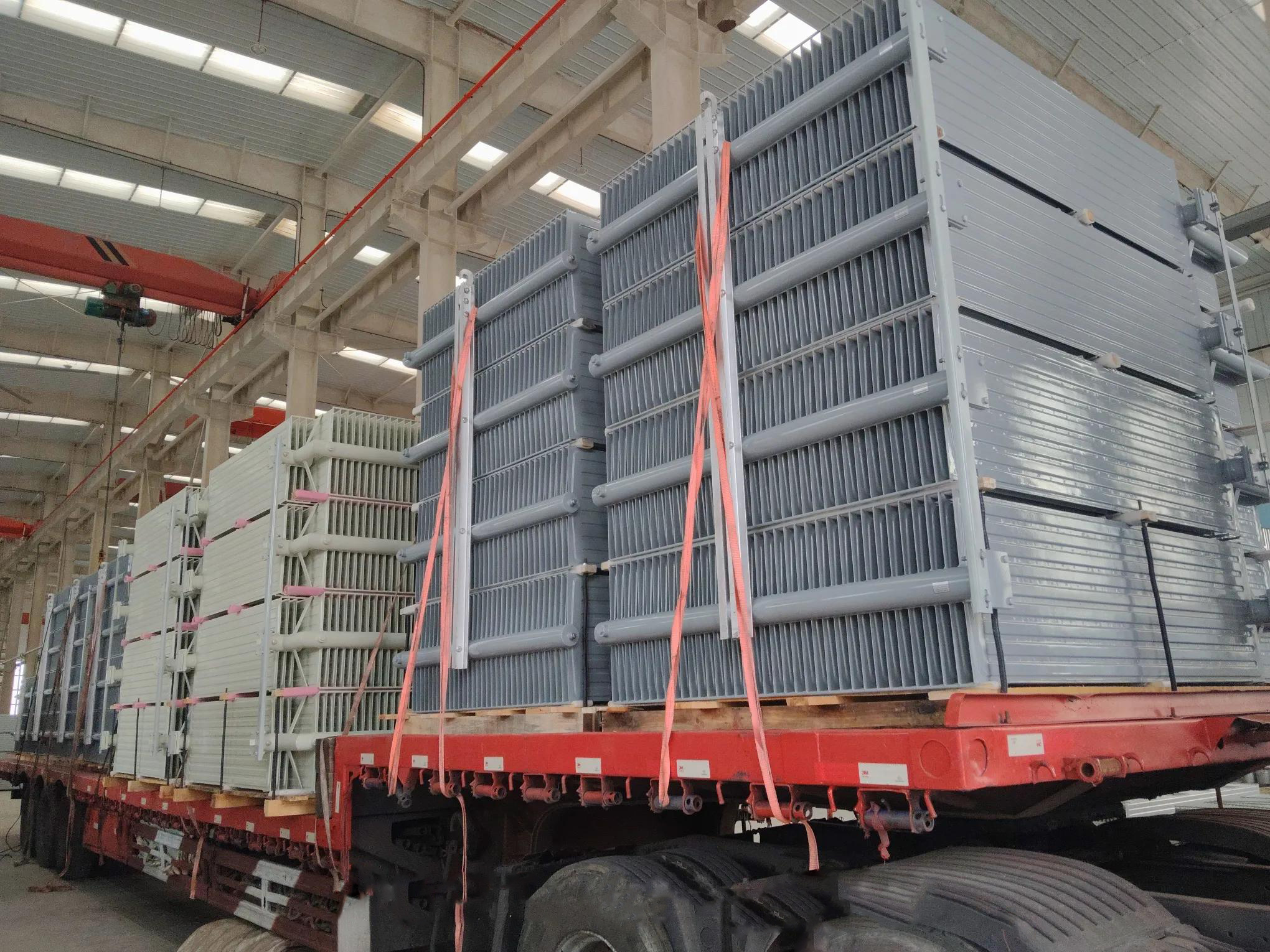
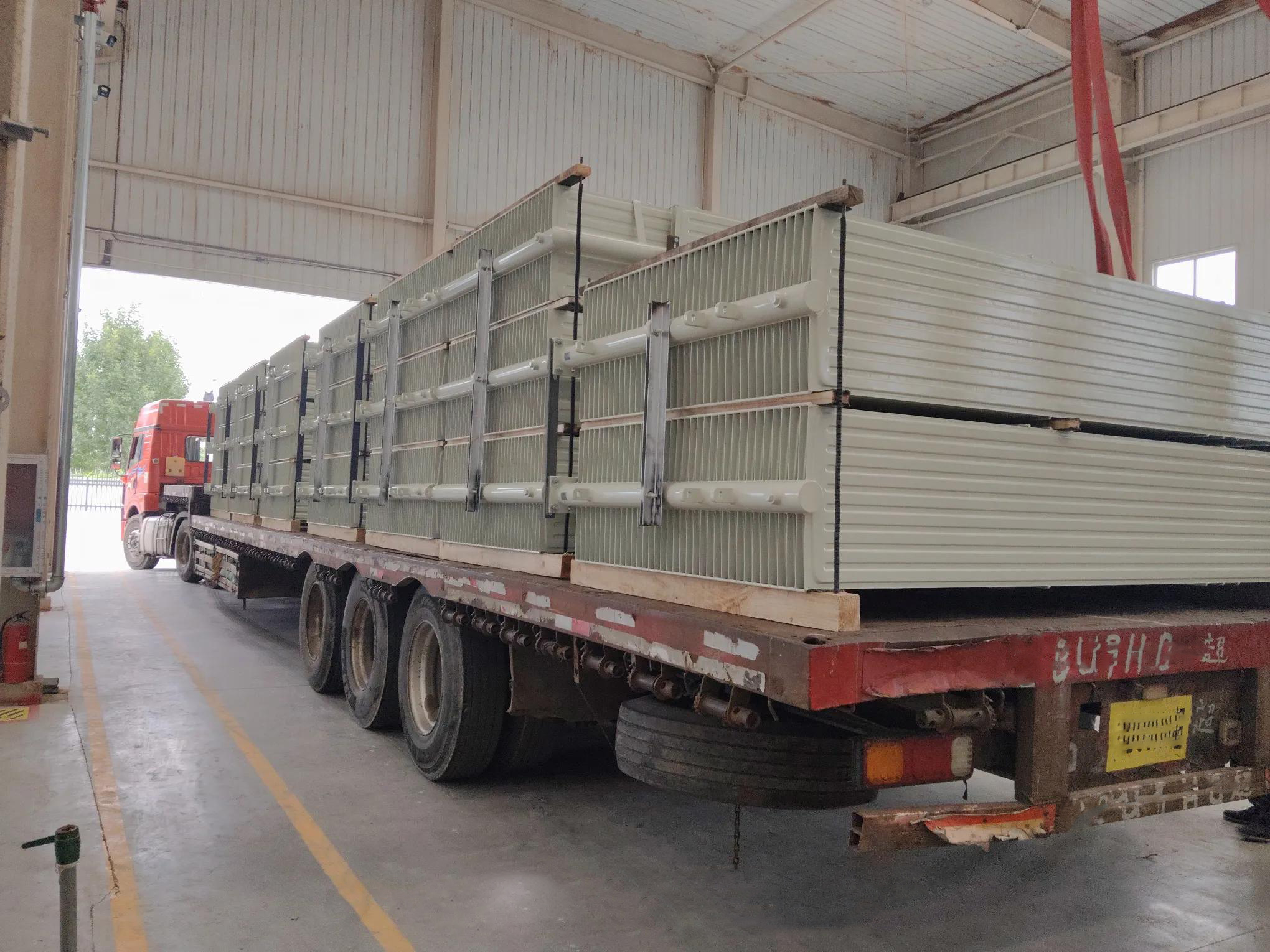
The following configuration is a reference project configuration based on commonly used PC-type panel radiator dimensions. Final dimensions should follow the customer’s approved GA drawing and thermal calculation.
| Parameter | Reference Specification |
|---|---|
| Application | 6300 kVA Oil-Immersed Transformer |
| Radiator Type | PC-Type Detachable Panel Radiator |
| Cooling Method | ONAN / ONAF, according to transformer design |
| Installation | Flange Mounted |
| Radiator Panel Width | 520 mm |
| Single Panel Thickness | 1.2 mm |
| Panel Pitch | 45 mm |
| Effective Oil Channel | Approx. 42 mm |
| Radiator Center Distance | 2,000 mm |
| Number of Panels | 20–30 panels, according to cooling requirement |
| Header Pipe | Carbon Steel |
| Header Pipe Diameter | Customized according to oil flow requirement |
| Upper/Lower Header | Oil inlet and outlet headers |
| Flange Connection | Customized to transformer tank |
| Panel Material | SPCC / equivalent cold-rolled steel |
| Header Material | Weldable carbon steel |
| Welding | Automatic / qualified welding process |
| Surface Treatment | Shot blasting + primer + finishing coat |
| Paint Thickness | Project specified |
| Oil Tightness | 100% leakage / tightness inspection |
| Dimensional Inspection | Required |
| Connection Position | According to approved drawing |
| Lifting Lugs | Provided |
| Drain / Vent Connection | Customized |
| Application Standard | IEC 60076-22-2 / project specification |
Commercial radiator manufacturers commonly use panel widths such as 480, 520 and 535 mm, fin pitches around 40–50 mm, and center distances from approximately 500 to 4,000 mm, depending on the radiator design.
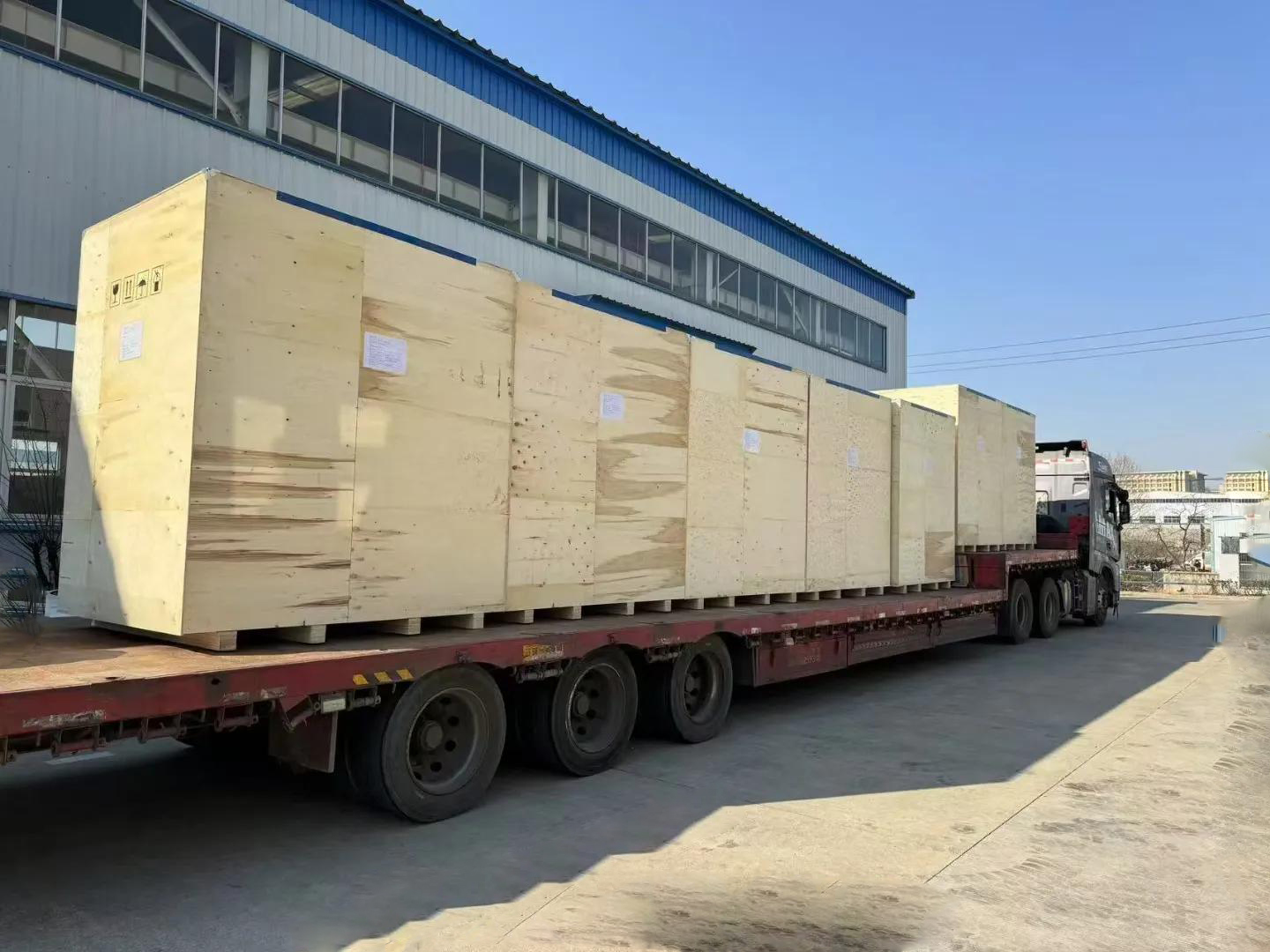
For transformer radiator procurement, the center distance is one of the most important dimensions.
The radiator center distance refers to the distance between the centers of the upper and lower oil headers.
For this reference project:
Center Distance: 2,000 mm
The center distance determines the overall radiator height and directly affects the available cooling surface.
Common commercial designs use center distances from approximately 500 mm to 4,000 mm, with customized dimensions available for larger transformers.
The panel width is the effective width of each radiator cooling section.
Reference panel width: 520 mm
A 520 mm-wide panel provides a relatively large heat-transfer surface while maintaining a standardized radiator structure.
For different transformer designs, 480 mm, 520 mm and 535 mm panel widths are also commonly available.
The radiator cooling panels are manufactured from formed steel sheets.
Reference steel thickness: 1.2 mm
IEC 60076-22-2 specifies a minimum thickness of 1.0 mm for radiator elements made from stamped steel sheets, while 1.2 mm can be specified when enhanced mechanical performance is required.
For large transformer radiator applications, the final material thickness should be selected according to the radiator center distance, mechanical strength, vacuum resistance and customer specification.
The panel pitch is the center-to-center distance between adjacent radiator panels.
Reference pitch: 45 mm
With a 45 mm pitch, the actual oil channel width is determined by the formed panel geometry and sheet thickness.
The pitch affects:
Unlike a fixed PG radiator, the PC-type radiator is connected to the transformer tank through flanges.
This structure provides several advantages for transformer manufacturers:
Easy Installation
The radiator can be installed after transportation of the transformer tank.
Easy Maintenance
Individual radiator assemblies can be removed without cutting the radiator from the tank.
Better Transportation Flexibility
The radiator can be shipped separately from the transformer tank, reducing the overall transportation envelope.
Replaceable Design
If required, the radiator can be removed and replaced during maintenance.
PC-type detachable radiators are typically flange-mounted, while PG-type radiators are generally directly welded to the transformer tank.
Each radiator panel consists of formed steel sheets creating internal oil channels.
Hot transformer oil enters the upper radiator header, flows through the radiator panels and transfers heat to the surrounding air.
The cooled oil then returns through the lower header into the transformer tank.
The radiator therefore works as part of the transformer’s natural or forced cooling system.
For a 6300 kVA transformer, the final number of radiator panels should not be determined by transformer capacity alone.
The engineering calculation should consider:
For transformer radiators, welding quality is directly related to service reliability.
The radiator manufacturing process includes controlled forming, positioning, welding and inspection of:
The completed radiator should undergo oil-tightness / leakage testing before shipment.
The purpose is to identify:
IEC 60076-22-2 includes tightness testing as part of the radiator testing requirements.
Because transformer radiators are commonly installed outdoors, corrosion protection is an important part of the procurement specification.
The radiator surface can be processed through:
Depending on the project environment, alternative treatments such as hot-dip galvanizing or galvanized + painted systems can also be specified.
Before delivery to the Turkish transformer assembly factory, the radiator assemblies are checked for:
The final inspection documents can include:
For transformer assembly manufacturers, a radiator is not simply a heat-dissipation accessory.
It must match the mechanical and thermal design of the complete transformer.
The PC-type detachable structure provides the Turkish customer with:
For a 6300 kVA transformer, radiator dimensions and panel quantity should be determined through the actual transformer thermal design rather than selecting a radiator only according to MVA rating.
When purchasing PC-type detachable radiators, transformer manufacturers should provide the following information:
| Required Data | Importance |
|---|---|
| Transformer Rating | 6300 kVA |
| Transformer Voltage | HV/LV rating |
| Cooling Method | ONAN / ONAF |
| Radiator Type | PC detachable |
| Panel Width | 480 / 520 / 535 mm or customized |
| Center Distance | Required |
| Panel Thickness | 1.0 / 1.2 mm or customized |
| Panel Pitch | Required |
| Number of Panels | Thermal calculation |
| Header Diameter | Oil-flow requirement |
| Flange Size | Tank matching |
| Flange Hole Pattern | Tank drawing |
| Oil Inlet/Outlet Position | Tank drawing |
| Surface Treatment | Paint / galvanized / customized |
| Testing | Tightness + dimensional inspection |
| Drawing | Approved GA drawing |
The customized PC-type detachable radiator was manufactured according to the customer’s transformer assembly requirements.
The project focused on dimensional accuracy, flange compatibility, radiator cooling surface, welding quality and oil-tightness, enabling the Turkish transformer manufacturer to integrate the radiator assemblies with its 6300 kVA oil-immersed transformer production.
The project also demonstrates an important principle in transformer radiator procurement:
Radiator selection should be based on thermal performance and mechanical compatibility, not transformer capacity alone.
For customized PC-type transformer radiators, the final radiator dimensions, panel quantity, center distance and connection arrangement should always be confirmed against the approved transformer GA drawing and thermal calculation.
A PC-type transformer radiator is a detachable panel radiator connected to an oil-immersed transformer tank through flanges. It can be removed independently for transportation, maintenance or replacement.
Radiator center distance is the distance between the centerlines of the upper and lower oil headers. It is one of the key dimensions used to define radiator size.
Common panel widths include approximately 480 mm, 520 mm and 535 mm, although customized widths can be manufactured according to the transformer design.
Common panel thicknesses include 1.0 mm and 1.2 mm. IEC 60076-22-2 specifies 1.0 mm as the minimum for stamped steel radiator elements, with 1.2 mm available where enhanced mechanical performance is required.
Yes. The center distance can be customized according to the transformer tank, cooling calculation and installation requirements.
No. The required radiator size depends on transformer losses, temperature rise, cooling method, ambient conditions, radiator surface area and oil circulation. The final design should therefore be based on the transformer thermal calculation and approved drawing.