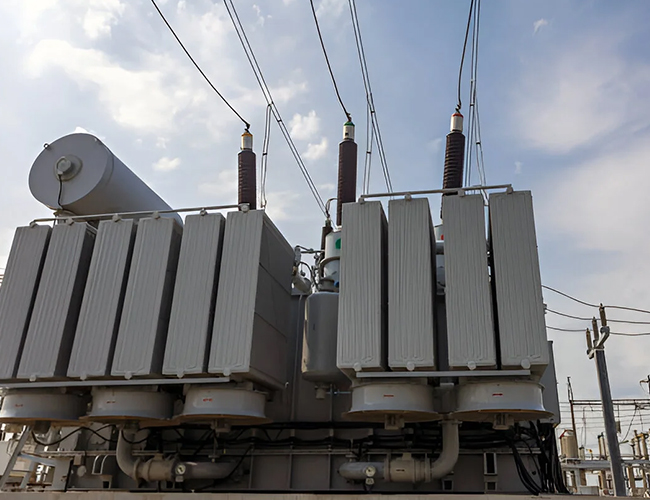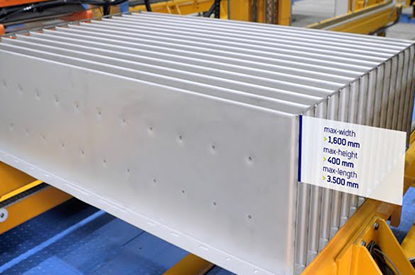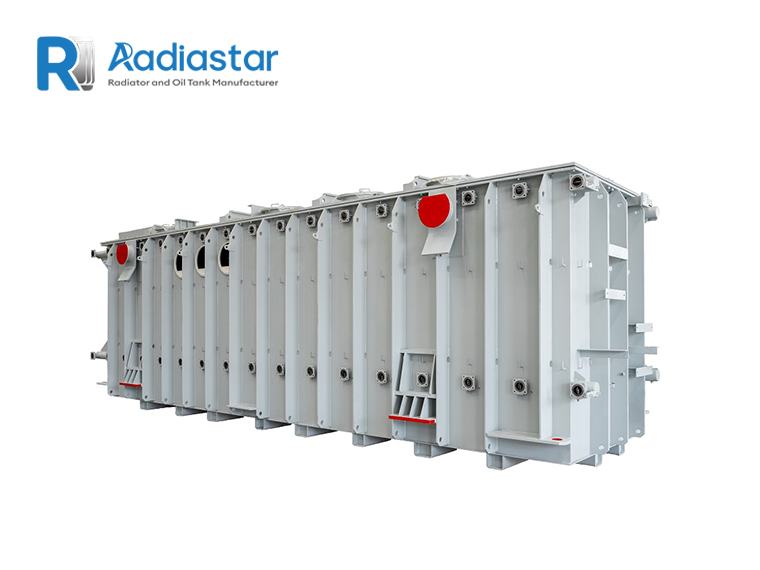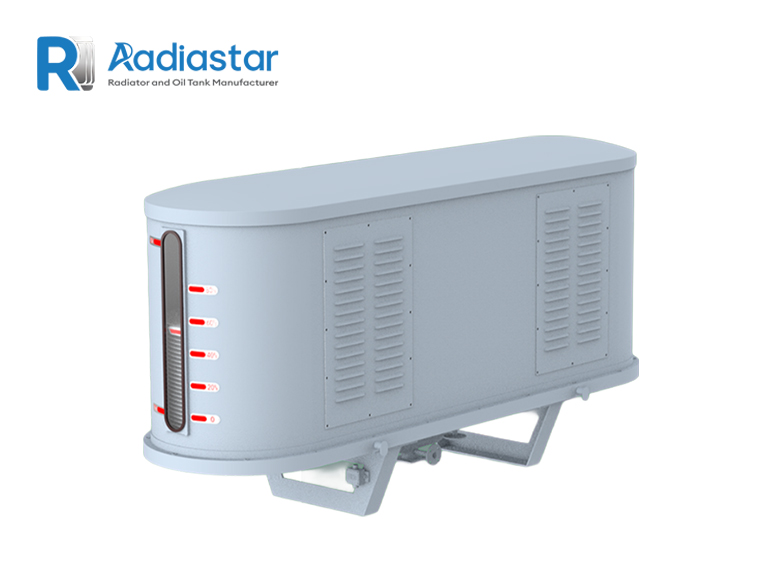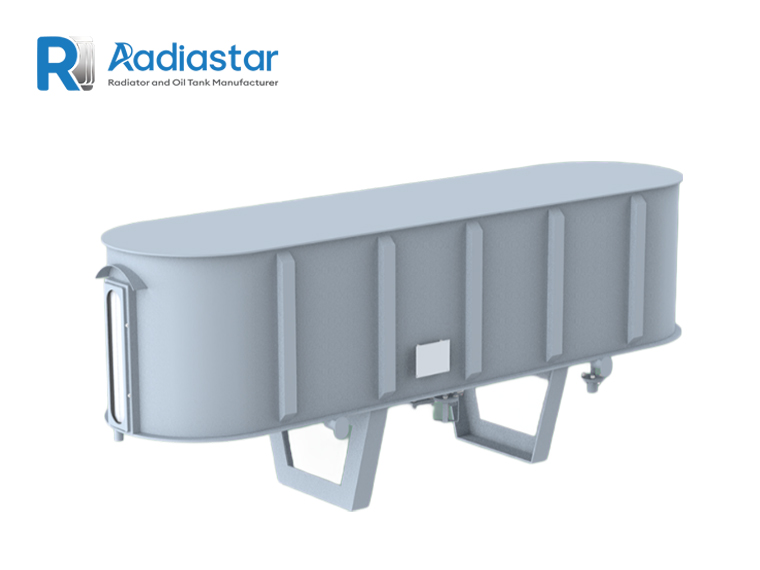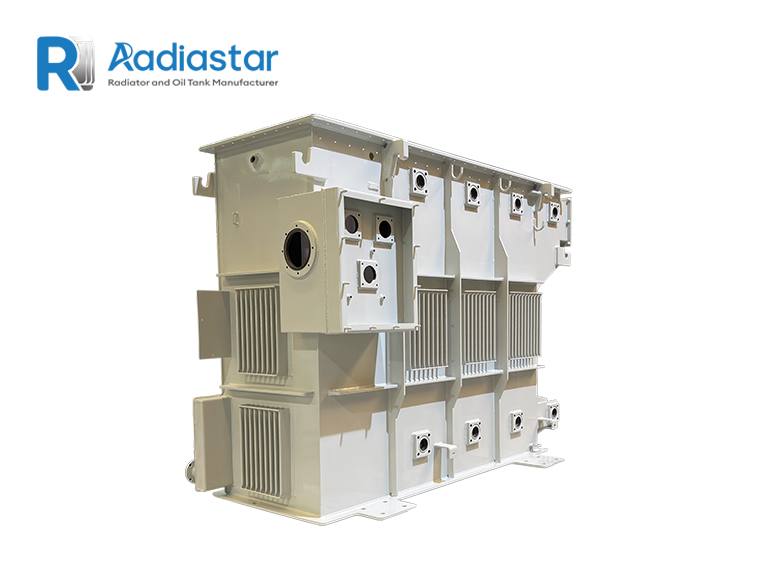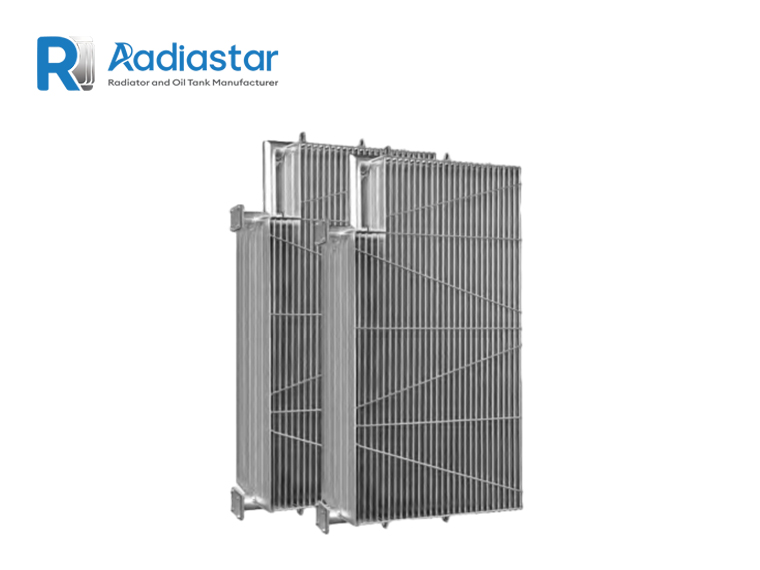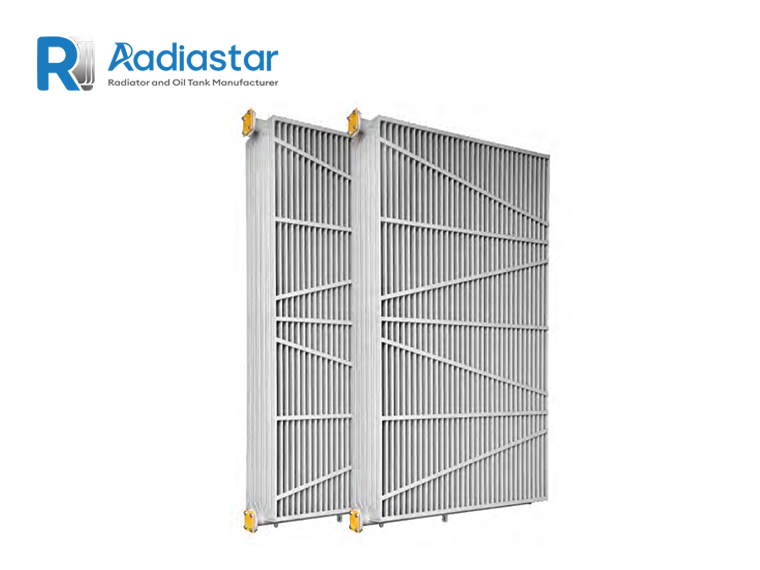

Transformer radiators are one of the most important components in the cooling system of a liquid-immersed transformer. Their function is to transfer heat from transformer oil to the surrounding air and maintain the winding and oil temperatures within the required limits.
Two of the most common cooling configurations are ONAN and ONAF.
ONAN means Oil Natural, Air Natural, while ONAF means Oil Natural, Air Forced. Under ONAN, transformer oil circulates naturally through the tank and radiators, and heat is dissipated through natural air convection. Under ONAF, the oil circulation remains natural, but fans are added to force air across the radiator surfaces. IEC 60076-2 recognizes ONAN/ONAF as alternative cooling methods, with the higher-capacity cooling condition normally corresponding to the higher rated power.
For transformer manufacturers, EPC contractors and radiator buyers, understanding the difference between ONAN and ONAF is essential when selecting:
This article explains how ONAN and ONAF radiator systems work, how they affect transformer cooling capacity, and what engineers should consider when selecting a radiator for a new or replacement transformer.
ONAN = Oil Natural Air Natural
The four-letter designation describes the cooling medium and circulation method.
For ONAN:
In an ONAN transformer, there are no oil pumps and no radiator fans required for the basic cooling mode.
Heat generated by:
raises the temperature of the insulating oil.
The warmer oil becomes less dense and rises naturally.
It then enters the upper radiator header.
Inside the radiator, heat is transferred from the oil through the radiator walls to the surrounding air.
As the oil cools, its density increases and it moves downward toward the lower part of the transformer tank.
The process creates a natural circulation loop:
Transformer winding/core → Hot oil rises → Upper header → Radiator → Heat dissipation → Cooled oil → Lower header → Transformer
This thermosiphon effect is the basic operating principle of ONAN cooling.
ONAF = Oil Natural Air Forced
The first three letters are essentially the same as ONAN:
The final letter changes from:
N = natural air
to:
F = forced air
The key difference is therefore very simple:
ONAF adds fans to the radiator system while keeping natural oil circulation.
The transformer oil still moves through the transformer and radiator through natural convection.
However, fans force ambient air across the radiator surfaces.
This increases the air-side heat-transfer rate and allows the radiator bank to dissipate more heat than under natural-air conditions.
IEC 60076-2 specifically gives ONAN/ONAF as an example of alternative cooling: the fans can be switched on at higher loading while oil circulation remains based on the thermosiphon effect.
The easiest way to understand the difference is:
| Feature | ONAN | ONAF |
|---|---|---|
| Oil circulation | Natural | Natural |
| Air circulation | Natural | Forced |
| Radiator fans | No | Yes |
| Oil pumps | No | No |
| Auxiliary power | Very low | Required for fans |
| Cooling capacity | Lower | Higher |
| Mechanical complexity | Low | Higher |
| Noise | Very low | Higher |
| Maintenance | Low | Fan maintenance required |
| Typical application | Standard cooling | Higher loading / larger transformers |
The radiator itself can be similar in basic construction.
The major difference is the airflow around the radiator.
An ONAN radiator relies on two natural convection processes.
Hot oil rises.
Cooler oil falls.
Hot air around the radiator rises naturally.
Cooler ambient air moves toward the radiator.
This creates a natural heat-transfer process.
The radiator therefore needs sufficient surface area to dissipate the transformer’s total heat losses under the specified ambient conditions.
A simplified thermal relationship can be expressed as:
where:
For ONAN cooling, natural convection determines the external air-side heat transfer.
Consequently, radiator geometry becomes especially important.
The internal oil circulation remains natural.
However, fans are installed near the radiator bank.
The fans force air through or across the radiator surfaces.
The simplified heat-transfer process becomes:
Transformer → Natural oil circulation → Radiator → Forced air → Ambient
Compared with ONAN, the forced airflow can substantially increase the heat-transfer coefficient on the air side.
This means that the same radiator bank can potentially dissipate more heat when fans are operating.
The exact increase depends on:
Therefore, it is not technically correct to assign one universal percentage increase to every ONAF radiator.
IEC 60076-22-2 indicates that radiator cooling-performance data established for ONAN must be adjusted for ONAF configurations using configuration-specific multiplicative factors.
A transformer does not necessarily operate at maximum load continuously.
For example, a transformer may have:
40/50 MVA ONAN/ONAF
This means that the transformer has two defined cooling conditions:
Natural cooling condition.
Rated capacity:
40 MVA
Fans operating.
Rated capacity:
50 MVA
The actual rating must always be taken from the transformer’s nameplate and approved design.
The advantage is that the transformer can operate without fans during normal or lower loading and activate the fans when additional cooling capacity is required.
This provides operational flexibility.
IEC 60076-2 states that when alternative cooling methods are specified, the relevant power values for the different cooling conditions are to be identified in the specification and on the rating plate.
For ONAN operation, the radiator must provide sufficient heat dissipation using natural air convection.
Important design parameters include:
A taller radiator generally provides greater effective cooling area.
More elements increase total heat-transfer surface area.
Affects the total radiator surface.
Controls airflow and affects natural convection.
The distance between upper and lower connections affects oil circulation and installation.
The radiator must support appropriate natural oil circulation.
Higher ambient temperatures reduce the available temperature difference.
IEC 60076-22-2 includes radiator cooling-performance testing for ONAN and uses radiator height, average oil temperature rise and correction factors in evaluating radiator performance.
An ONAF radiator generally uses the same fundamental radiator construction as an ONAN radiator but adds forced-air equipment.
The design therefore includes:
The radiator still needs adequate surface area.
Fans do not eliminate the need for proper radiator design.
Instead:
Fans enhance the air-side heat transfer of a properly designed radiator system.
The fan airflow should be matched to the radiator arrangement.
Not necessarily.
This is an important engineering point.
Because forced air increases heat transfer, an ONAF system can achieve a specified cooling capacity with a radiator arrangement that may be smaller than would be required for the same capacity under pure ONAN operation.
However, the actual design depends on:
In some projects, the manufacturer may use a larger radiator bank and operate it in both ONAN and ONAF modes.
In others, forced-air cooling allows the required transformer rating to be achieved with a more compact cooling system.
The correct design must be calculated rather than inferred from the MVA value alone.
The cooling capacity difference is one of the main reasons customers specify ONAF.
A radiator manufacturer normally needs to establish:
ONAN heat dissipation
and
ONAF heat dissipation
separately.
For example, a radiator may be characterized by its heat dissipation per unit area or per radiator configuration under specified temperature-rise conditions.
The final cooling calculation should consider:
where:
The actual calculation method depends on the applicable standard and radiator manufacturer’s test data.
IEC 60076-22-2 provides specific methods for determining radiator cooling performance and correction coefficients.
Radiator selection should begin with transformer heat generation rather than simply transformer MVA.
Transformer losses generally include:
Primarily associated with the magnetic core.
Primarily associated with winding resistance and additional stray losses.
The total heat that must ultimately be removed by the cooling system is related to these losses.
A simplified engineering concept is:
where:
For a complete transformer thermal design, additional factors and temperature-rise requirements must be considered.
Therefore:
Transformer MVA is an important input, but it is not sufficient by itself to determine radiator size.
Ambient temperature is extremely important.
Consider two transformers with identical ratings:
Transformer A: ambient 25°C
Transformer B: ambient 45°C
The second transformer has less temperature difference available for heat rejection at the same oil temperature limit.
IEC 60076 references normal service temperature conditions including a maximum ambient temperature of 40°C for standard conditions. Projects with higher site temperatures require appropriate thermal design or derating.
For hot-climate projects, engineers may need to consider:
This is particularly important for transformer projects in regions with very high summer temperatures.
ONAN has several important advantages.
There are no radiator fans or oil pumps in the basic cooling system.
Fewer moving parts mean fewer mechanical failure points.
The basic ONAN system does not require electrical power for radiator fans.
There are no fan motors requiring regular maintenance.
Natural convection produces very little additional mechanical noise.
If auxiliary power is lost, the transformer can continue operating at its ONAN rating where the design allows it.
These characteristics make ONAN particularly attractive for applications where simplicity and reliability are priorities.
ONAF provides a different set of benefits.
Forced air improves radiator heat dissipation.
A transformer can have a higher rating with fans operating.
Fans can be activated only when required.
ONAF is useful when transformer loading varies significantly.
Forced air can increase heat-transfer performance without relying entirely on natural convection.
This makes ONAF particularly useful for larger power transformers and applications with variable loading.
The main limitation of ONAN is its cooling capacity.
To remove more heat naturally, the designer generally needs:
This can increase:
Therefore, pure ONAN may become less practical as transformer capacity increases.
ONAF introduces additional equipment.
The main disadvantages include:
The cooling system therefore becomes more complex than pure ONAN.
For this reason, engineers should not automatically choose ONAF simply because it offers higher cooling capacity.
The additional complexity must be justified by the transformer operating requirements.
Fan configuration is an important part of ONAF design.
The fans must provide adequate airflow across the radiator surfaces.
Important parameters include:
Poor fan arrangement can create:
Therefore, fan selection should be part of the overall radiator thermal design rather than an afterthought.
ONAF fans are normally controlled according to transformer operating conditions.
Control inputs can include:
A typical control concept is:
Normal load
→ ONAN
Temperature/load increases
→ Fan stage 1 ON
Higher temperature/load
→ Additional fan stage ON
Temperature decreases
→ Fan stage OFF
The exact control logic should be specified by the transformer manufacturer and project requirements.
One of the major advantages of an ONAN/ONAF transformer is that the transformer can often continue operating at its lower ONAN rating if the fans are unavailable, provided this operating condition is part of the approved design.
For example:
40/50 MVA ONAN/ONAF
If fans are unavailable:
→ operate within the 40 MVA ONAN rating
If fans are available:
→ operate up to the 50 MVA ONAF rating
This is one reason dual cooling ratings are attractive for critical transformer applications.
However, the exact emergency operating limits must come from the transformer’s approved operating instructions.
As transformer capacity increases, cooling requirements increase.
The designer may consider:
There is no single MVA threshold at which one cooling method becomes universally mandatory.
Transformer cooling selection depends on:
Therefore, statements such as:
“All transformers above X MVA must use ONAF”
should be avoided unless they refer to a specific manufacturer’s design range or project specification.
For purchasing departments, the comparison should include more than radiator price.
| Item | ONAN | ONAF |
|---|---|---|
| Radiator | Required | Required |
| Fans | No | Yes |
| Fan motors | No | Yes |
| Control cabinet | Basic | More complex |
| Auxiliary power | Minimal | Required |
| Maintenance | Low | Higher |
| Noise | Low | Higher |
| Cooling capacity | Lower | Higher |
| Peak loading | Limited | Better |
| Initial system complexity | Low | Higher |
The buyer should evaluate the complete cooling package.
When requesting an ONAN or ONAF radiator quotation, provide as much technical information as possible.
This information allows the manufacturer to determine the appropriate radiator configuration.
Consider a hypothetical transformer:
Rated capacity: 40/50 MVA
Cooling: ONAN/ONAF
Ambient: 40°C maximum
Installation: Outdoor
Radiator: Removable panel type
The engineering process could be:
Determine transformer total losses at the required loading conditions.
Define the allowable oil and winding temperature rises.
Calculate the required ONAN cooling capacity.
Select the radiator configuration.
Verify the ONAF cooling capacity with forced airflow.
Select the appropriate fans.
Verify the fan airflow and radiator arrangement.
Confirm the transformer temperature-rise performance.
The important point is that ONAN and ONAF should be calculated as two defined operating conditions, not simply assumed to provide an arbitrary percentage difference.
When replacing an existing ONAN radiator, the supplier should not simply copy the external dimensions.
Important parameters include:
If the replacement radiator has a smaller cooling area, the transformer may no longer meet its original thermal design.
Therefore, the replacement radiator should be checked against the original transformer rating and cooling method.
In some applications, customers ask:
Can an ONAN transformer be upgraded to ONAF by adding fans?
The answer is application-dependent.
Adding fans may increase radiator heat dissipation, but the transformer itself must still be capable of operating at the proposed higher rating.
The engineering review may need to consider:
Therefore:
Adding fans does not automatically convert an existing ONAN transformer into a higher-rated ONAF transformer.
Any rating increase must be verified by the transformer manufacturer or responsible design authority.
Radiator performance should be based on appropriate engineering data and testing.
IEC 60076-22-2 includes radiator type-test provisions for cooling performance. The standard describes determining specific heat dissipation under ONAN conditions and applying appropriate correction factors; ONAF performance requires configuration-specific adjustment.
For a professional radiator supplier, quality control may include:
For procurement, the customer should request the relevant test reports and technical documentation when required by the project.
There is no universally better cooling method.
For many power transformer applications, the practical solution is:
ONAN/ONAF dual rating
rather than choosing only one cooling mode.
The same basic radiator may operate in both modes, but its performance changes significantly because the external airflow changes.
Natural air:
Low airflow → Natural convection → Lower heat-transfer rate
Forced air:
Fan airflow → Higher air velocity → Higher heat-transfer rate
Therefore, when designing an ONAN/ONAF radiator, the manufacturer needs to consider both operating conditions.
The radiator should not be optimized only for ONAF.
It must also meet the required ONAN rating when the fans are not operating.
A transformer radiator specification should clearly state:
Cooling method: ONAN / ONAF / ONAN-ONAF
Transformer rating: ___ / ___ MVA
Ambient temperature: ___ °C
Radiator type: Removable / Fixed
Radiator height: ___ mm
Center distance: ___ mm
Number of elements: ___
Fin width: ___ mm
Material: Carbon steel / Stainless steel
Surface treatment: ___
Fan quantity: ___
Fan airflow: ___ m³/h
Fan motor: ___ kW
Fan voltage: ___ V
Pressure test: According to approved specification
Applicable standards: IEC / IEEE / project-specific
This level of information significantly reduces procurement misunderstandings.
Radiastar can provide transformer radiator configurations for ONAN, ONAF and ONAN/ONAF applications, with the radiator design developed according to the transformer thermal and mechanical requirements.
Depending on the project, the radiator can be configured according to:
For ONAF applications, radiator design should be coordinated with the fan system so that the airflow distribution and required cooling capacity are compatible.
For replacement projects, customers should provide the existing radiator drawing or detailed dimensions whenever possible.
Before ordering, engineers should confirm:
The difference between ONAN and ONAF transformer radiators is fundamentally the method used to move air across the radiator.
ONAN:
Natural oil circulation + natural air circulation
ONAF:
Natural oil circulation + forced air circulation
ONAN provides:
ONAF provides:
For many power transformers, ONAN/ONAF dual cooling provides the best balance between reliability and additional capacity.
However, radiator selection should never be based solely on transformer MVA.
Engineers should evaluate:
Transformer losses → Temperature-rise limits → Ambient temperature → ONAN cooling requirement → ONAF cooling requirement → Radiator area → Radiator configuration → Fan airflow → Final thermal verification
IEC 60076-2 establishes the framework for transformer cooling designations and alternative cooling ratings, while IEC 60076-22-2 provides specific requirements and test methods relevant to removable transformer radiators and their cooling performance.
For a radiator quotation, the most useful information is the transformer rating, ONAN/ONAF rating, cooling method, maximum ambient temperature, radiator dimensions, transformer drawing and fan requirements. With these parameters, the radiator manufacturer can develop a configuration that matches the transformer’s actual thermal and mechanical requirements.