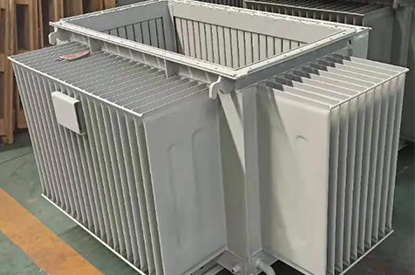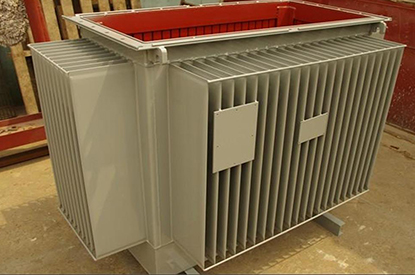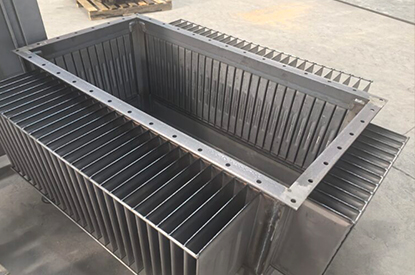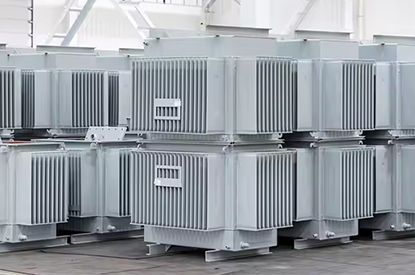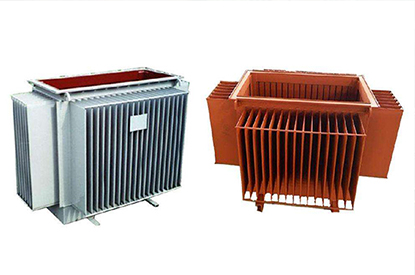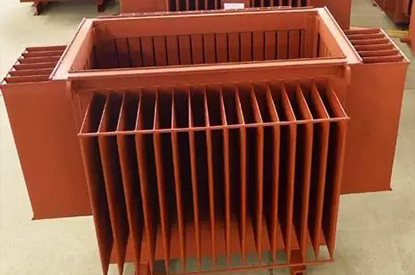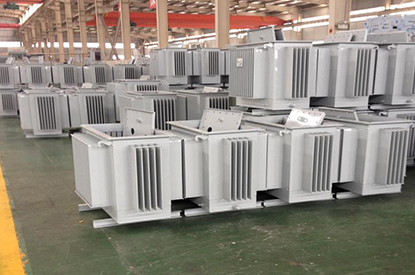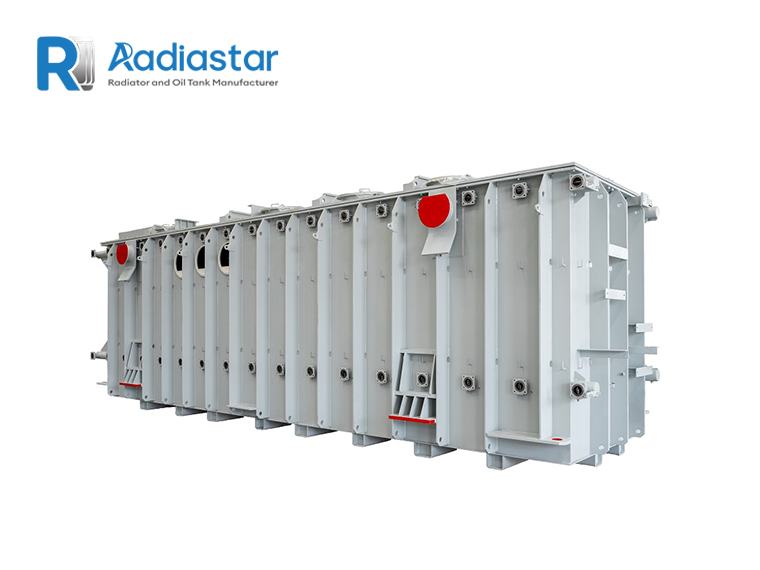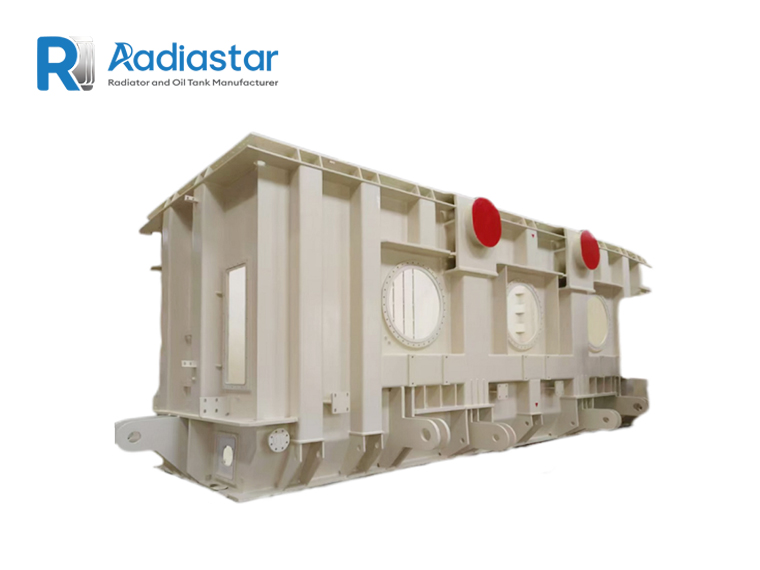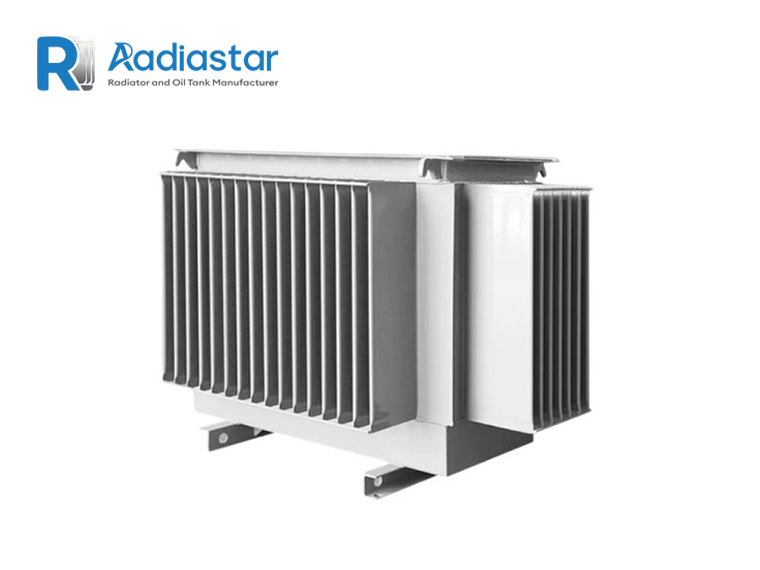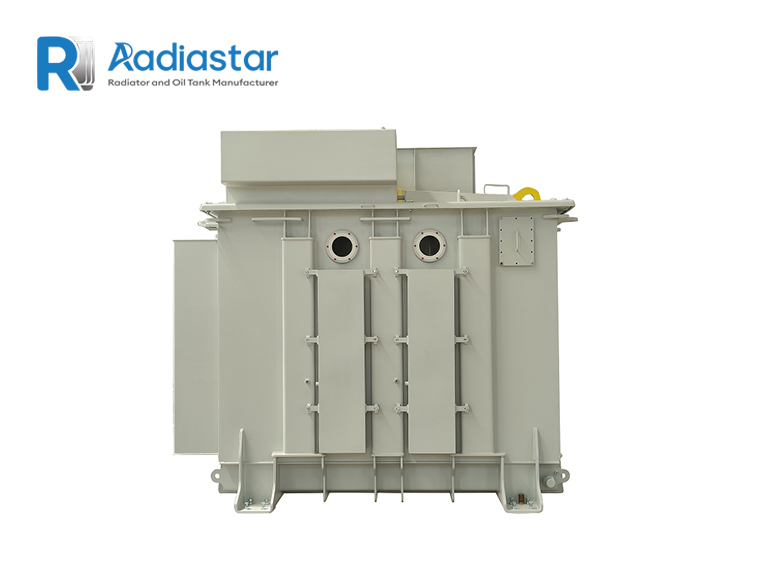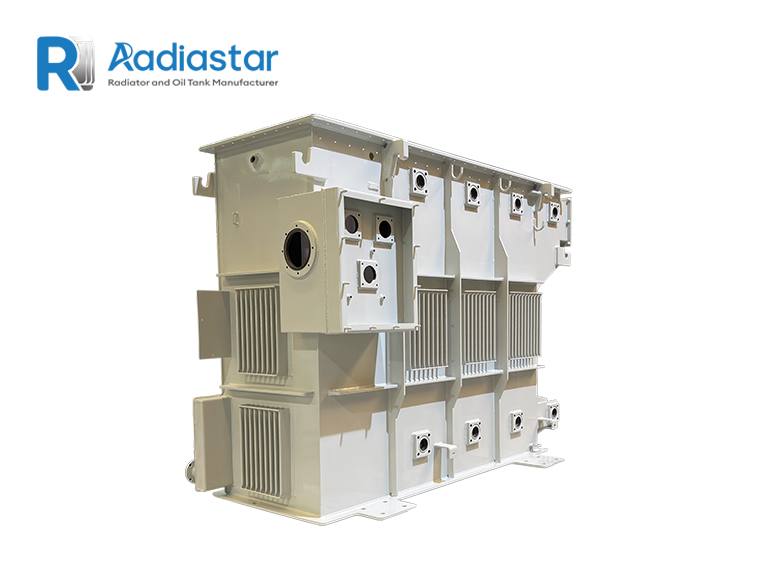

The transformer tank is the core enclosure of an oil-immersed transformer. Its installation quality directly affects equipment safety, reliability, and service life. A poorly installed tank can lead to oil leakage, moisture ingress, overheating, or even explosion. Therefore, installation must follow design requirements and safety regulations, with special attention to sealing, heat dissipation, and explosion protection.
For transformer manufacturers, EPC contractors, and utility engineers, understanding the correct installation procedures is as important as selecting a qualified tank supplier. A well-designed and well-fabricated tank can only perform its function if it is installed correctly on site.
This article explains the key points of transformer tank installation, covering preparation, conservator installation, radiator mounting, Buchholz relay installation, bushing assembly, vacuum oil filling, and grounding. It also explains how Radiastar, as an OEM transformer tank manufacturer, supports installation through precision fabrication, clear marking, pre-assembly, and complete documentation.
Long-tail keyword: transformer tank installation key points and best practices
Before placing the transformer tank on its foundation, several checks and preparations must be completed.
Inspect the tank exterior for any collision damage, deformation, or coating scratches that may have occurred during transport. Check that the core-to-ground insulation is intact and that the internal active part has not shifted.
For the tank itself, verify:
No visible weld cracks or oil stains indicating leakage
All flanges and sealing surfaces are clean and undamaged
Valves, bushings, and pipe connections are tight
Pressure relief devices and Buchholz relay are not damaged
If any doubt exists about oil quality, take an oil sample and test for moisture content and dielectric strength before energization.
Long-tail keyword: transformer tank inspection before installation
Before installation, check the packing list against the actual accessories. All components should be present and intact. Critical devices should be sent for testing or calibration before mounting:
Buchholz relay
Oil flow relay
Temperature gauges
Pressure relief valve
Oil level indicator
Testing these devices before installation prevents later failures and ensures correct protection settings.
Long-tail keyword: transformer tank accessories testing before installation
The transformer tank must be reliably grounded before any other work begins. The grounding resistance should not exceed 0.5 Ω for the tank body. This provides protection during installation and ensures safety for personnel working on the transformer.
Radiastar installs grounding terminals at the factory, usually two terminals placed diagonally on the base. These terminals are made of galvanized steel or copper and are ready for connection to the site grounding grid.
Long-tail keyword: transformer tank grounding resistance 0.5 ohm
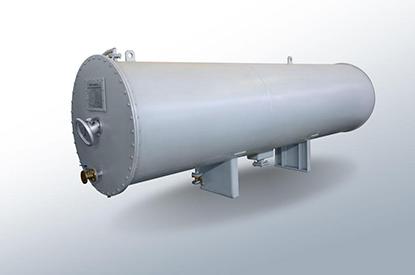
The oil conservator, also known as the oil expansion tank, accommodates oil volume changes due to temperature variation. Proper installation is critical for safe operation.
The conservator support should use a frame-type structure. Diaphragm-type or bladder-type conservators are preferred because they provide a longer service life and better isolate the oil from air and moisture.
The conservator should be positioned on the short-axis side of the main tank. This arrangement makes it easier to inspect the Buchholz relay and simplifies piping layout.
Long-tail keyword: oil conservator installation transformer tank frame support
The connecting pipe between the main tank and the conservator must have a slope of approximately 1.5% toward the Buchholz relay. This slope ensures that any gas generated inside the transformer travels naturally to the gas relay, where it can be detected.
Radiastar fabricates tank tops with the correct slope and provides pipe connections that match the conservator design. This helps ensure proper gas collection and relay operation after installation.
Long-tail keyword: transformer tank conservator pipe slope 1.5 percent
The oil level indicator should be pre-calibrated and able to withstand negative pressure up to 15 Pa. This is important during vacuum oil filling and during temperature-related oil volume changes.
Long-tail keyword: transformer oil level indicator negative pressure 15 Pa
Radiators dissipate heat from the transformer oil to the surrounding air. They are either wall-mounted with a collection pipe structure or directly mounted as stainless steel tube panels.
Radiators should be installed on the same day that the tank sealing plates are removed. Leaving the tank open to the atmosphere for extended periods risks moisture ingress and contamination.
Before opening any flange, ensure that the surrounding environment is clean and dry. Use temporary covers when work is interrupted.
Long-tail keyword: transformer radiator installation same day sealing plate removal
When installing radiators, always replace used or old gaskets with new ones. Nitrile rubber (NBR) gaskets are commonly used for oil service. Do not reuse gaskets that have been compressed, aged, or exposed to sunlight for long periods.
Radiastar supplies tanks with flanges that are machined flat and smooth, ensuring proper gasket seating. We also provide gasket recommendations based on the operating temperature and oil type.
Long-tail keyword: nitrile rubber gasket transformer radiator installation
The Buchholz relay detects gas accumulation and oil flow surges inside the transformer. Its correct installation is essential for protection and early fault detection.
After each installation step, the system should be sealed and filled with dry air. During work intervals, use a leak detection instrument, soap solution, or plastic bag method to check for leaks.
Any leak in the relay piping can reduce sensitivity or introduce moisture, so careful sealing and testing are necessary.
Long-tail keyword: Buchholz relay installation leak detection dry air
The pipe leading to the Buchholz relay should have a slope of about 1.5% from the tank to the relay. A vent plug should be installed at the highest point of the pipe to release trapped air.
Radiastar designs the tank top and relay connection so that the slope is achieved naturally during installation. The relay mounting bracket and pipe flanges are aligned and tested at the factory.
Long-tail keyword: Buchholz relay pipe slope vent plug
Bushings are critical high-voltage components that connect the transformer windings to external circuits. Improper installation can cause mechanical damage, oil leaks, or insulation failure.
For bushings rated 110 kV and above, a dedicated bushing lifting frame should be used. Before lifting, inspect:
Porcelain surface for cracks or chips
Oil level inside the bushing
Insulator sheds for contamination
Insulation test results
Long-tail keyword: high voltage bushing installation transformer 110kV
Use a double-hook lifting method to keep the bushing vertical and prevent impact damage to the porcelain. The bushing should be raised slowly and guided carefully into the turret.
Long-tail keyword: double hook lifting transformer bushing porcelain
The bushing turret orientation on the tank must match the flange symbols shown on the drawings. The connecting pipe flanges must also match correctly. Any mismatch can cause mechanical stress and oil leakage.
Radiastar marks all turret positions and flange connections clearly during fabrication, following the customer’s general arrangement drawing. This reduces the risk of installation errors on site.
Long-tail keyword: transformer bushing turret orientation flange matching
Vacuum oil filling is a critical step for large power transformers. It removes moisture and air from the insulation and ensures complete oil impregnation.
The transformer is evacuated from the breather connection or the conservator to a vacuum level of ≤ 0.133 kPa (133 Pa). The exact vacuum level and holding time should follow the manufacturer’s instructions.
All components must be properly sealed before vacuum pumping. Any leak will allow air and moisture to enter, defeating the purpose of the vacuum process.
Long-tail keyword: transformer vacuum oil filling 0.133 kPa
Before and during vacuum pumping, check all flanges, valves, and gaskets for tightness. The tank must be able to withstand the specified vacuum without deformation or leakage.
Radiastar fabricates tanks with reinforced walls and proper stiffeners to withstand vacuum conditions. Each tank is vacuum tested in the factory before shipment, providing documented evidence of vacuum integrity.
Long-tail keyword: transformer tank vacuum integrity factory test
The installation quality of a transformer tank is strongly influenced by its design. A well-designed tank makes installation easier, safer, and more reliable. Key design requirements include:
The tank is welded from high-strength steel plates with internal magnetic shielding to reduce stray losses. The shielding must be firmly mounted, well insulated, and properly grounded.
Radiastar uses high-strength steel such as Q235, Q345, or S355JR, and can install magnetic shielding according to customer specifications.
Long-tail keyword: high strength steel transformer tank magnetic shielding
The tank top should have a slope to direct gas accumulation toward the Buchholz relay. High points should be equipped with vent plugs. All openings on the top should have raised flanges to prevent water ingress.
Radiastar designs and fabricates sloped tank tops with proper flange heights and gas collection pipe connections. This ensures correct gas relay operation and reduces the risk of false alarms or missed faults.
Long-tail keyword: transformer tank top slope gas collection pipe
The tank base is a channel steel structure with anchor bolts to fix the transformer to the concrete foundation. It must withstand the equipment weight and seismic forces.
Radiastar fabricates robust base channels with towing devices and anchor bolt holes according to customer foundation drawings. The base design is verified for lifting, dragging, and seismic loads.
Long-tail keyword: transformer tank base channel steel anchor bolts seismic
Radiastar is not only a transformer tank manufacturer; we are a partner in ensuring successful installation and long-term operation. Our support includes:
All flanges, turrets, and connections are pre-assembled and marked
Orientation symbols match the general arrangement drawing
Removable parts are packed with identification tags
Lifting lugs and jacking points are clearly indicated
As-built drawings
Material test certificates
Welding procedure specifications and records
Pressure test and vacuum test reports
Coating inspection reports
Installation guidelines and torque values for bolts
Engineering team available for installation queries
Third-party inspection support
On-site assistance can be arranged for large projects
Long-tail keyword: Radiastar transformer tank installation support documentation
The transformer tank should be grounded before installation with a grounding resistance not exceeding 0.5 Ω for the tank body. The main grounding system should meet national or project specifications.
The pipe connecting the transformer tank to the Buchholz relay should have a slope of approximately 1.5% toward the relay. This allows gas bubbles to travel naturally to the relay.
Radiators should be installed on the same day that the sealing plates are removed. This minimizes the time the tank interior is exposed to the atmosphere.
The transformer is typically evacuated to a vacuum level of ≤ 0.133 kPa before oil filling. The exact procedure and holding time should follow the manufacturer’s instructions.
Yes. Radiastar prefabricates and marks all connections, provides as-built drawings, and includes installation guidelines with every shipment. Our tanks are pressure tested and vacuum tested before delivery.
Transformer tank installation is a critical process that requires careful preparation, correct component installation, and strict sealing verification. From grounding and conservator mounting to radiator and bushing installation, every step affects the transformer’s long-term reliability.
Radiastar supports successful installation by manufacturing precision transformer tanks with clear marking, pre-assembled connections, and complete documentation. Our OEM tanks are designed for easy installation, efficient cooling, and leak-proof operation.
Whether you need a standard distribution tank, a heavy-duty power transformer tank, or a custom acid-resistant design, Radiastar provides the engineering support and manufacturing quality you can rely on.
Contact Radiastar to discuss your transformer tank requirements and installation support.