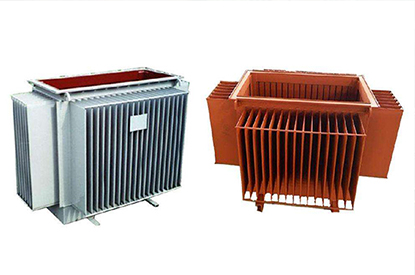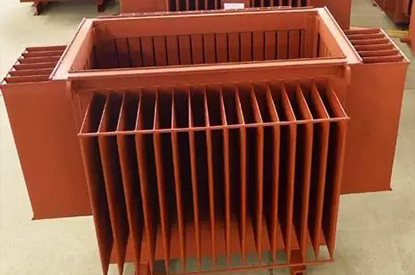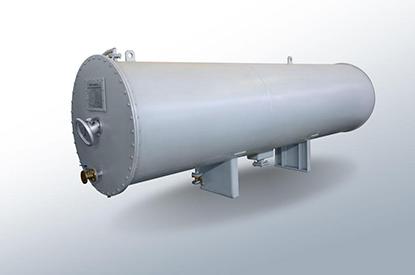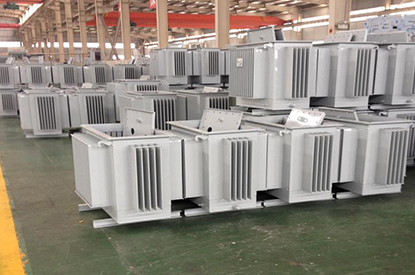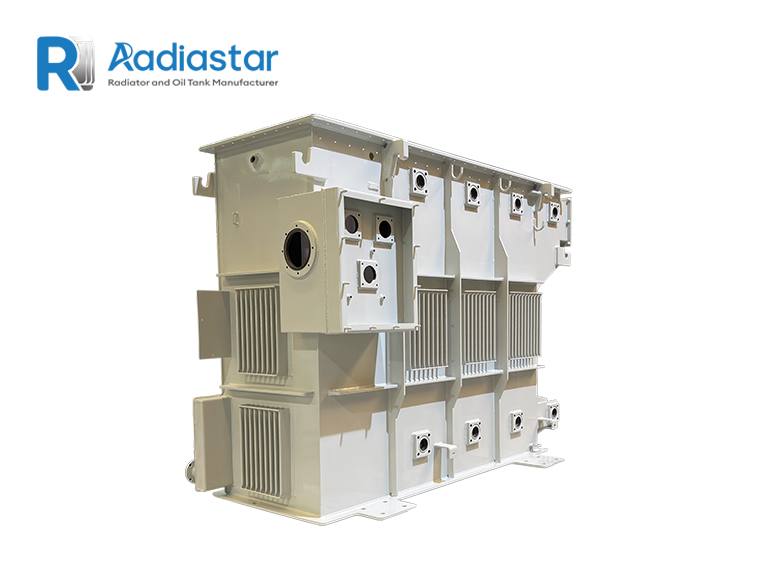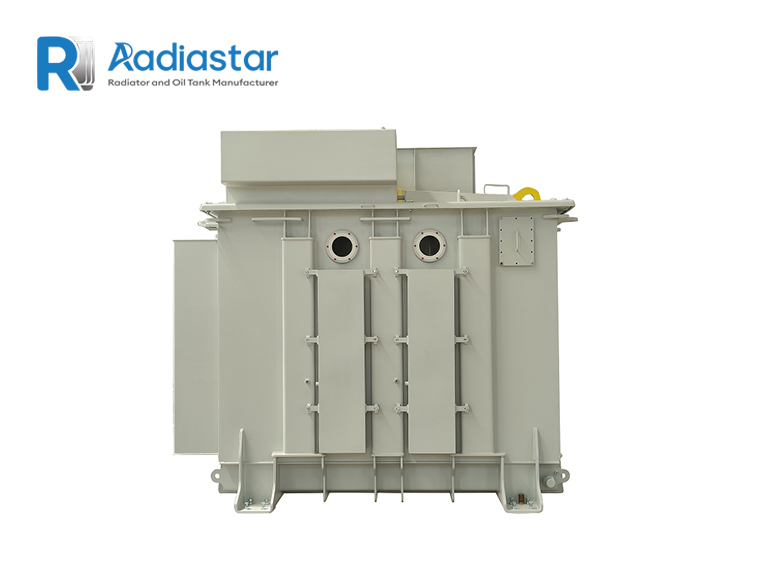

Transformer tanks are not one-size-fits-all structures. They are designed in different shapes, sizes, and configurations to suit the transformer type, cooling method, installation environment, and operating voltage. Understanding the common types of transformer tanks helps buyers and engineers specify the right design and select a qualified manufacturer.
This article explains the main types of transformer tanks used in the power industry. It covers tank designs based on structure, cooling method, application, and sealing system. It also discusses how to choose the appropriate type for different transformer applications and how Radiastar, as an OEM manufacturer, produces tanks for each category.
Long-tail keyword: common types of transformer tanks in power industry
Flat-top tanks have a simple, flat cover welded or bolted to the main tank body. They are commonly used for small distribution transformers where simplicity and low cost are important.
Advantages:
Low manufacturing cost
Simple design and easy fabrication
Easy access for internal inspection
Limitations:
Limited pressure resistance
Water can accumulate on the flat top if not properly sloped
Gas pockets may form under the cover
Long-tail keyword: flat top transformer tank design
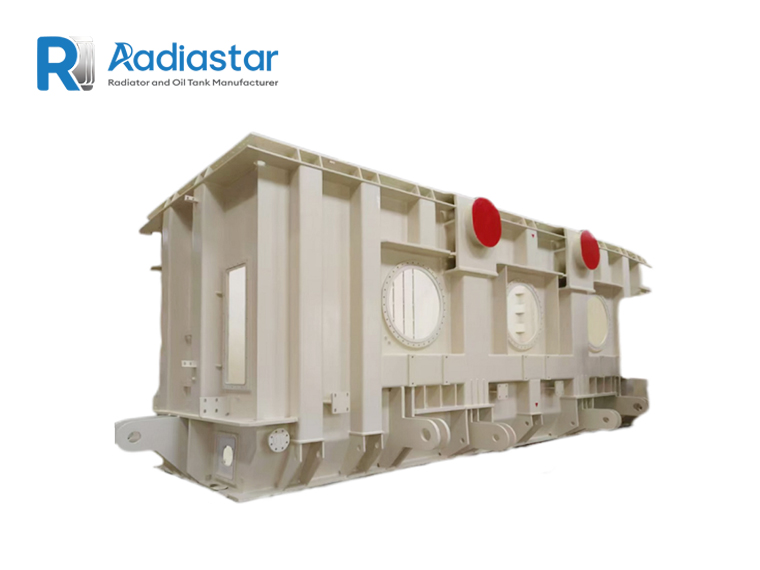
Arched-top tanks have a curved or domed top cover. This design improves structural strength and helps direct gas bubbles toward the Buchholz relay. Arched-top tanks are common in medium and large power transformers.
Advantages:
Better pressure resistance
Natural gas collection and venting
Improved drainage and reduced water accumulation
Limitations:
Higher fabrication cost
More complex welding and forming
Long-tail keyword: arched top transformer tank pressure resistance
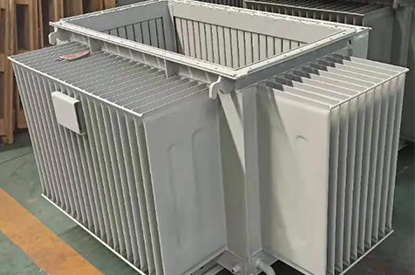
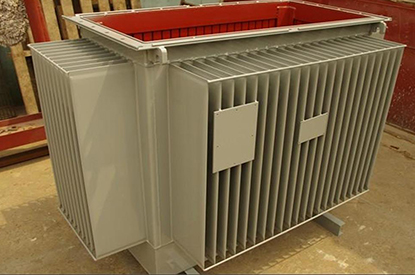
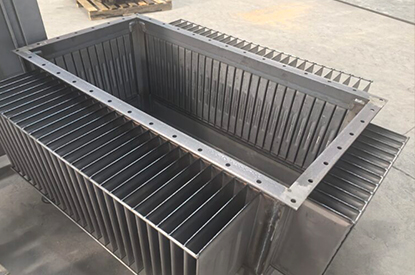
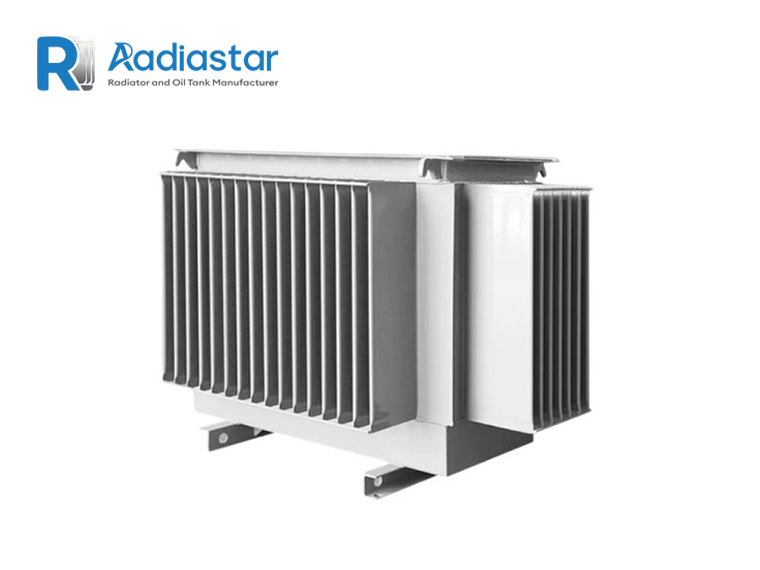
Corrugated tanks use wave-shaped or finned wall panels instead of flat steel plates. The corrugations serve two purposes: they increase the cooling surface area and allow the tank walls to flex with oil thermal expansion.
Corrugated tanks are widely used in sealed distribution transformers because they eliminate the need for a conservator. The oil expansion is absorbed by the elastic deformation of the corrugated walls.
Advantages:
Maintenance-free sealed design
Large cooling surface in a compact space
No conservator required
Reduced oil-air contact
Limitations:
Higher fabrication complexity
Requires precise forming and welding
Limited to smaller and medium transformer sizes
Long-tail keyword: corrugated transformer tank sealed design oil expansion
Radiastar manufactures corrugated transformer tanks using hydroforming technology and performs fatigue testing to ensure long-term durability.
Bell-type tanks have a tank body that is lifted upward for access to the active part. The bottom part remains with the base, and the upper part is the “bell.” This design is used for large power transformers where removing the active part is difficult.
Advantages:
Easier access to core and windings for maintenance
The active part stays on the base during disassembly
Limitations:
Complex sealing arrangement
Heavy lifting equipment required
Higher manufacturing cost
Long-tail keyword: bell-type transformer tank large power transformer
Sealed tanks are completely filled with oil and have no conservator. The tank is designed to withstand internal pressure and thermal expansion without breathing. Corrugated tanks are a common type of sealed tank, but some sealed tanks use a gas cushion or an elastic membrane.
Advantages:
Prevents moisture and oxygen ingress
Reduces oil degradation
Low maintenance
Limitations:
Requires precise pressure management
Not suitable for very large transformers
Long-tail keyword: sealed transformer tank gas cushion membrane
Transformer tanks can also be categorized by the application they are designed for. Radiastar manufactures all of the following types:
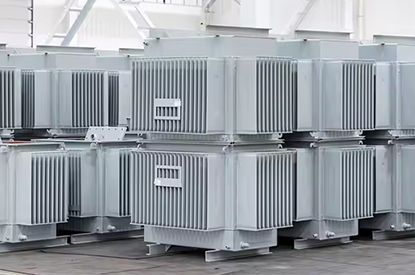
Distribution transformers are used in local distribution networks to step down voltage to consumer levels. Their tanks are typically small to medium size, with cooling provided by flat walls, corrugated panels, or cooling fins.
Long-tail keyword: distribution transformer tank manufacturer
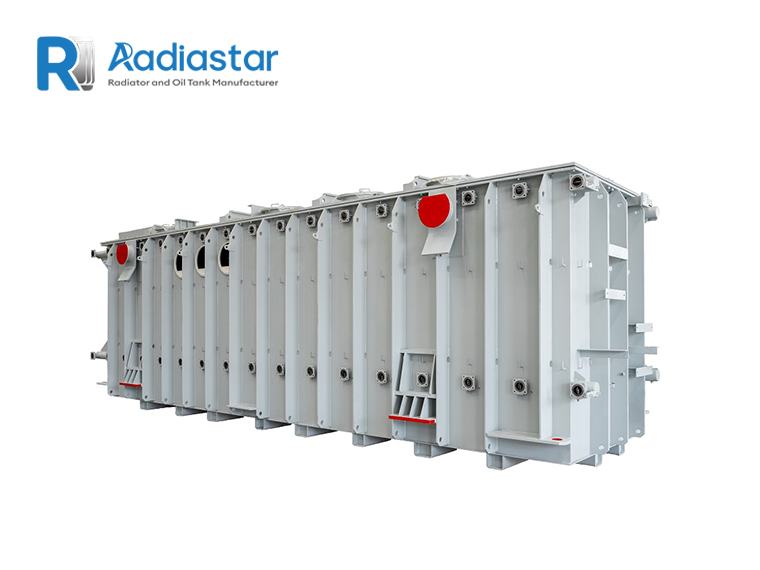
Power transformers are large units used in transmission and generation. Their tanks must withstand high mechanical loads, high voltage stresses, and significant thermal cycling. They often use radiators, conservators, and advanced cooling systems.
Long-tail keyword: power transformer tank heavy duty design
Pad-mounted transformers are installed on concrete pads at ground level, commonly used in underground distribution systems. Their tanks are compact, weather-resistant, and designed for outdoor installation with tamper-resistant enclosures.
Long-tail keyword: pad-mounted transformer tank outdoor weather resistant
Radiastar provides single-phase and three-phase pad-mounted transformer tanks with corrosion-resistant coatings and fully welded construction.
Pole-mounted transformers are installed on utility poles. Their tanks are lightweight, compact, and optimized for overhead installation. They must withstand wind loads, temperature extremes, and vibration.
Long-tail keyword: pole-mounted transformer tank lightweight design
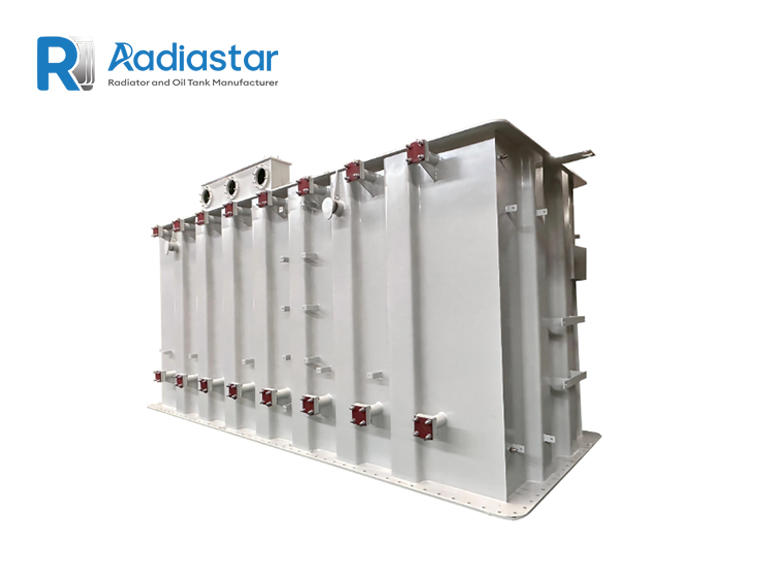
Substation transformers are high-capacity units used in transmission and distribution substations. Their tanks are heavy-duty, often with radiators, conservators, and multiple cooling stages.
Long-tail keyword: substation transformer tank high capacity
Special transformers include traction transformers, furnace transformers, rectifier transformers, and grounding transformers. Their tanks are often custom-designed to meet specific electrical, thermal, and mechanical requirements.
Long-tail keyword: special transformer tank custom design traction furnace
The cooling method also influences tank design.
Small transformers rely on natural air cooling through the tank surface. Flat or corrugated walls provide sufficient heat dissipation.
Larger transformers use fans to force air over radiators or cooling tubes. The tank must provide proper radiator mounting and airflow paths.
For very large transformers, oil is pumped through external coolers. The tank must have proper inlet and outlet connections, oil flow guides, and structural reinforcement.
Long-tail keyword: transformer tank cooling method ONAN ONAF OFAF
| Tank Type | Typical Application | Cooling Method | Sealing System | Advantages | Limitations |
|---|---|---|---|---|---|
| Flat-top | Small distribution | Natural air | Sealed or conservator | Low cost, simple | Poor pressure resistance |
| Arched-top | Medium/large power | Radiators | Conservator | Good pressure resistance | Higher cost |
| Corrugated | Distribution, sealed | Natural air through corrugations | Sealed | Maintenance-free, compact | Size limited |
| Bell-type | Large power | Radiators | Conservator | Easy maintenance access | Complex sealing |
| Pad-mounted | Underground/distribution | Natural or forced air | Sealed | Outdoor weatherproof | Enclosure required |
| Pole-mounted | Overhead distribution | Natural air | Sealed | Lightweight, compact | Vibration loads |
Long-tail keyword: transformer tank type comparison table
Selecting the appropriate tank type depends on several factors:
Transformer capacity and voltage class
Larger transformers require stronger tanks, often arched-top or bell-type, with radiators and conservators.
Cooling requirements
The tank must provide adequate heat dissipation. Corrugated walls work well for sealed distribution transformers, while radiators are needed for power transformers.
Environmental conditions
Coastal, industrial, or acidic environments require corrosion-resistant materials and coatings. Radiastar provides stainless steel, Corten steel, and acid-resistant options.
Maintenance philosophy
Sealed corrugated tanks require less maintenance, while conservator-type tanks allow easier oil sampling and level monitoring.
Transport and installation constraints
Pole-mounted tanks must be lightweight, while substation tanks can be heavier. The tank design must accommodate lifting and anchoring.
OEM specifications
Transformer factories often have their own standard tank designs. An experienced OEM manufacturer can build to customer drawings or develop a new design.
Long-tail keyword: how to choose transformer tank type for project
Radiastar manufactures a wide range of transformer tank types, including:
Corrugated transformer tanks
Flat-top and arched-top tanks
Pad-mounted transformer tanks (single-phase and three-phase)
Pole-mounted transformer tanks
Substation transformer tanks
Power transformer tanks
Distribution transformer tanks
Special transformer tanks
All tanks are produced with high-grade materials, certified welding, corrosion-resistant coatings, and 100% leak testing. We provide complete documentation packages and support third-party inspection.
Long-tail keyword: OEM transformer tank types Radiastar
For distribution transformers, the corrugated sealed tank is the most common because it is maintenance-free and provides efficient cooling. For larger power transformers, arched-top tanks with radiators and conservators are standard.
A flat-top tank has a simple flat cover, while an arched-top tank has a curved top. The arched design provides better pressure resistance, improves gas collection, and reduces water accumulation.
Corrugated walls can flex with oil thermal expansion, eliminating the need for a conservator. This design reduces oil-air contact and minimizes maintenance.
Yes. Radiastar produces custom transformer tanks for special applications, including traction, furnace, rectifier, and grounding transformers. We build to customer drawings and specifications.
Transformer tanks come in many types, each designed for specific applications, cooling methods, and environmental conditions. Understanding these types helps buyers and engineers select the right design and specify clear requirements to manufacturers.
Radiastar is an experienced OEM transformer tank manufacturer with full in-house capability for all common tank types. Whether you need a standard corrugated distribution tank, a heavy-duty power transformer tank, or a custom acid-resistant design, we can provide a technical proposal and quality documentation.
Contact Radiastar to discuss your transformer tank type requirements.