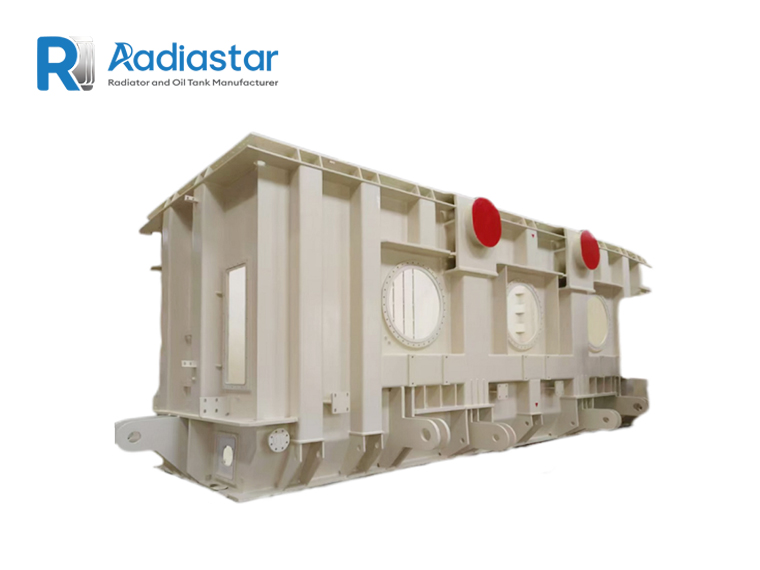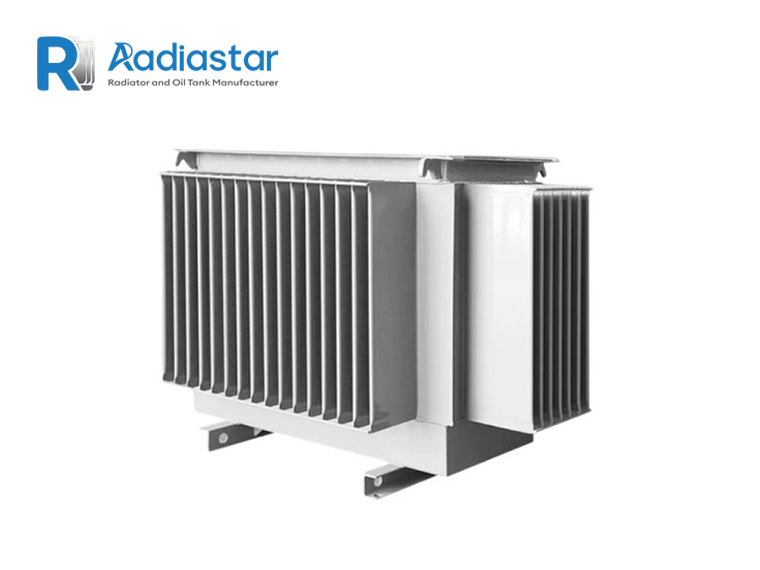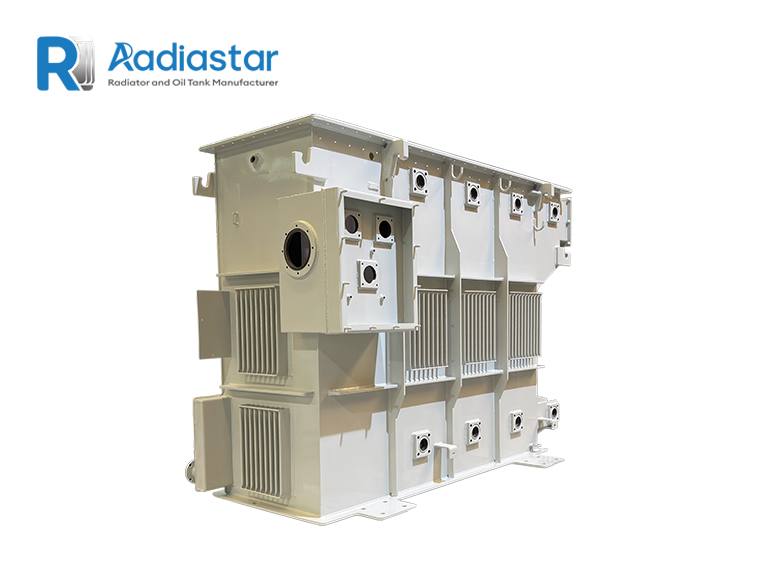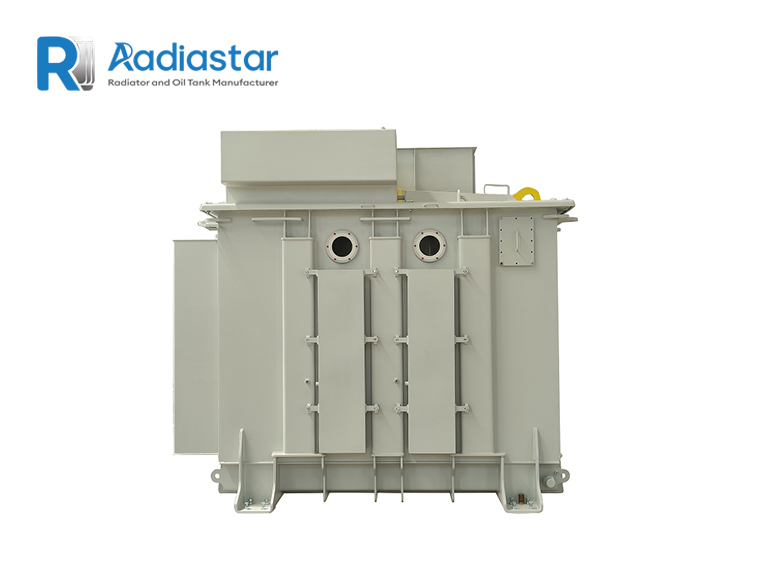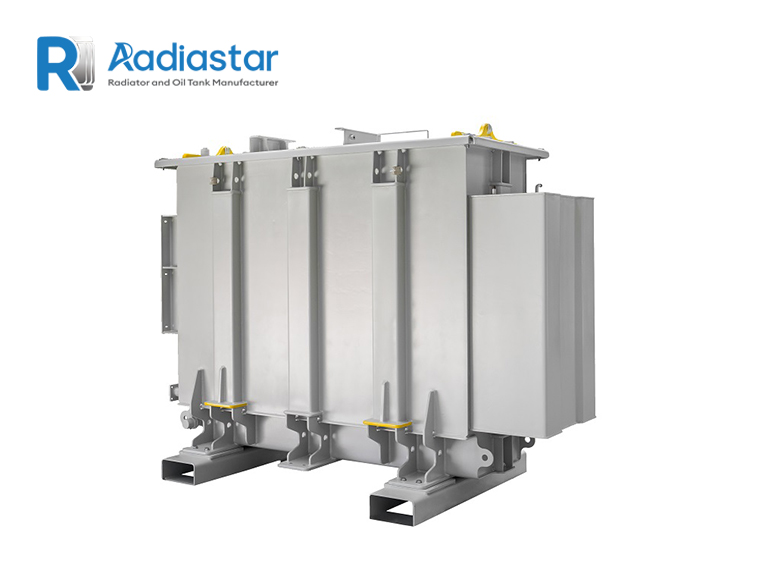

The transformer tank is often seen as a simple steel enclosure, but in reality it is a critical component that directly affects transformer performance, reliability, and service life. For transformer factories, utility engineers, and procurement managers, understanding the function of a transformer tank is essential for specifying the right design, material, and manufacturing quality.
A transformer tank performs multiple functions at the same time. It contains the insulating oil, supports the core and windings, dissipates heat, provides electrical insulation, and protects internal components from environmental contamination. In modern transformer design, the tank must also withstand internal pressure, vacuum, seismic loads, and corrosive environments.
This article explains the primary and secondary functions of a transformer tank in detail. It also discusses why tank quality is a key factor in procurement decisions and how Radiastar, as an OEM transformer tank manufacturer, designs and fabricates tanks that meet these functional requirements.
Long-tail keyword: function of transformer tank in power transformer
The most obvious function of a transformer tank is to contain the insulating oil. Transformer oil serves as both a coolant and an electrical insulator. The tank must prevent oil leakage under all operating conditions, including:
Thermal expansion and contraction of the oil
Internal pressure changes during operation
Vacuum conditions during oil filling and drying
Mechanical vibration from core and windings
External impact during transport and installation
A leak in the tank can lead to moisture ingress, reduced dielectric strength, environmental contamination, and even fire. Therefore, the tank must be designed and fabricated with leak-proof welded seams, precision flanges, and reliable gaskets.
Long-tail keyword: transformer tank oil containment leak-proof design
Radiastar uses full-penetration welding, qualified welders, and 100% pressure testing to ensure oil containment. Air pressure tests, vacuum tests, and hydrostatic tests are performed according to customer specifications and international standards.
Transformer losses generate heat in the core and windings. If this heat is not removed efficiently, insulation aging accelerates and the transformer may fail prematurely. The tank plays a central role in heat dissipation.
The insulating oil absorbs heat from the core and windings, then transfers it to the tank walls. From there, heat is dissipated to the surrounding air through:
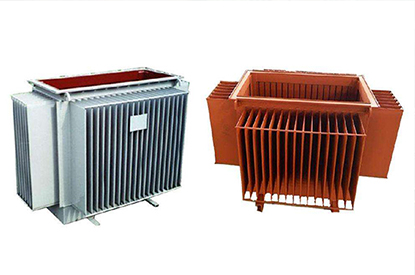
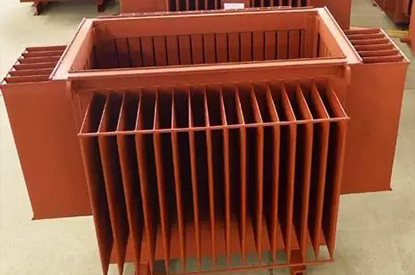
Flat tank walls for small distribution transformers
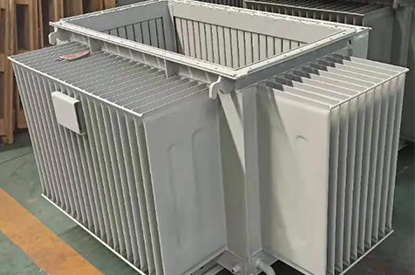
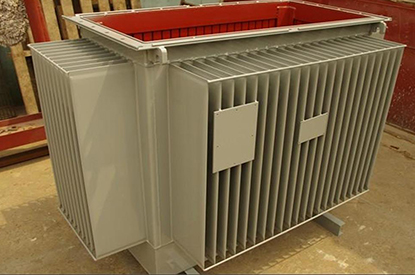
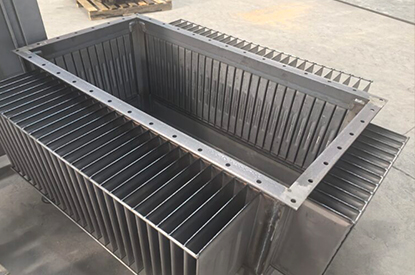
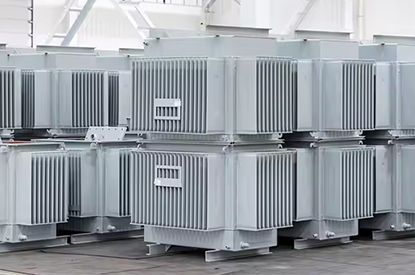
Corrugated wall panels for sealed distribution transformers
Welded cooling tubes or fins
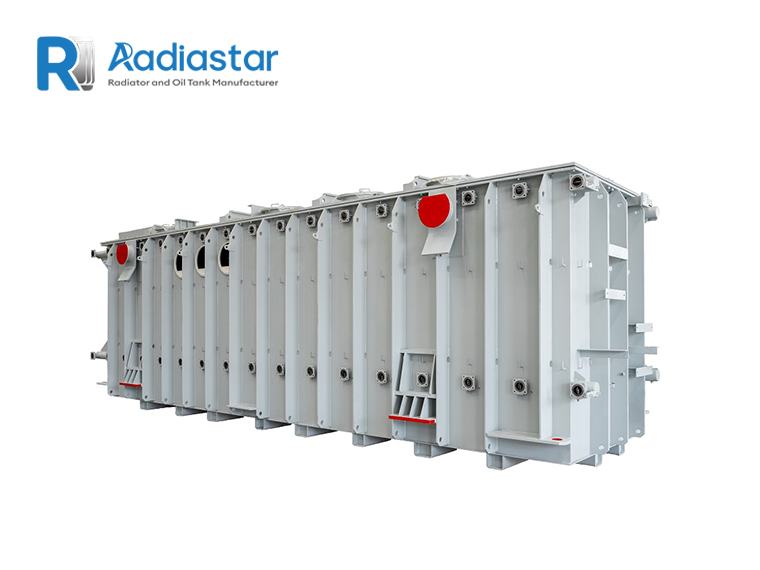
Detachable radiators for larger power transformers
Fan-cooled or forced-oil-cooled systems for high-capacity units
Long-tail keyword: transformer tank cooling heat dissipation design
The tank design must ensure proper oil circulation and avoid hot spots. Baffles, oil guides, and outlet positions are carefully considered. Radiastar engineers analyze the thermal performance of each tank design and recommend cooling configurations based on transformer losses and ambient conditions.
The transformer tank must support the weight of the active part, including the core, windings, tap changer, bushings, and oil. For large power transformers, the total weight can exceed 100 tons. The tank must also withstand:
Lifting loads during transport and installation
Internal pressure from oil expansion
Vacuum forces during oil filling
Short-circuit electromagnetic forces
Seismic loads in earthquake-prone regions
Long-tail keyword: transformer tank mechanical support structural strength
To meet these requirements, the tank is reinforced with stiffeners, base channels, and internal bracing. The design must balance strength and weight, especially for pole-mounted and pad-mounted transformers where weight is a key constraint.
Radiastar performs structural calculations and finite element analysis when required to verify that the tank can withstand specified mechanical loads without permanent deformation.
The tank also contributes to the electrical performance of the transformer. The tank walls are at ground potential, while the windings operate at high voltage. The insulating oil provides the primary dielectric barrier, but the tank must be designed to avoid:
Excessive electric field concentration
Partial discharge at sharp edges or protrusions
Stray losses caused by magnetic flux entering the tank wall
Long-tail keyword: transformer tank electrical insulation magnetic shielding
Internal magnetic shielding may be installed on the tank walls to reduce stray losses and prevent localized heating. The shielding must be securely mounted and well insulated to prevent discharge or overheating.
Radiastar can install magnetic shielding according to customer specifications, ensuring proper grounding and insulation of the shield plates.
Modern transformer tanks are designed to minimize oil-air contact and prevent moisture ingress. Sealed tank systems are common in distribution transformers, where the tank is completely filled with oil and the corrugated walls flex to accommodate oil expansion.
For larger transformers, a conservator may be used, but the tank itself must still be airtight. Safety devices such as pressure relief valves, Buchholz relays, and explosion vents are mounted on the tank to protect against excessive internal pressure.
Long-tail keyword: sealed transformer tank pressure relief valve Buchholz relay
The tank top is usually sloped to direct gas accumulation toward the Buchholz relay. All openings are equipped with raised flanges to prevent water ingress. Radiastar designs tanks with proper slopes, flange heights, and safety device mounting positions according to international standards.
In coastal, industrial, or chemically aggressive environments, the tank must resist corrosion and acid attack. This is achieved through material selection and protective coatings.
Mild steel with epoxy/polyurethane coating for standard environments
Stainless steel for acid or coastal environments
Corten steel for unpainted outdoor use
Acid-resistant internal linings for special applications
Long-tail keyword: transformer tank environmental corrosion protection
Radiastar provides corrosion-resistant and acid-resistant transformer tanks designed according to ISO 12944 corrosion categories. Surface preparation includes abrasive blasting to Sa 2.5, and coating thickness is verified with calibrated gauges.
The tank is a grounded metallic structure. If insulation fails, fault current flows through the grounding system, preventing electric shock. The tank must have at least two grounding terminals, usually located diagonally on the base.
Grounding terminals should be made of galvanized steel or copper, and the grounding resistance must be ≤4 Ω. The tank is connected directly to the main grounding grid, not in series.
Long-tail keyword: transformer tank grounding terminals safety
Radiastar installs grounding terminals according to customer requirements and provides documentation of grounding system design.
Transformer tanks also help reduce noise generated by core magnetostriction and cooling equipment. The tank structure can be designed to dampen vibrations and reduce noise levels, which is important for transformers installed in residential or urban areas.
Long-tail keyword: transformer tank noise reduction design
For procurement managers and transformer factories, the transformer tank is not a commodity item. A low-quality tank may pass visual inspection but fail after years of thermal cycling, vibration, or environmental exposure. Common quality problems include:
Weld defects leading to oil leakage
Inadequate coating causing corrosion
Poor flange flatness causing gasket leaks
Insufficient stiffeners causing deformation under vacuum
Missing documentation or material traceability
Long-tail keyword: transformer tank quality problems procurement
Radiastar addresses these risks through a controlled manufacturing process. Every tank is tested for leaks and provided with a complete quality dossier, including material certificates, welding records, pressure test reports, and coating inspection reports.
Radiastar is an OEM transformer tank manufacturer with full in-house production capability. We design and manufacture tanks for:
Distribution transformers
Power transformers
Pad-mounted transformers
Pole-mounted transformers
Substation transformers
Special transformers (traction, furnace, rectifier, grounding)
Our tanks can be supplied as bare steel, coated, or fully fitted with accessories. We work from customer drawings or provide complete design support. All tanks are tested and documented before shipment.
Long-tail keyword: OEM transformer tank manufacturer Radiastar
The main function is to contain the insulating oil and protect the core and windings from external contamination. It also provides cooling, mechanical support, electrical insulation, and safety sealing.
The tank is grounded for personnel safety. If insulation fails, fault current flows to ground through the grounding system, preventing electric shock and equipment damage.
The insulating oil absorbs heat from the core and windings and transfers it to the tank walls. Heat is then dissipated through flat walls, corrugated panels, cooling tubes, or radiators, depending on the transformer size and design.
Yes. Radiastar provides corrosion-resistant and acid-resistant transformer tanks using coated mild steel, stainless steel, or Corten steel, depending on the environment and customer requirements.
The transformer tank is a multi-functional component that combines oil containment, cooling, mechanical support, electrical insulation, and safety sealing. Its design and manufacturing quality directly affect transformer reliability, safety, and service life.
Radiastar understands these functional requirements and manufactures transformer tanks that meet international standards and customer specifications. Whether you need a standard tank or a custom corrosion-resistant design, we provide engineering support, quality documentation, and OEM flexibility.
Contact Radiastar to discuss your transformer tank requirements.