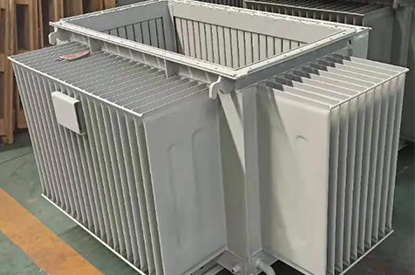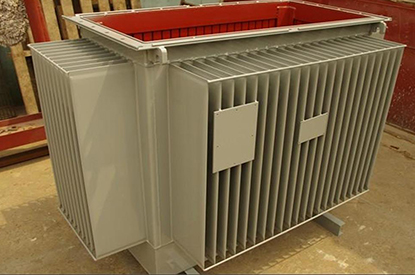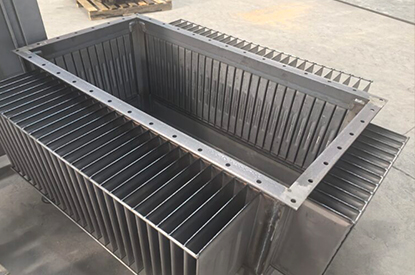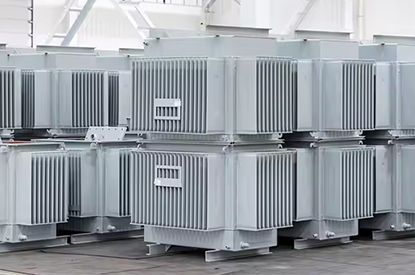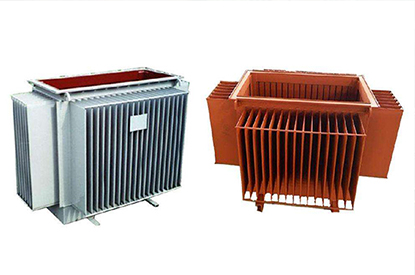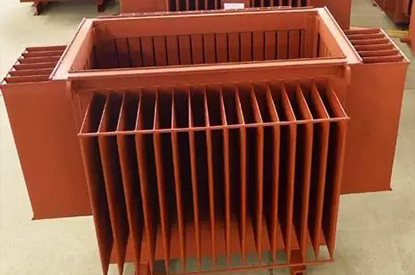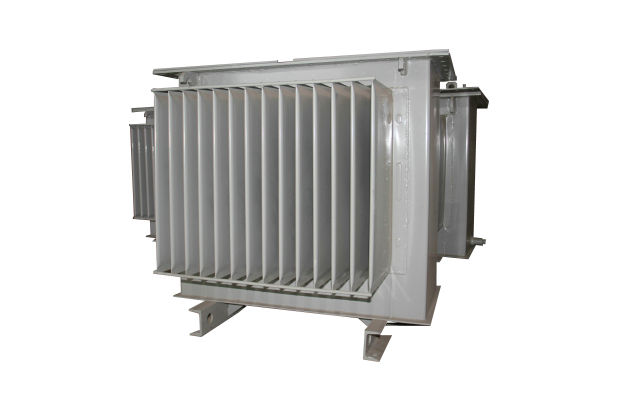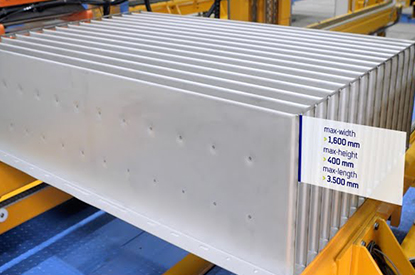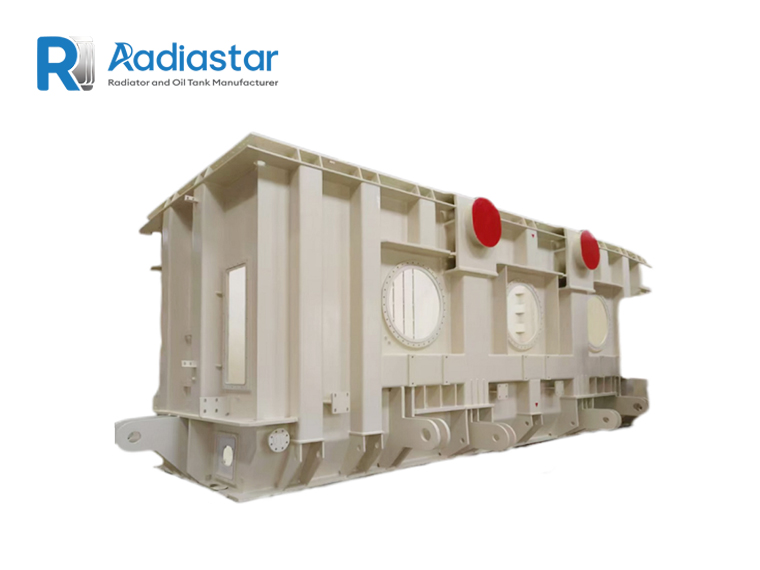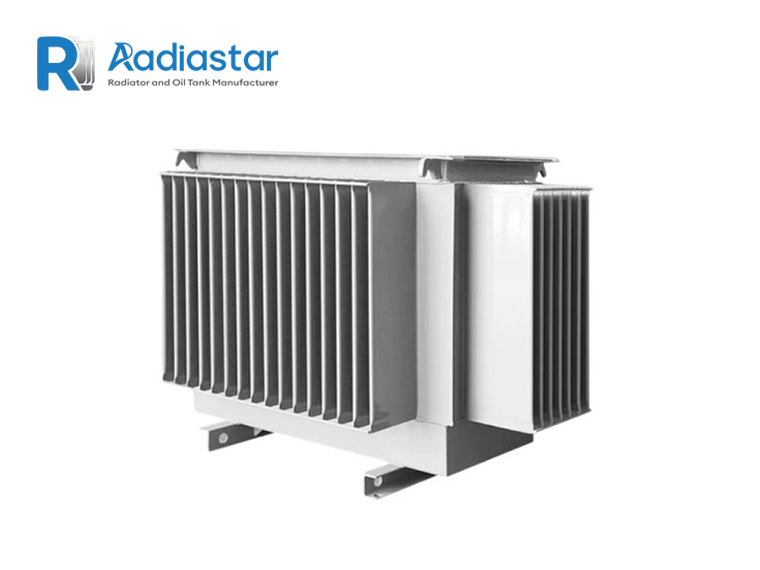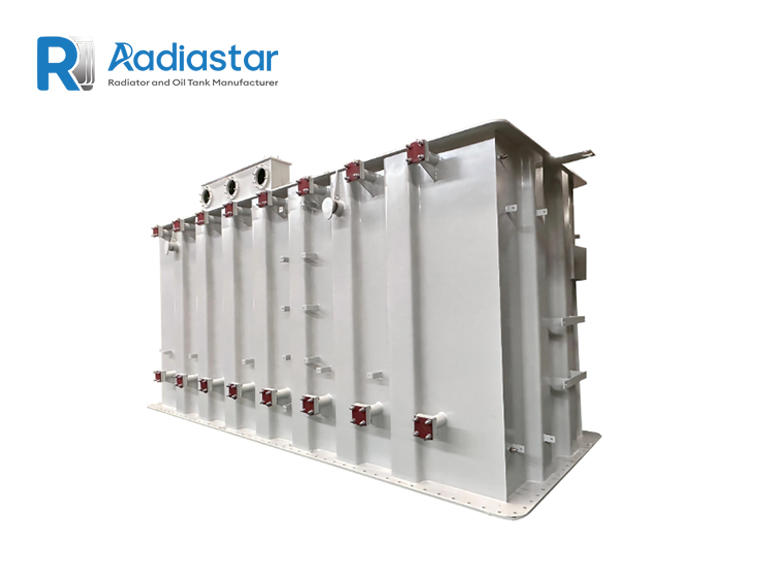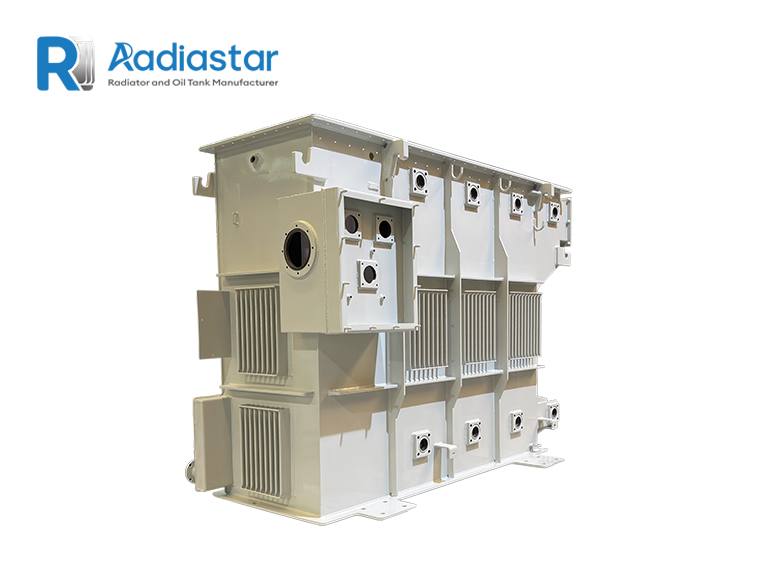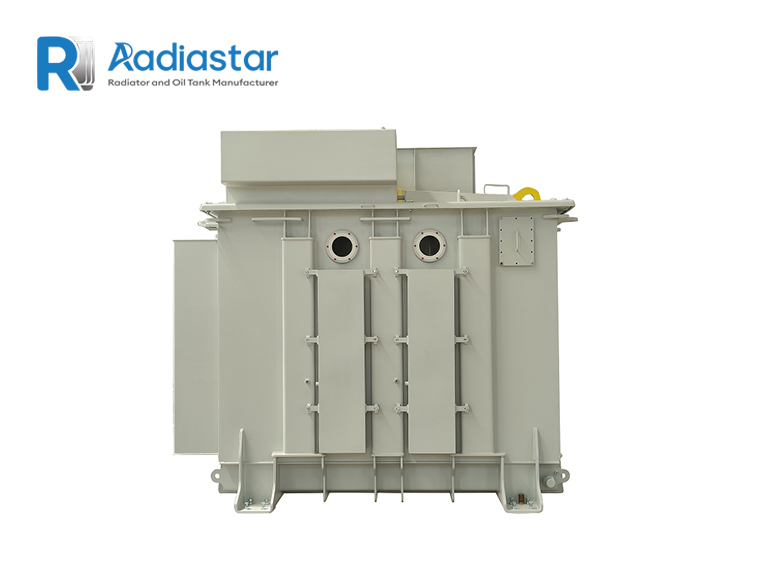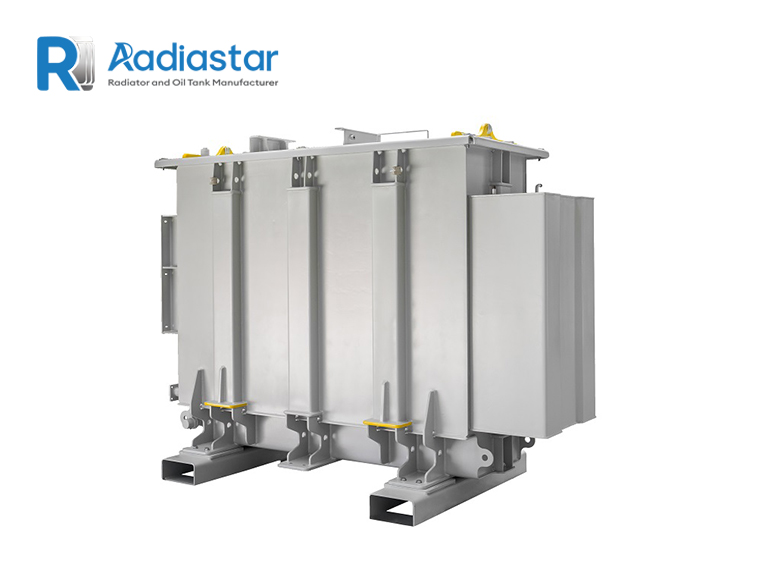

Selecting the right material for a transformer tank is a balance between mechanical strength, corrosion resistance, weldability, cost, and service environment. The three most common material families are:
Mild steel – cost-effective, easy to weld, requires protective coating
Stainless steel – excellent corrosion and acid resistance, higher cost
Corten steel – improved atmospheric corrosion resistance without painting, moderate cost
This article compares these materials for transformer tank applications, covering their properties, welding considerations, coating requirements, and typical use cases. It helps transformer manufacturers and procurement engineers make an informed material selection for OEM transformer tanks.
Radiastar fabricates transformer tanks from all three material groups. We provide material recommendations based on the installation environment, oil type, and customer specifications.
Mild steel is the most widely used material for transformer tanks. Common grades include:
Q235 / Q235B (China)
S235JR (Europe)
ASTM A36 (USA)
IS 2062 (India)
Mild steel offers good weldability, formability, and low cost. However, it has poor atmospheric corrosion resistance and must be protected with a coating system.
Long-tail keyword: mild steel transformer tank material grade
Stainless steel is used when superior corrosion and acid resistance are required. Common grades include:
304 / 304L – general corrosion resistance, suitable for coastal and mildly acidic environments
316 / 316L – molybdenum added for improved pitting and acid resistance
Duplex grades – higher strength and chloride stress corrosion cracking resistance
Stainless steel transformer tanks are used in chemical plants, coastal substations, food processing facilities, and applications where oil contamination or acid exposure is a concern.
Long-tail keyword: stainless steel transformer tank 316L
Corten steel, also known as weathering steel, is a high-strength low-alloy steel that forms a stable protective rust layer when exposed to the atmosphere. Common grades include:
Corten A – often used for thinner sections, good atmospheric corrosion resistance
Corten B – higher strength, used for structural applications
Corten steel transformer tanks can be used unpainted in many atmospheric environments, reducing maintenance costs. However, the protective patina may take months to form and is not suitable for all environments, especially marine or heavily polluted areas.
Long-tail keyword: Corten steel transformer tank weathering steel
| Property | Mild Steel (Q235/S235JR) | Stainless Steel 304/316L | Corten A/B |
|---|---|---|---|
| Yield strength | 235 MPa (Q235) / 235 MPa (S235JR) | 205–220 MPa (304/316L) | 275–355 MPa |
| Tensile strength | 360–510 MPa | 515–620 MPa | 410–510 MPa |
| Elongation | 20–26% | 40–45% | 20–24% |
| Density | 7.85 g/cm³ | 7.90–8.00 g/cm³ | 7.85 g/cm³ |
| Weldability | Excellent | Good (with precautions) | Good (with matching filler) |
| Atmospheric corrosion resistance | Poor (requires coating) | Excellent | Good after patina forms |
| Acid resistance | Poor | Excellent (especially 316L) | Moderate |
| Cost ratio (relative) | 1.0 | 3–5 | 1.2–1.5 |
Long-tail keyword: transformer tank material properties comparison
Mild steel rusts quickly when exposed to moisture, oxygen, and salts. In coastal environments, corrosion rates can be several times higher than inland. Therefore, mild steel transformer tanks always require:
Abrasive blasting to Sa 2.5
Epoxy zinc-rich primer
Epoxy intermediate coat
Polyurethane or polysiloxane topcoat
Regular inspection and touch-up
Long-tail keyword: coating system for mild steel transformer tank
Stainless steel resists corrosion through a passive chromium oxide film. 304 stainless steel performs well in rural and urban environments but may suffer pitting in chloride-rich coastal areas. 316L provides better resistance to chlorides and acids.
For transformer tanks in chemical plants or acidic environments, 316L or specialized acid-resistant linings are recommended.
Long-tail keyword: 316L stainless steel transformer tank for acid environment
Corten steel forms a dense, adherent rust layer that protects the base metal from further atmospheric corrosion. This patina provides long-term protection without painting in many environments. However:
Corten steel should not be used in highly acidic or alkaline environments
It is not recommended for continuous immersion or buried applications
The protective patina may not form properly in very dry or very humid climates
Runoff from early rust staining can affect surrounding surfaces
Long-tail keyword: Corten steel transformer tank rust patina performance
Mild steel is the easiest to weld. Standard processes include MIG/MAG, TIG, and submerged arc welding. Low carbon content reduces the risk of cracking. Preheating is usually not required for thicknesses below 30 mm.
Long-tail keyword: welding mild steel transformer tank
Stainless steel requires more careful welding to avoid:
Carbide precipitation – chromium carbides form at grain boundaries, causing sensitization and reduced corrosion resistance. Use low-carbon grades (304L/316L) or control heat input.
Distortion – higher thermal expansion coefficient leads to more distortion; use fixturing and proper weld sequence.
Weld oxidation – back purge with argon for full-penetration welds to prevent oxidation on the root side.
Filler metal selection – use matching or over-alloyed filler (e.g., 316L with 316L filler).
Long-tail keyword: welding stainless steel transformer tank heat input and distortion
Corten steel welds similarly to mild steel but requires matching weathering steel filler metal to maintain the same corrosion properties. If standard mild steel filler is used, the weld area will corrode faster than the base metal. Recommended filler metals include AWS E7018-W or equivalent. Preheating may be required for thicker sections.
Long-tail keyword: welding Corten steel transformer tank filler metal
Radiastar has qualified welding procedures for mild steel, stainless steel, and Corten steel. Our welders are certified to ISO 9606 and AWS D1.1, and we control welding consumables for each material group.
Mild steel is the least expensive. Stainless steel costs 3 to 5 times more than mild steel, depending on grade and market conditions. Corten steel is typically 20–50% more expensive than mild steel.
Long-tail keyword: transformer tank material cost comparison mild steel stainless steel Corten
Mild steel: lowest fabrication cost due to easy cutting, forming, and welding.
Stainless steel: higher fabrication cost due to slower cutting speeds, special tooling, distortion control, and more expensive filler metals.
Corten steel: similar fabrication cost to mild steel, but requires matching filler and may need special handling to avoid surface contamination.
Mild steel: requires full coating system, higher initial painting cost and periodic maintenance.
Stainless steel: no coating required, lowest maintenance cost.
Corten steel: usually no coating required, but early rust staining may need aesthetic consideration. Minimal long-term maintenance if patina forms properly.
For aggressive environments, stainless steel can be the most economical over the transformer’s 25–40 year life because it eliminates recoating and corrosion repair costs. Mild steel is economical in mild environments with proper maintenance. Corten steel offers a middle ground for outdoor substations in non-marine climates.
Long-tail keyword: lifecycle cost of transformer tank materials
| Environment / Application | Recommended Material | Coating Requirement |
|---|---|---|
| Inland substation, moderate climate | Mild steel | 3-coat epoxy/PU system |
| Coastal substation, high humidity | Mild steel + high-performance coating OR 316L stainless steel | C5-M/CX coating or none for stainless |
| Chemical plant, acid exposure | 316L stainless steel or mild steel + acid-resistant lining | Acid-resistant lining |
| Outdoor distribution, no painting desired | Corten steel | None (after patina) |
| Indoor factory, dry environment | Mild steel | Primer + topcoat |
| High-temperature oil | Stainless steel or mild steel with heat-resistant coating | Heat-resistant coating |
Long-tail keyword: how to select material for transformer oil tank
Radiastar engineers can recommend the most cost-effective material and coating system based on the project’s environmental conditions and service life requirements.
Radiastar fabricates transformer tanks from all three material groups:
Mild steel
Q235, S235JR, ASTM A36
High-precision CNC cutting and forming
Full welding and 3-coat painting system
100% leak testing
Stainless steel
304, 304L, 316, 316L
Controlled welding with proper back purge
Pickling and passivation after welding
No coating needed for most applications
Corten steel
Corten A, Corten B
Matching weathering steel filler metals
No paint required after patina formation
Suitable for outdoor substations
All material groups receive the same rigorous pressure testing and quality documentation.
Long-tail keyword: OEM transformer tank manufacturer mild steel stainless steel Corten
For coastal environments with salt spray, either mild steel with a high-performance C5-M coating system or 316L stainless steel is recommended. 316L offers better long-term corrosion resistance without coating maintenance.
Corten steel is designed to be used unpainted. It forms a protective rust patina that reduces further atmospheric corrosion. However, in marine or heavily polluted environments, painting may still be recommended.
In aggressive environments such as chemical plants, coastal areas, or acid exposure, stainless steel can reduce lifecycle costs by eliminating recoating and corrosion repairs. For mild environments, coated mild steel is usually more economical.
No. Mild steel will rust rapidly without a protective coating. A proper surface preparation and coating system is essential to achieve the required service life.
Material selection for transformer tanks is a critical engineering decision. Mild steel offers the lowest initial cost, stainless steel provides the best corrosion and acid resistance, and Corten steel offers a low-maintenance option for suitable atmospheric environments.
Radiastar combines material expertise with OEM fabrication capabilities to deliver transformer tanks that meet performance, budget, and delivery requirements. Contact our engineering team to discuss your material selection and request a technical recommendation for your project.