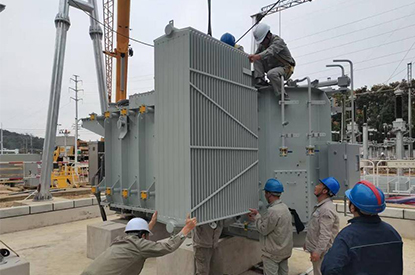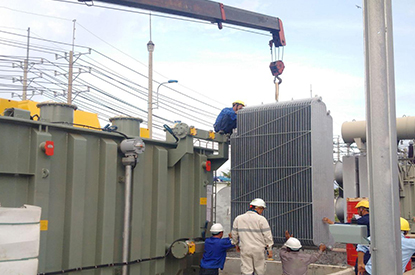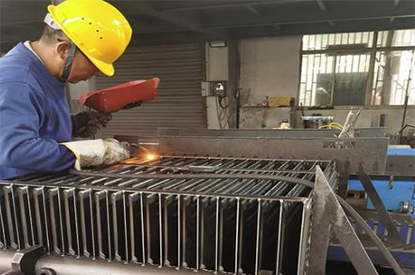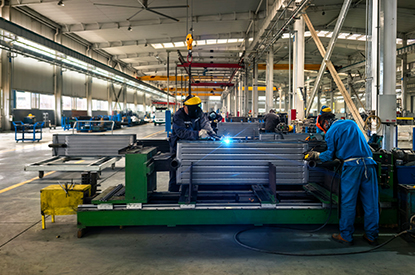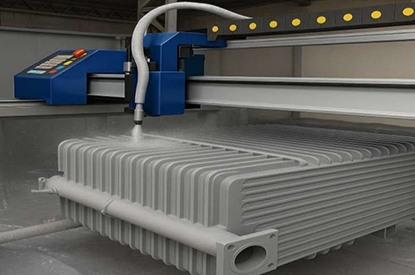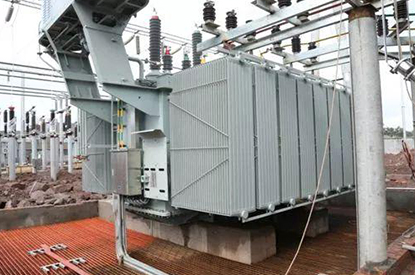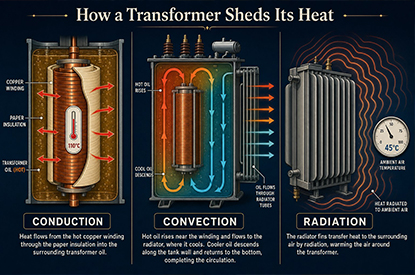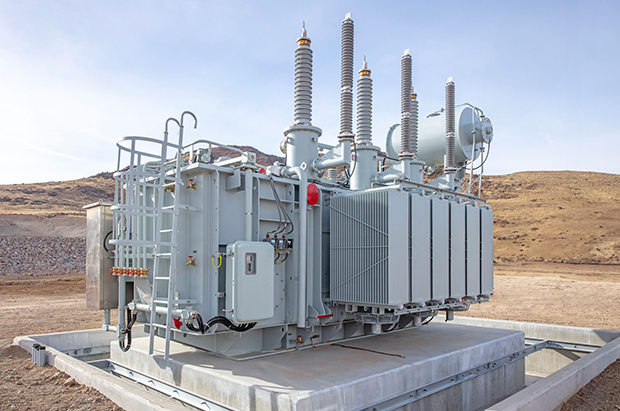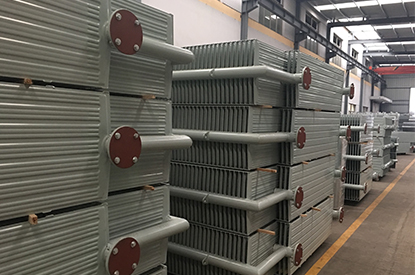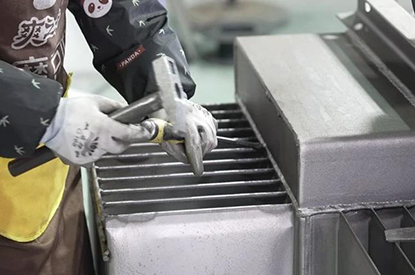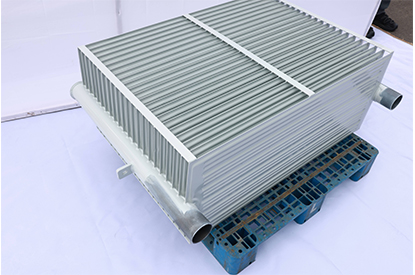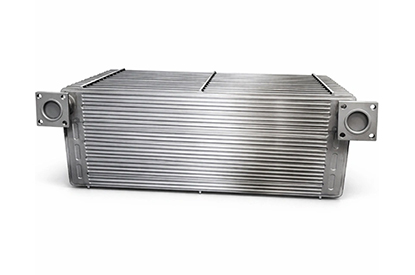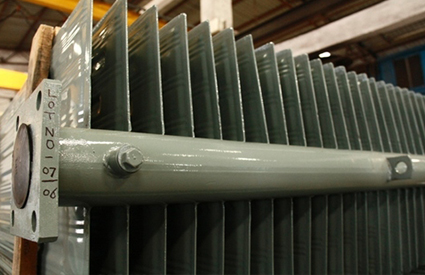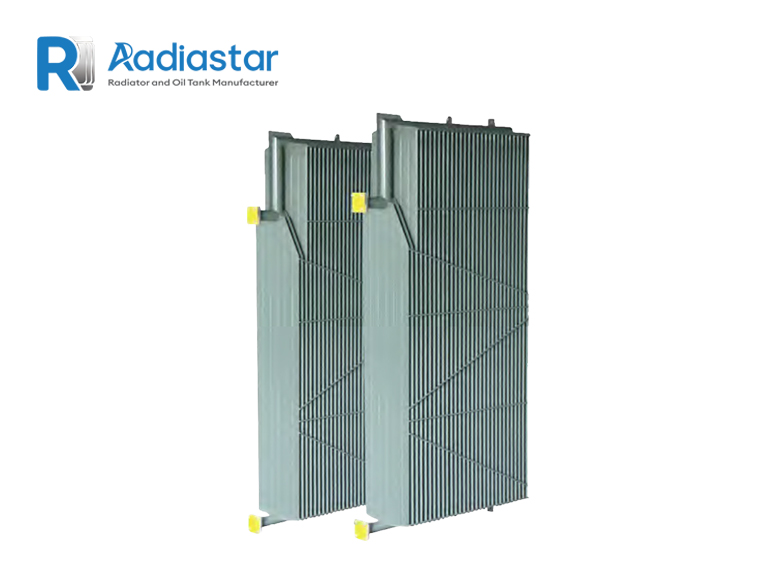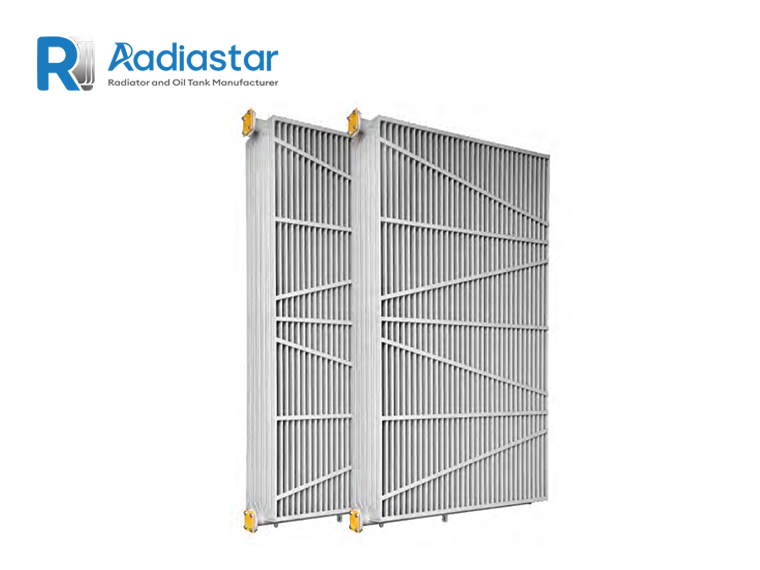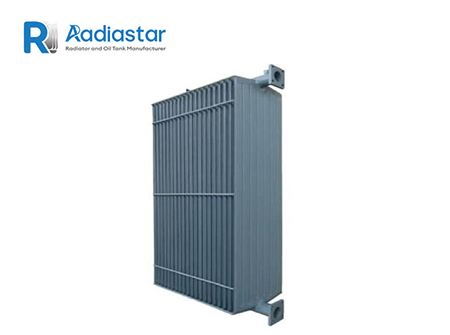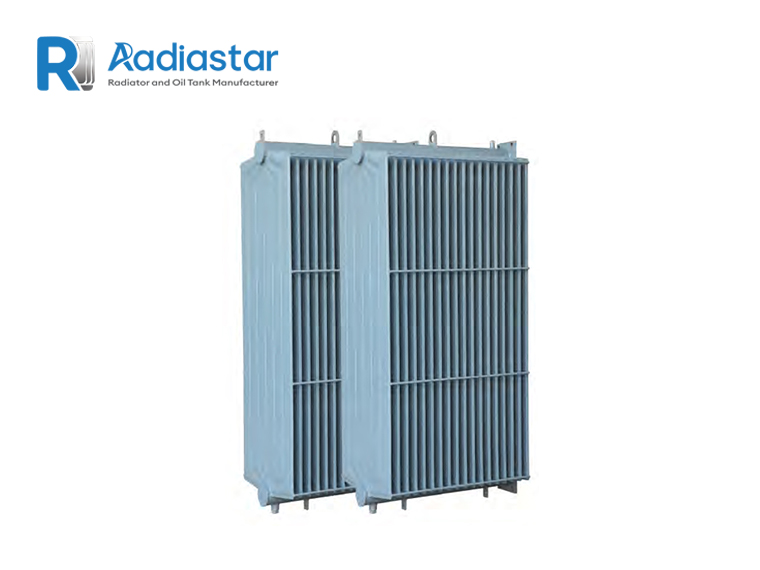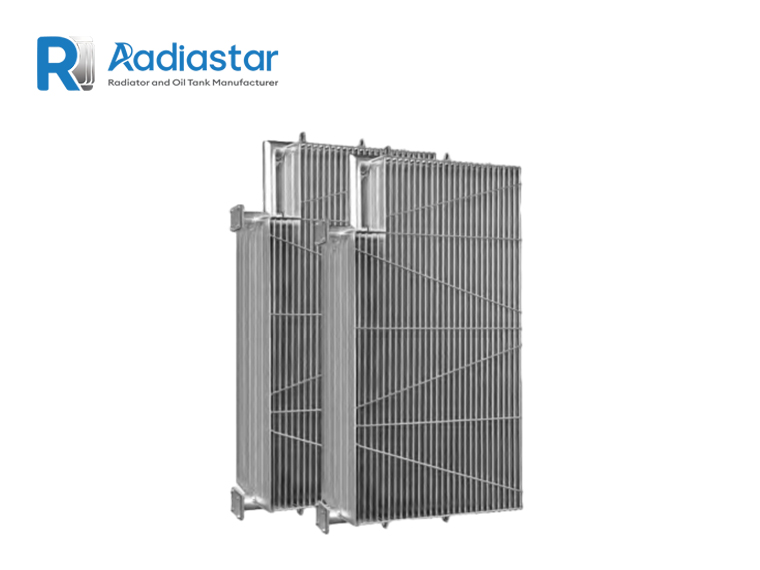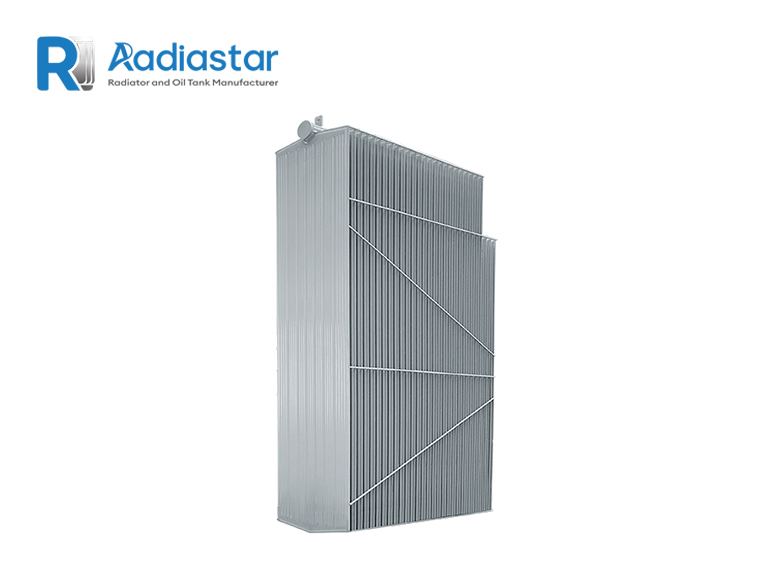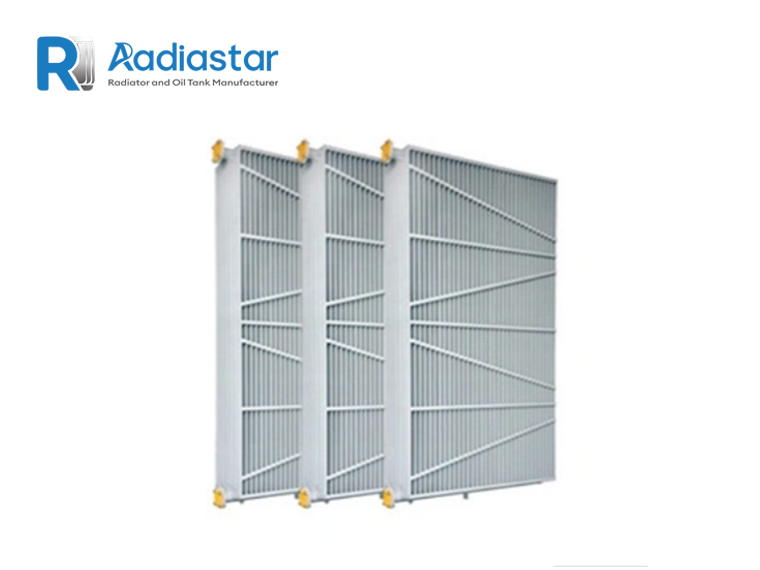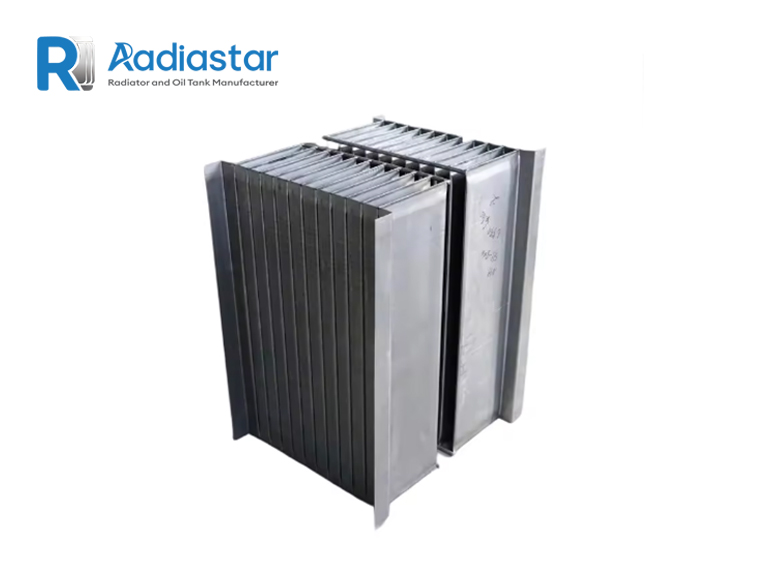

A transformer radiator is a pressure-containing component of a liquid-immersed transformer cooling system. Although its primary function is to dissipate heat, it must also maintain a reliable oil-tight boundary throughout transportation, installation and long-term operation.
A radiator with insufficient weld quality, defective joints or inadequate sealing can result in transformer oil leakage. In a power transformer, even a relatively small leak can lead to:
For this reason, transformer radiator pressure testing and tightness testing are important quality-control procedures before shipment.
For international buyers, however, an important distinction should be made between pressure testing, tightness/leak testing, and mechanical or thermal type tests. They are not necessarily the same test.
The international reference most directly applicable to removable radiators is IEC 60076-22-2:2019, Power transformers – Part 22-2: Power transformer and reactor fittings – Removable radiators. The IEC states that this standard covers removable radiators installed on liquid-immersed power transformers and reactors and specifies their service conditions, mechanical requirements, operation requirements, preferred dimensions, and type and routine tests.
For procurement engineers, the most important question is therefore not simply:
“Does the radiator pass a pressure test?”
A better question is:
“What test method, pressure, duration, acceptance criterion and inspection record are provided for each radiator?”
A transformer radiator pressure test is a quality-control test used to verify the mechanical integrity and oil-tightness of the radiator under a specified internal pressure.
The test is particularly important for:
The test is intended to identify problems such as:
A professional radiator manufacturer should establish a controlled test procedure and maintain records of the test results.
Transformer radiators contain insulating oil during operation.
The radiator therefore has two simultaneous functions:
Transfer heat from transformer oil to ambient air.
Contain the oil without leakage.
A radiator can have excellent thermal performance and still be unacceptable if it leaks.
For this reason, radiator quality should be evaluated in several dimensions:
Thermal performance
Mechanical integrity
Oil tightness
Dimensional accuracy
Corrosion protection
Pressure testing primarily addresses the mechanical and sealing aspects.
The key international standard for removable transformer radiators is:
IEC 60076-22-2:2019
The standard specifically covers radiators mounted on liquid-immersed power transformers and reactors and includes requirements for type and routine tests.
For routine tightness testing, IEC 60076-22-2 specifies alternative test methods.
According to the published text of the standard, the radiator may be subjected to one of the following tightness tests, with the choice of method at the radiator manufacturer’s discretion:
The acceptance criterion is that no leakage is detected by visual inspection during the specified test period. Different procedures can be agreed between purchaser and manufacturer.
This point is extremely important for international purchasing.
There is not one universal “transformer radiator pressure test pressure” that applies to every project.
The applicable standard, project specification and agreed manufacturing specification must be checked.
These terms are often used interchangeably in commercial discussions, but technically they can describe different aspects of inspection.
The radiator is subjected to a specified internal pressure.
The objective is to verify integrity under the test condition.
The objective is to identify whether oil, air or another test medium escapes from the radiator.
The radiator is inspected for:
IEC 60076-22-2 specifically separates routine tightness tests from other inspection requirements.
Therefore, when requesting a quotation, buyers should ask the manufacturer to identify exactly which tests are included.
A hydraulic test uses liquid as the pressure medium.
For the IEC 60076-22-2 routine tightness method, the specified hydraulic method uses transformer oil at 60 °C ± 5 °C, with a pressure of 200 kPa maintained for 3 hours.
The basic principle is:
Fill radiator
↓
Remove trapped air
↓
Raise pressure gradually
↓
Maintain specified pressure
↓
Inspect for leakage
↓
Release pressure
↓
Drain/prepare radiator
The exact factory procedure should follow the applicable standard and the manufacturer’s approved inspection procedure.
Hydraulic testing has a major engineering advantage: liquids are far less compressible than gases.
Therefore, stored energy is much lower than in a comparable pneumatic test.
For pressure-containing equipment, this makes hydraulic testing a widely used approach where practical.
For transformer radiators, hydraulic testing can help identify:
However, the test medium and post-test handling must also be controlled.
If water is used under a customer-specific procedure rather than the IEC oil-based routine method, the radiator must be properly drained and dried afterward to avoid internal contamination or moisture.
A pneumatic test uses compressed air or another suitable gas.
IEC 60076-22-2 provides pneumatic tightness-test alternatives in which the radiator is tested under water.
The published standard specifies:
200 kPa for at least 30 minutes
or:
500 kPa for at least 5 minutes.
When a radiator is submerged under water, escaping gas produces visible bubbles.
This provides a straightforward visual indication of leakage.
However, compressed-gas testing involves stored energy and therefore requires appropriate safety controls.
The test area should be controlled and personnel should not be exposed unnecessarily to pressurized equipment.
When compressed air is introduced into a radiator submerged under water, a leak produces bubbles.
The principle is simple:
Pressurized air
↓
Defect in weld/seam
↓
Air escapes
↓
Visible bubbles
The acceptance criterion under the IEC routine tightness test is that no leakage is detected by visual inspection during the specified period.
This makes the method particularly useful for detecting very small leakage points that might not be obvious during a simple external visual inspection.
A professional pressure/leak test should not focus only on the center of the radiator panels.
Potential leak locations include:
Pressed panels are joined by welding, making seam quality critical.
The upper and lower headers are connected to the individual radiator elements.
The radiator connects to the transformer tank through flanges or other specified connections.
If radiator valves are included in the assembly, their interfaces should also be checked.
Drain plugs, lifting brackets and other welded attachments may require inspection according to the project specification.
Geometry changes can create stress concentrations and are therefore important inspection areas.
Pressure testing should not be considered a substitute for good welding quality.
A professional manufacturing process should control:
The pressure test is essentially a verification step.
If a manufacturer relies entirely on the final pressure test to identify manufacturing problems, the quality-control system is weaker than one that controls the process from the beginning.
For international procurement, ask the supplier:
How are radiator welds controlled before pressure testing?
This question can reveal a great deal about manufacturing capability.
This is one of the most important purchasing questions.
There is a major difference between:
Every finished radiator is individually tested.
and:
Only selected radiators from a production batch are tested.
For transformer radiator procurement, buyers should clearly specify whether every radiator assembly must undergo the required routine tightness test.
Some manufacturers publicly state that they perform 100% pressure and leak testing on every radiator.
Radiastar’s current product information also states that its transformer radiators undergo a 100% factory pressure test, alongside hydraulic testing and leakage inspection.
For critical utility or EPC projects, the purchase specification should explicitly state the required inspection level rather than assuming it.
For the IEC 60076-22-2 routine tightness tests described above, the key acceptance criterion is:
No leakage detected by visual inspection during the specified test period.
Depending on the customer’s technical specification, additional acceptance requirements may include:
The acceptance criteria should be written clearly into the purchase order or inspection plan.
This requires careful interpretation.
A pressure gauge reading should not be evaluated without considering:
For a professional inspection, leakage should be assessed according to the specified test method and acceptance criteria.
For example, the IEC tightness-test criterion is based on leakage detection, not simply a generic statement that “the gauge must never move.”
This is an important distinction when writing technical specifications.
International buyers often confuse:
Working pressure
with:
Test pressure
These are different parameters.
A radiator may have a specified normal operating pressure, while the test pressure is selected specifically to verify integrity under a controlled test condition.
Therefore:
Do not select the pressure-test value by simply multiplying the working pressure unless the applicable standard or project specification requires it.
The test value should come from:
Radiastar currently publishes working pressure ≤0.6 MPa and a 0.8 MPa hydraulic test for one of its oil-immersed transformer radiator product ranges. This is a manufacturer-specific product specification and should not be interpreted as the universal IEC test value for every radiator design.
This distinction is critical for technically accurate international marketing.
When comparing radiator quotations, you may see:
This does not automatically mean that one supplier has a better radiator.
The numbers may represent different things:
Therefore, always ask:
What standard and test procedure does this pressure value refer to?
This is much more meaningful than comparing the numerical pressure value alone.
A typical controlled factory procedure can be organized as follows.
Check:
Close the required:
Use the specified test medium.
For hydraulic testing, remove trapped air as required by the procedure.
The gauge should have appropriate range and valid calibration.
Do not apply pressure suddenly.
Allow the system to stabilize according to the approved procedure.
Maintain the specified test pressure for the specified duration.
Check:
Document:
Pressure should be reduced in a controlled manner.
A pressure test is only as reliable as the measurement system.
The pressure gauge should therefore have:
For international projects, buyers may request:
Pressure Gauge Calibration Certificate
as part of the quality documentation.
A professional factory inspection system should be able to trace the instrument used during testing.
Temperature can influence pressure measurements, especially in systems containing gas.
This is one reason why the IEC hydraulic tightness-test procedure specifies transformer oil at 60 °C ± 5 °C for the oil-based routine method.
For a purchaser, the important point is:
Pressure, temperature, medium and holding time should be treated as one test condition.
A test report that only says:
“Pressure test: PASS”
provides very little technical information.
A better report identifies the actual test parameters.
For international procurement, a useful pressure-test record should include at least:
| Test Item | Recommended Record |
|---|---|
| Product | Radiator model/type |
| Serial No. | Individual identification |
| PO No. | Purchase order |
| Drawing No. | Approved drawing |
| Material | Grade |
| Test method | Hydraulic / pneumatic |
| Test medium | Oil / air / other |
| Test pressure | kPa / MPa |
| Holding time | min / h |
| Test temperature | °C where applicable |
| Pressure gauge No. | Identification |
| Calibration status | Certificate/reference |
| Visual inspection | PASS/FAIL |
| Leakage | None detected |
| Deformation | None / specified limit |
| Inspector | Name/signature |
| Date | Test date |
This type of documentation is particularly useful for EPC projects and utility procurement.
This distinction is essential.
Performed on individual production units or as specified for production acceptance.
The purpose is to verify that the manufactured radiator meets the routine requirements.
Used to validate the design itself.
For radiators, type testing can include thermal dissipation testing and other design-related tests.
IEC 60076-22-2 contains both routine tests and type-test requirements.
A buyer should therefore not accept a type-test certificate as proof that every individual radiator shipped has passed its routine tightness test.
These documents serve different purposes.
These tests answer completely different questions.
Can the radiator contain the test medium without leakage under the specified pressure?
Can the radiator remove the required amount of heat under defined thermal conditions?
A radiator can pass one and fail the other.
For example:
A radiator may be perfectly leak-tight but have insufficient cooling surface.
Conversely, a radiator may have excellent thermal geometry but unacceptable weld leakage.
Professional radiator quality therefore requires both mechanical and thermal verification where applicable.
IEC 60076-22-2 includes specific radiator dissipation-test provisions in addition to tightness testing.
Some transformer radiator specifications also include vacuum testing.
Vacuum testing evaluates the radiator under external pressure conditions created by internal vacuum.
This is different from positive-pressure testing.
The two tests address different mechanical conditions:
Positive pressure
→ internal pressure stresses the radiator outward.
Vacuum
→ external atmospheric pressure acts against the evacuated radiator.
Not every project requires the same vacuum test.
Therefore, if vacuum operation is relevant to the transformer design, it should be specifically included in the technical specification.
Some transformer radiator specifications used in industry include periodic vacuum and hot-oil seepage testing in addition to routine leakage testing.
For certain customer specifications, hot-oil testing may be required.
The objective is to verify that the radiator remains oil-tight under elevated temperature and pressure conditions.
This is particularly relevant because transformer radiators operate with hot insulating oil.
However, hot-oil testing requirements vary between standards and project specifications.
Therefore, buyers should not assume that every radiator supplier performs the same hot-oil test.
If required, specify:
Common causes include:
Examples:
Excessive deformation may damage the panel or create stress concentration.
Connections between panels and headers are critical.
Poor flatness or damaged sealing surfaces can cause leakage.
Impact during handling can deform radiator panels.
Long-term corrosion can eventually compromise the radiator wall.
Improper repair welding may create a new leakage point.
A robust quality system should prevent these problems rather than relying solely on final inspection.
Depending on the project requirements, welding inspection can include:
Not every radiator weld requires every NDT method.
The inspection method should be determined by:
For international procurement, the buyer should specify critical weld inspection requirements in the ITP rather than assuming the supplier will automatically perform advanced NDT.
A transformer radiator may travel thousands of kilometers before installation.
Potential transportation conditions include:
A small manufacturing defect can become a serious field problem.
This is why 100% routine leakage testing is particularly valuable for export orders.
It gives the buyer confidence that every supplied radiator has individually passed the specified tightness check.
When purchasing transformer radiators, ask the supplier these questions.
These questions are far more useful than asking simply:
“Is your radiator high quality?”
A professional purchase order can specify:
Radiator type: Removable pressed-steel radiator
Cooling: ONAN / ONAF
Applicable standard: IEC 60076-22-2:2019 or project-specified equivalent
Routine tightness test: Required
Test method: As agreed
Test pressure: According to applicable standard/project specification
Holding time: According to applicable standard/project specification
Acceptance: No detectable leakage
Inspection: 100% units
Documentation: Individual test record / batch test record as agreed
Material certificate: Required
Dimensional inspection: Required
Surface-treatment inspection: Required
This avoids disputes after production.
Radiastar’s current transformer radiator product information specifies 100% factory pressure testing, together with leakage inspection and other quality-control procedures. Its published product range lists hydraulic testing and a product-specific test pressure of 0.8 MPa.
For a customer project, however, the final test requirement should be confirmed against:
Radiastar’s radiator product range includes customized dimensions, panel quantities, connection configurations and surface-treatment options, allowing the pressure-test and inspection requirements to be incorporated into the project specification.
For an international project, an Inspection and Test Plan can be structured as follows:
| Manufacturing Stage | Inspection / Test | Typical Responsibility |
|---|---|---|
| Raw material | Material verification | Manufacturer |
| Forming | Dimensions / visual | Manufacturer |
| Welding | Visual / specified NDT | Manufacturer |
| Assembly | Dimensional inspection | Manufacturer |
| Pressure testing | 100% tightness test | Manufacturer |
| Surface treatment | Coating inspection | Manufacturer |
| Final inspection | Dimensions / appearance | Manufacturer + buyer if required |
| Documentation | Test certificates | Manufacturer |
| Packing | Visual / export packing | Manufacturer |
The exact Hold Point and Witness Point arrangements should be agreed with the purchaser.
A higher number does not automatically mean better quality.
Pressure without duration is incomplete information.
Ask what test was actually performed.
A type-test certificate does not necessarily prove individual production testing.
Different manufacturers may use different procedures.
If the transformer design requires vacuum resistance, specify it.
Radiators should be protected against deformation and impact during export.
Suppose Supplier A says:
Pressure test: 0.8 MPa
Supplier B says:
Pressure test: 0.5 MPa
It would be a mistake to conclude that Supplier A is automatically better.
Ask both suppliers:
Only then can the two offers be compared technically.
A good certificate should identify the actual product.
For example:
Product: Transformer Radiator
Model: RAD-XXXX
Drawing No.: XXXX
Serial No.: XXXX
Material: Carbon Steel
Test Method: Hydraulic
Test Pressure: XXXX kPa
Holding Time: XXXX min
Test Medium: XXXX
Gauge No.: XXXX
Calibration Certificate: XXXX
Leakage: None detected
Visual Condition: Acceptable
Test Result: PASS
Inspector: XXXX
Date: XXXX
This level of traceability is valuable for utility and EPC projects.
Pressure testing does not determine the complete service life of a radiator.
Long-term performance also depends on:
Therefore:
A radiator passing a pressure test means that it has met the specified test condition. It does not mean that the radiator is guaranteed to remain leak-free forever under every possible operating condition.
This distinction is important in professional technical documentation.
Before shipment, an international buyer should confirm:
Transformer radiator pressure testing is one of the most important routine quality-control procedures for liquid-immersed transformer radiators.
The purpose is not simply to demonstrate that a radiator can withstand a certain pressure. A professional test verifies that the completed radiator is oil-tight, mechanically sound and suitable for installation into the transformer cooling system under the specified conditions.
For removable transformer radiators, IEC 60076-22-2:2019 provides an important international reference. Its routine tightness provisions include alternative hydraulic and pneumatic methods, with specified pressure and holding periods and a leakage-based acceptance criterion.
For international procurement, the most important points are:
Test method + test pressure + test duration + test medium + acceptance criteria + 100% or sampling + calibrated instruments + traceable documentation.
Do not compare radiator suppliers based only on a statement such as:
“Pressure tested.”
Instead, ask for the complete inspection procedure and test record.
A reliable transformer radiator supplier should be able to provide the relevant pressure/tightness test documentation, material certificates, dimensional inspection records and quality-control information required by the project.
For Radiastar, the product specification can be customized according to the customer’s transformer rating, radiator drawing, cooling method, material, connection dimensions and project-specific testing requirements, allowing the radiator to be supplied as an engineered component rather than a generic fabricated steel product.